Independent UK bed & mattress guide
UK bed sizes, mattresses and bases, explained simply.
Understand the bed before you buy one. BedGuide explains UK bed sizes, mattress types, bed bases and bedding in plain English. We sell nothing. We take no commission and rank no brands.
- 147 plain-English guides
- 102 checked UK company profiles
- 0 affiliate links or paid rankings
- last site update

UK bed sizes
What are the standard UK bed sizes?
UK mattress sizes are measured in centimetres. A Single is 90 × 190 cm. A Double is 135 × 190 cm. A King is 150 × 200 cm. A Super King is 180 × 200 cm. Sizes can differ by about 2 cm between makers, so check the label.
UK sizes are not the same as EU or US sizes. A UK King is narrower than many EU Kings. Leave about 50–60 cm of walking space beside the bed.
| UK size | Feet | Centimetres | Inches | Usually for |
|---|---|---|---|---|
| Small Single | 2ft 6 | 75 × 190 cm | 30 × 75 in | Children and small rooms |
| Single | 3ft | 90 × 190 cm | 35 × 75 in | One sleeper |
| Small Double | 4ft | 120 × 190 cm | 47 × 75 in | One adult who wants more room |
| Double | 4ft 6 | 135 × 190 cm | 53 × 75 in | Two adults (about 67 cm each) |
| King | 5ft | 150 × 200 cm | 59 × 79 in | Two adults, 10 cm longer than a Double |
| Super King | 6ft | 180 × 200 cm | 71 × 79 in | Two adults who want the most space |
| Emperor | 6ft 6 | 200 × 200 cm | 79 × 79 in | Very large rooms; size varies by maker |
Where to start
Buying a bed or mattress? Decide in this order.
Most regrets come from choosing the look first. Start with size and build. Leave colour and fabric until last.
-
Choosing a mattress
Pick the build first. Then support, feel and size.
-
Choosing a bed
Measure the room. Then pick a base that fits how you store things.
-
Looking after it
Simple care makes a mattress feel better for longer.
How support works
How a mattress works: layers, springs and feel.
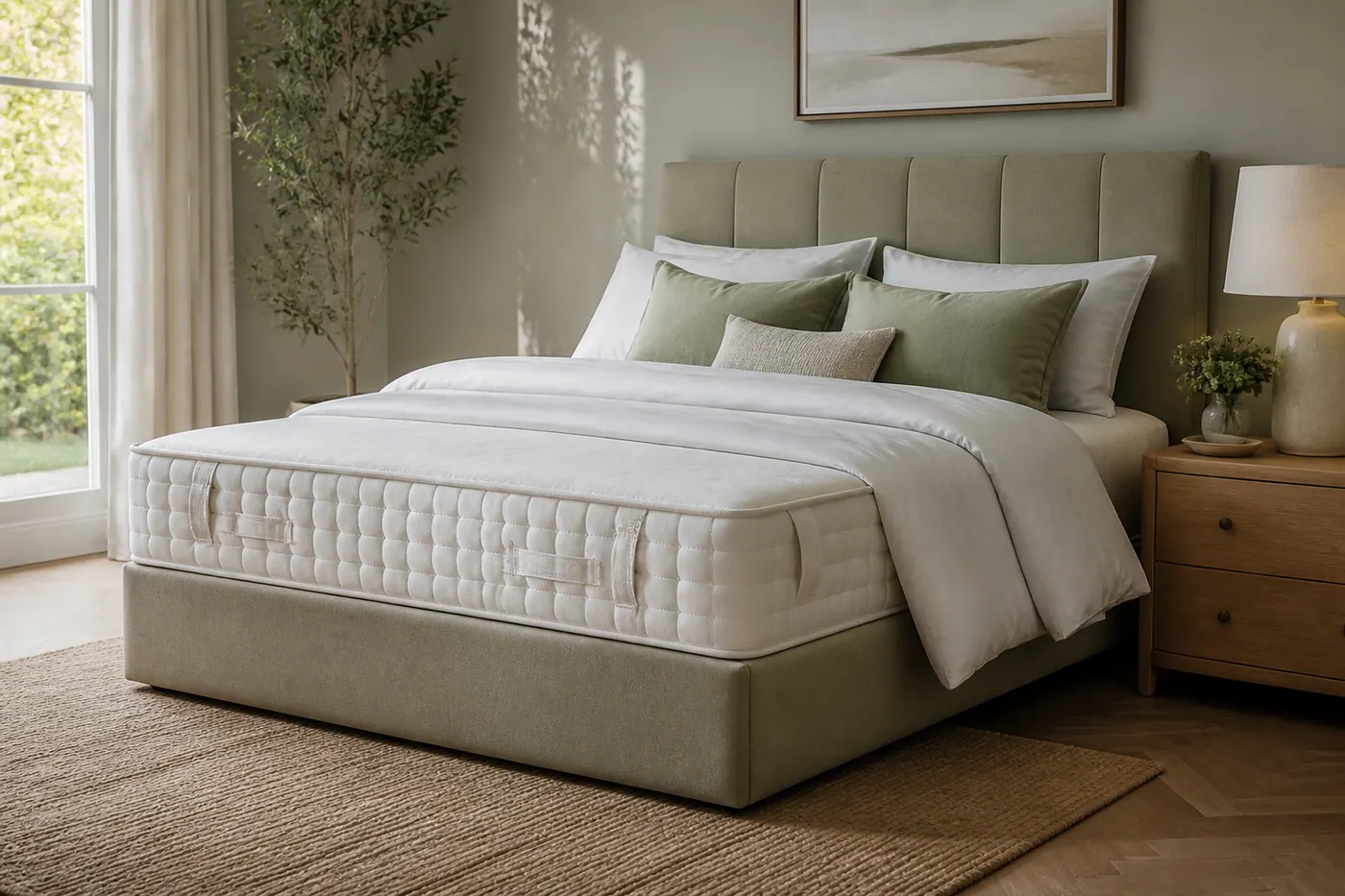
Shops mix up two things. Support is how the core holds you up. Feel is how soft the top is. We split them so you can judge the build, not the slogan.
-
What is inside
A cover, comfort layers and a support core. That is every mattress.
What’s inside a mattress → -
Tension vs feel
Why “firm” on a label can mean a firm spring or a firm top.
Spring tension explained → -
Pocket sprung
Springs sewn into fabric bags, so each one moves on its own.
Pocket sprung mattresses →
Bed styles
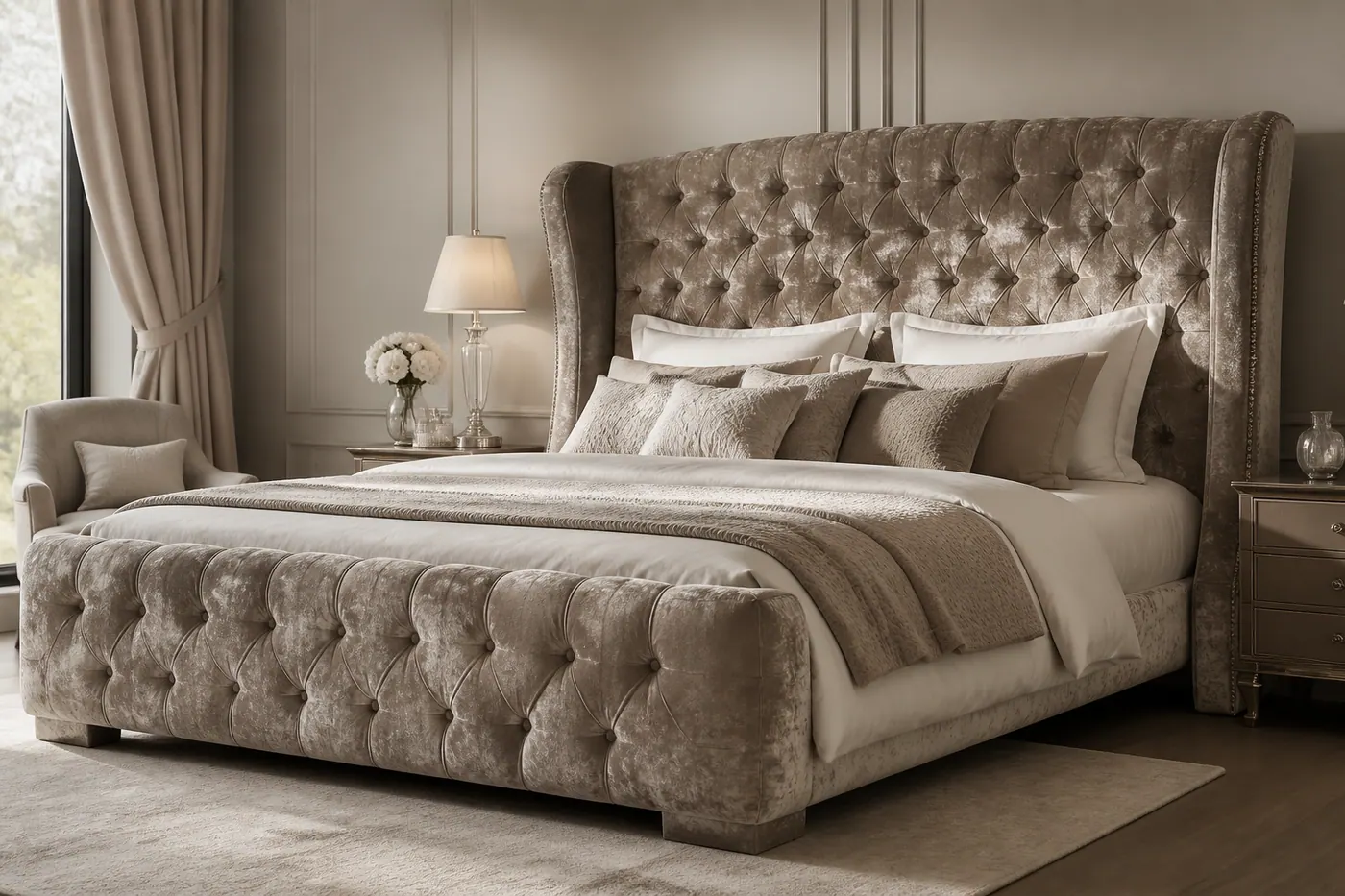
Chesterfield and buttoned beds: the look, then the mechanics.
A deep-buttoned frame is furniture first. The mattress and base still follow their own rules. Learn the style, then check the build.
Fabrics
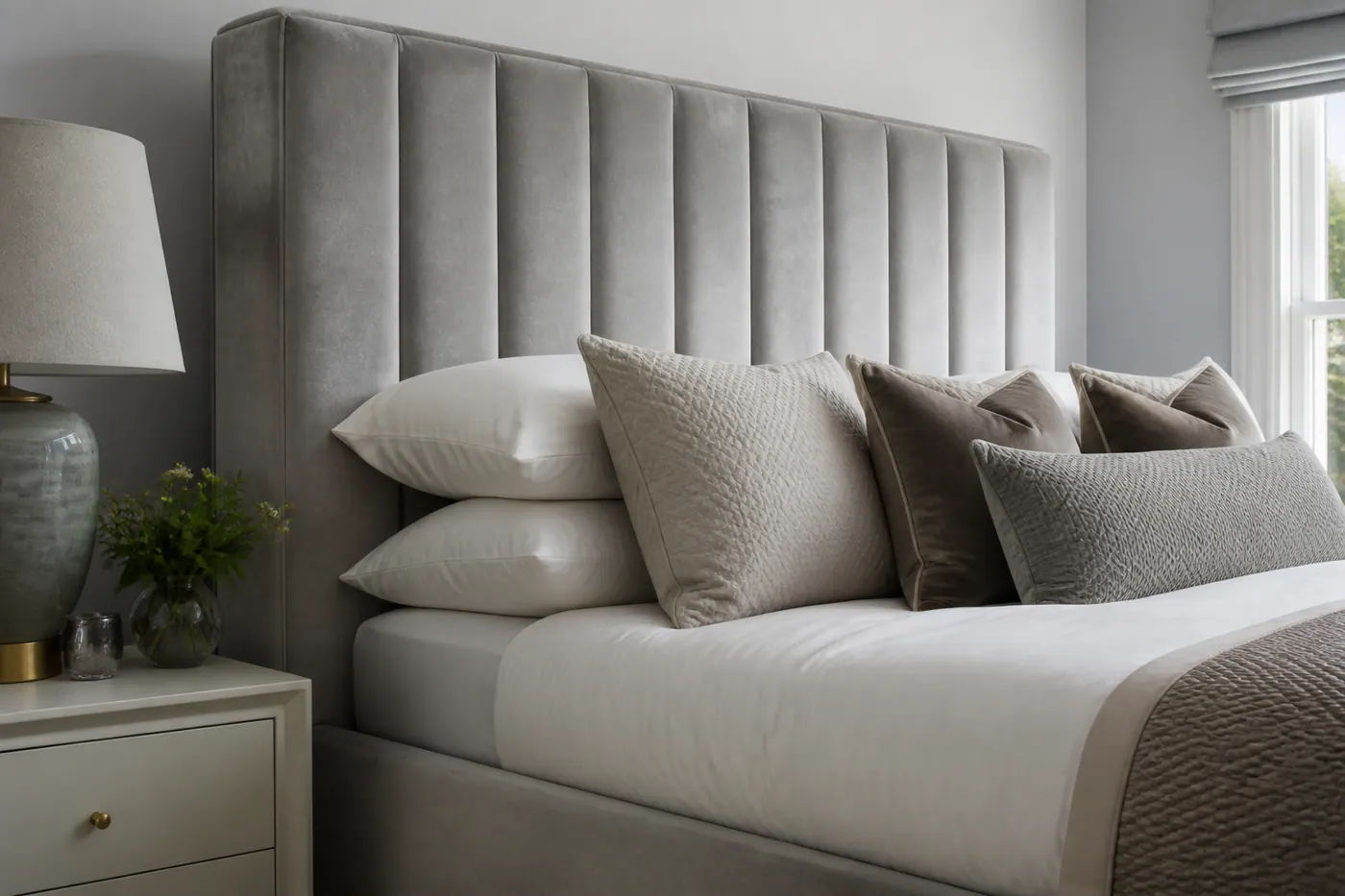
Bed fabrics: velvet, chenille and linen-look.
Fabric changes how light sits on a headboard and how easy it is to clean. It does not change how the springs feel. Keep those choices separate.
How beds are built
Headboards, divan bases and upholstery.
A platform-top divan feels firmer than a sprung-edge one. Struts, buttons and fill weight also change feel and lifespan. These guides show you what to look for.

Design explorer
Try bed styles, sizes and storage — and learn as you go.
Switch between Chesterfield, divan, ottoman, sleigh and more. See how much floor space each one needs. There are no prices and no checkout.
In the room
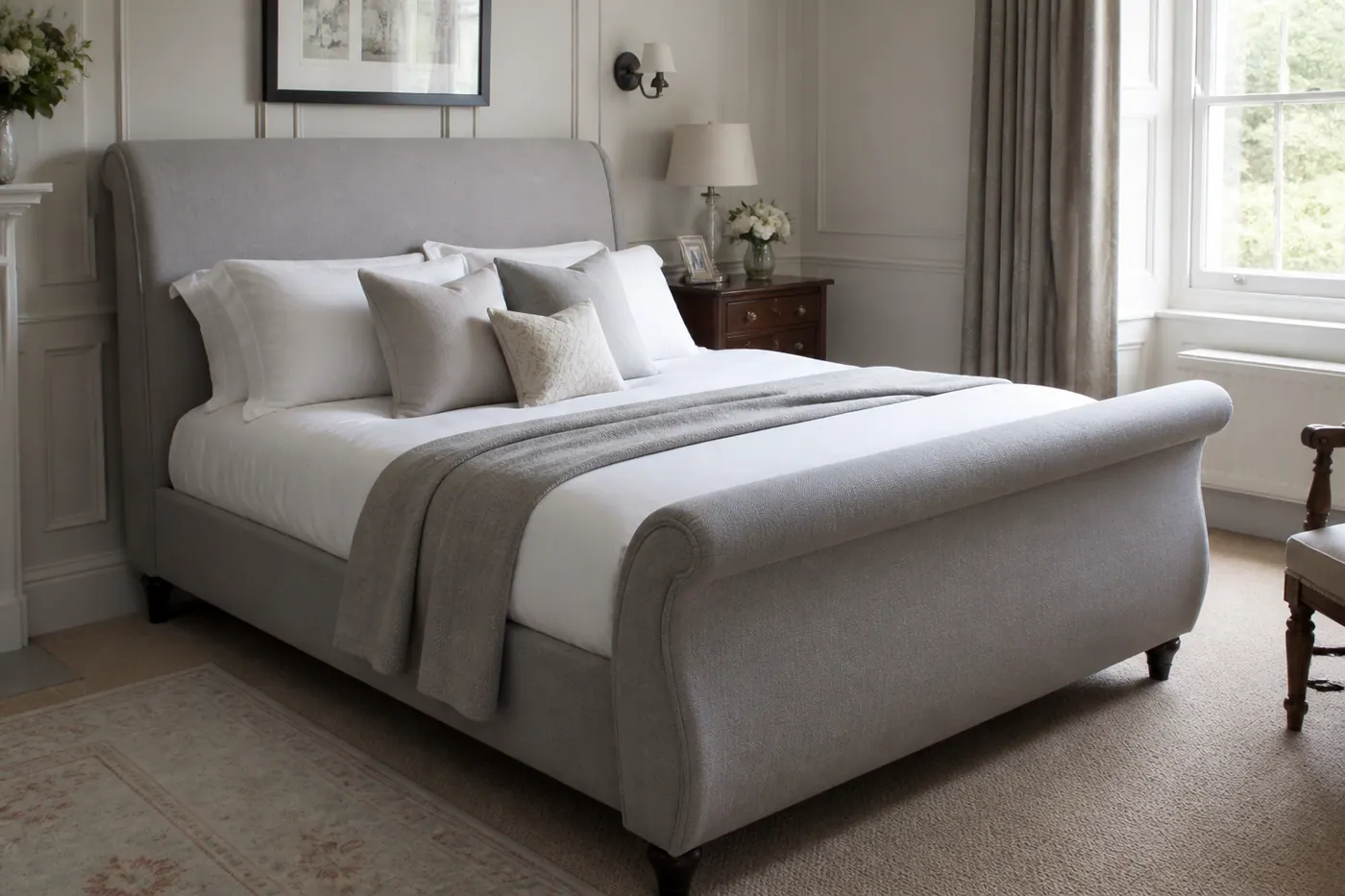
Plan the bedroom around the bed.
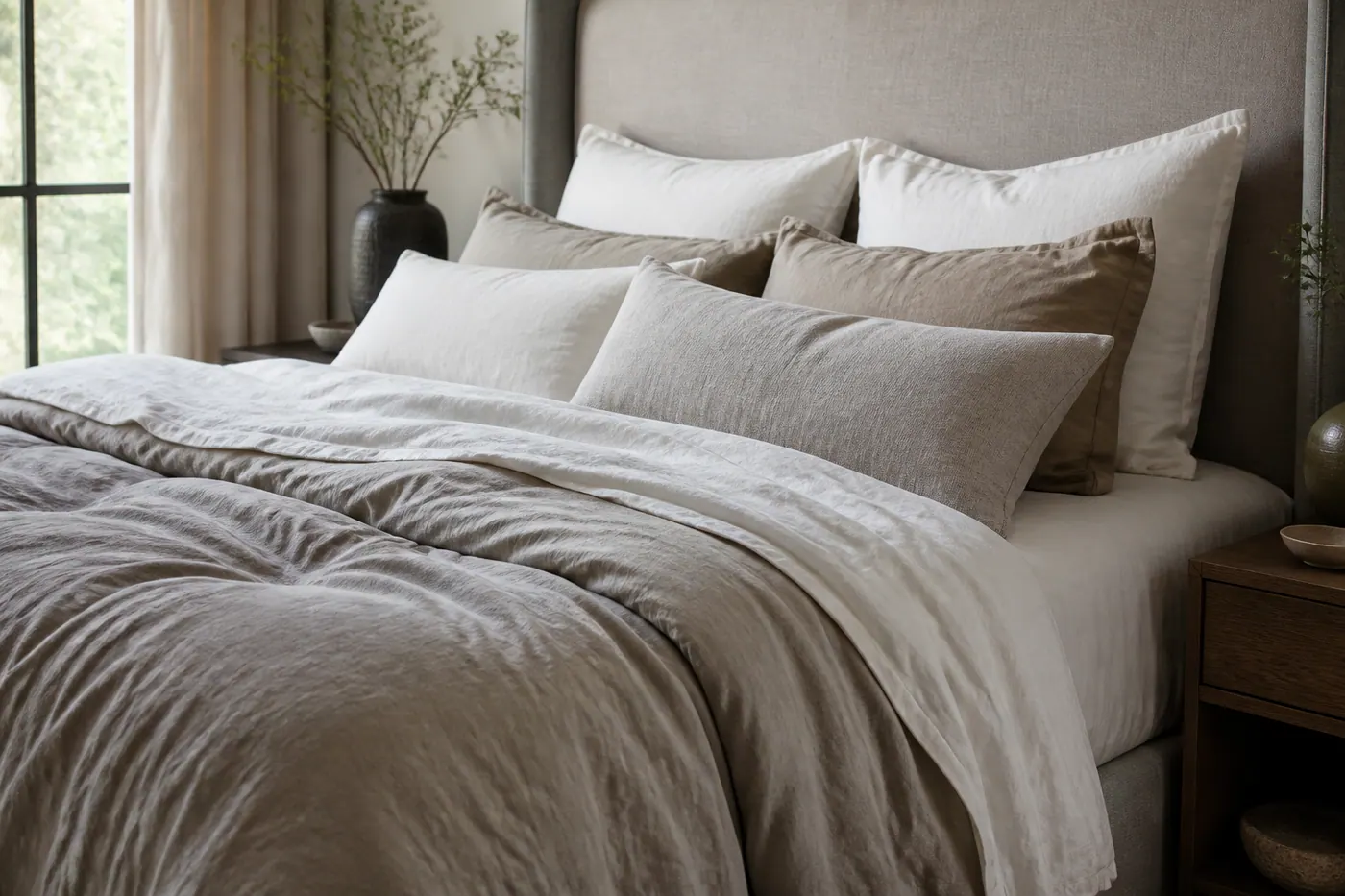
Photos help you picture scale. The guides do the hard work on sizes, bases and warranties.
Kept up to date
Recently updated guides
- Updated UK Bed Sizes Chart: cm, Feet and Inches UK bed sizes chart in cm, feet and inches: Single 90 × 190, Double 135 × 190, King 150 × 200 and Super King 180 × 200 cm, plus Emperor and small sizes.
- Updated UK vs EU Bed Sizes UK vs EU bed sizes in cm: a UK King is 150 × 200, a common EU King 160 × 200. Will a UK mattress fit an EU or IKEA frame? Plain rules.
- Updated Zip and Link Mattresses: UK Sizes, Pros and Cons Zip and link mattresses explained: UK sizes in cm, two Singles vs a Super King, sheets, the zip join, bases, headboards and how to turn them.
- Updated How to Choose a Mattress (UK Decision Guide) How to choose a mattress in the UK: pick the type, match spring tension to your weight, then feel, size, base, trial and warranty. No brand rankings.
- Updated Mattress Types UK: 8 Types of Mattress Compared Mattress types UK guide: pocket sprung, open coil, memory foam, latex, hybrid and more, compared by feel, heat, partner movement, turning and weight.
- Updated What Is a Pocket Sprung Mattress? Pocket sprung mattress explained: how springs in fabric pockets work, spring count, tension for your weight, bases, turning, pros and cons.
Searched topics
Explore the guide library
Sizes, mattress types, bases, care and company kinds — grouped the way people search. No brand scores.
People type
- UK sizes 3ft, 4ft 6, 5ft and 6ft in cm
- Mattress types Type, support, feel, then size
- Bed bases Divan, ottoman, slats or adjustable
- Couples & two sleepers One mattress or two joined
- Care, trials & UK law Faults, distance cancel, hygiene
- Bedding TOG, fill and size
- Type vs type Compare springs and foam
- By UK city West Yorkshire making cluster
- UK factories & firms Directory kinds — not brand scores
People also ask
Quick answers
Short answers to common bed and mattress questions — each opens a full simple guide.
-
sizing
What size mattress do I need?
Pick mattress size from how many people sleep there, how tall they are, and how much floor space you have. A UK Single is 90 × 190 cm for one person. Couples usually need at least a Double (135 × 190 cm). King (150 × 200 cm) or Super King (180 × 200 cm) gives more width. Leave about 10–15 cm of mattress length beyond the tallest person’s height.
-
mattresses
How do I choose a mattress?
Pick a build type first (pocket, hybrid, foam, latex or open coil), then match spring tension or foam support to body mass, then tune surface feel to sleep position. Confirm UK size in centimetres and check the base meets the mattress warranty. Soft/medium/firm labels are not standardised.
-
mattresses
What should I know before I buy a mattress?
Lock UK size in centimetres, confirm base and doorway access, then choose build type and support for your body weight before soft/medium/firm labels. Read trial and warranty small print and plan old-mattress disposal before delivery day.
-
care
How long does a mattress last?
Lifespan depends on core material: many foams last about 6–8 years, pocket sprung and hybrids often 7–10, and latex cores commonly 8–12 under normal use. Sag, broken support, or persistent discomfort with an aged mattress are replacement signals.
Why trust BedGuide
Independent, sourced and dated.
Every guide is desk research from official sources, such as GOV.UK, the British Standards Institution and the National Bed Federation. Each page shows its sources and when it was last checked.
- No commission We earn nothing when you buy. Company links are for reference only.
- No rankings We explain how beds work. We never score brands or products.
- Named editor Kaiser Khan checks sources and dates.
- Public fixes Read our editorial policy and corrections log.