Mattress Protectors and Toppers Explained
By Kaiser Khan, Editor Updated First published
Desk research from official sources. Not a product test or medical advice. How we check facts.
In short
A mattress protector is a thin barrier that shields the mattress from fluids and allergens while changing feel as little as possible. A topper is a thicker comfort pad that softens or firms the surface. Protectors support hygiene and warranty conditions. Toppers change contact feel without replacing the core support unit beneath.
About 1 minutes to read
How it works
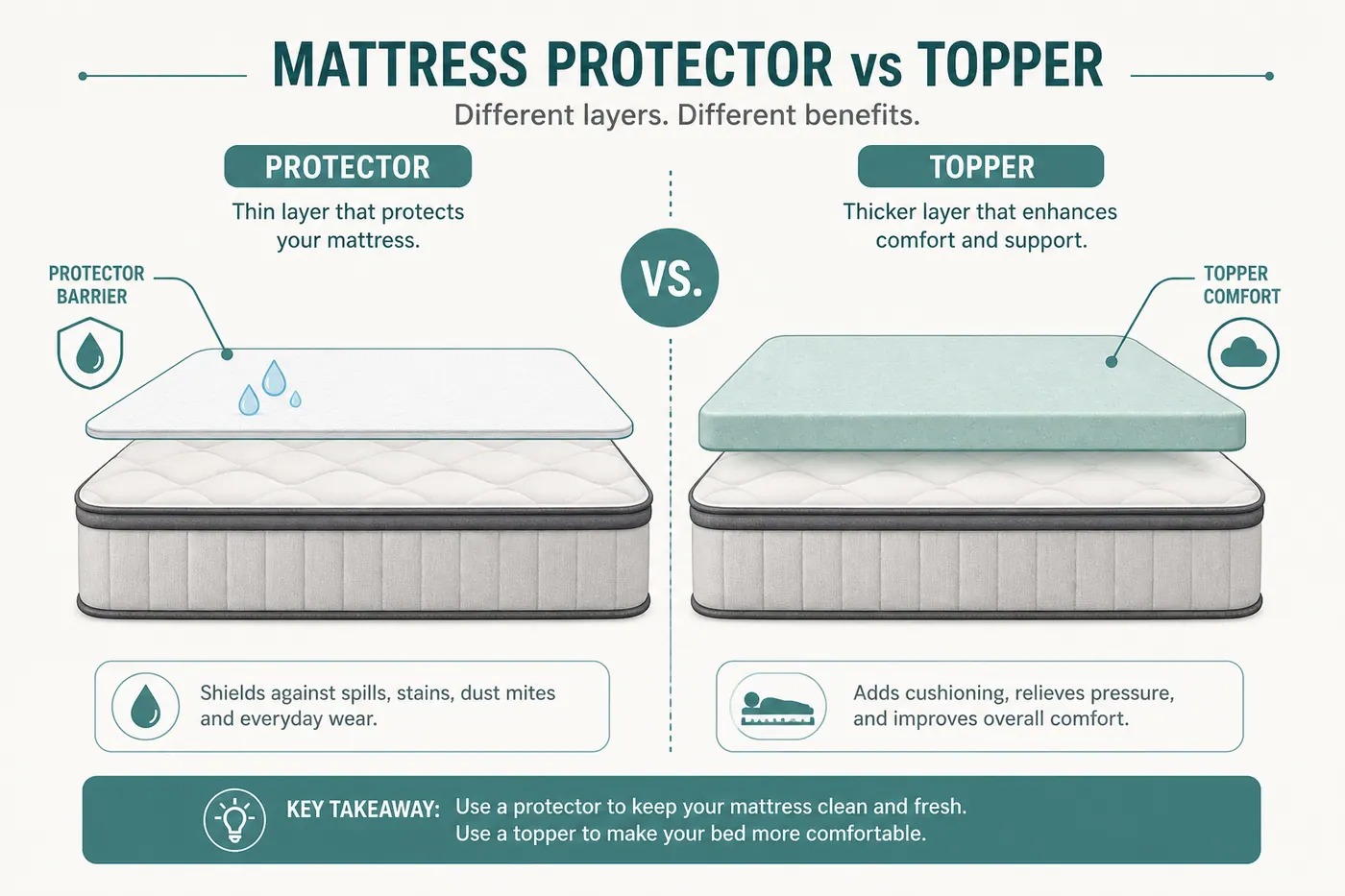
Protector roles
- Fluid and stain barrier (often important for warranty claims).
- Allergen and dust-mite barrier when zip-enclosed.
- Minimal change to the mattress’s engineered feel when correctly specified.
Topper roles
- Soften a firm surface for side sleepers.
- Add plushness without buying a new core.
- Temporary guest-room comfort tuning.
| Layer | Typical thickness | Primary job |
|---|---|---|
| Protector | Millimetres to ~1–2 cm quilted | Shield |
| Topper | Often 3–8+ cm | Change surface feel |
Depth and fitted sheets
Adding a topper increases total sleep-system height. Check mattress depth and deep-pocket sheet sizing.
Deeper textile guides
- Mattress toppers — density and gel
- Protectors and encasements — membranes
- Protector vs topper compare
Related BedGuide entries
Frequently asked questions
What is the difference between a protector and a topper?
Protectors are thin shields for spills and allergens. Toppers are thicker comfort pads that change surface softness. Use a protector under a topper if you want both hygiene and a feel change.
Do mattress protectors affect firmness?
Quality thin protectors should add negligible firmness. Thick quilted or padded protectors can slightly soften or mute the mattress surface.
Can a topper fix a worn-out mattress?
Toppers mask surface feel but cannot restore a collapsed spring unit or permanently compressed foam core. Deep body impressions usually mean the mattress itself needs replacement.