Bed Sheet Materials and Thread Count
Entity: bed sheet materials
In short
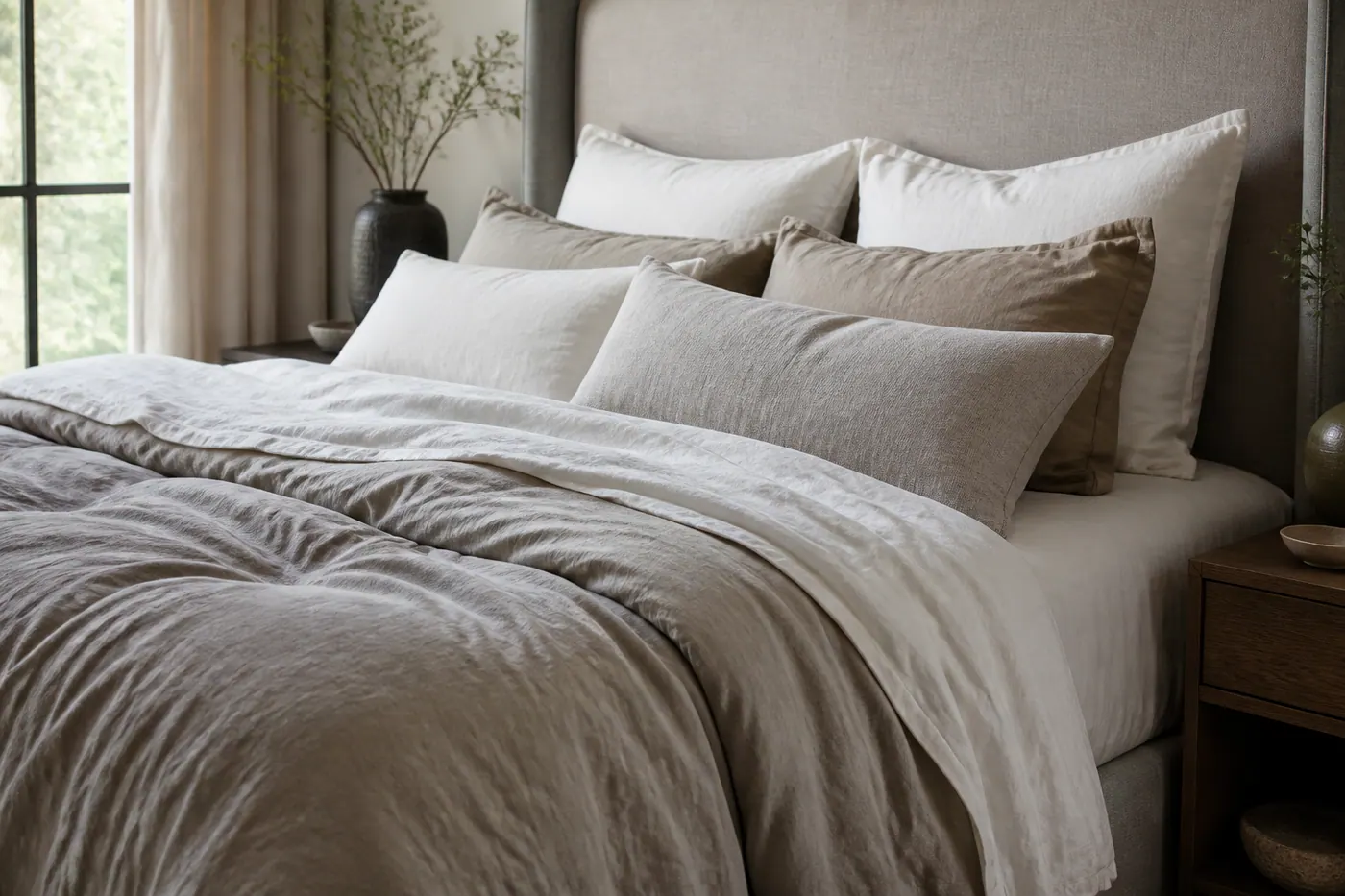
Sheet feel comes from fibre type and weave more than from thread count alone. Percale is a crisp plain weave. Sateen is smoother and shinier. Long-staple cotton uses longer fibres. Linen is strong and airy. Bamboo-viscose and silk handle moisture differently. Very high thread counts can use multi-ply yarns that inflate the number without improving quality.
How it works
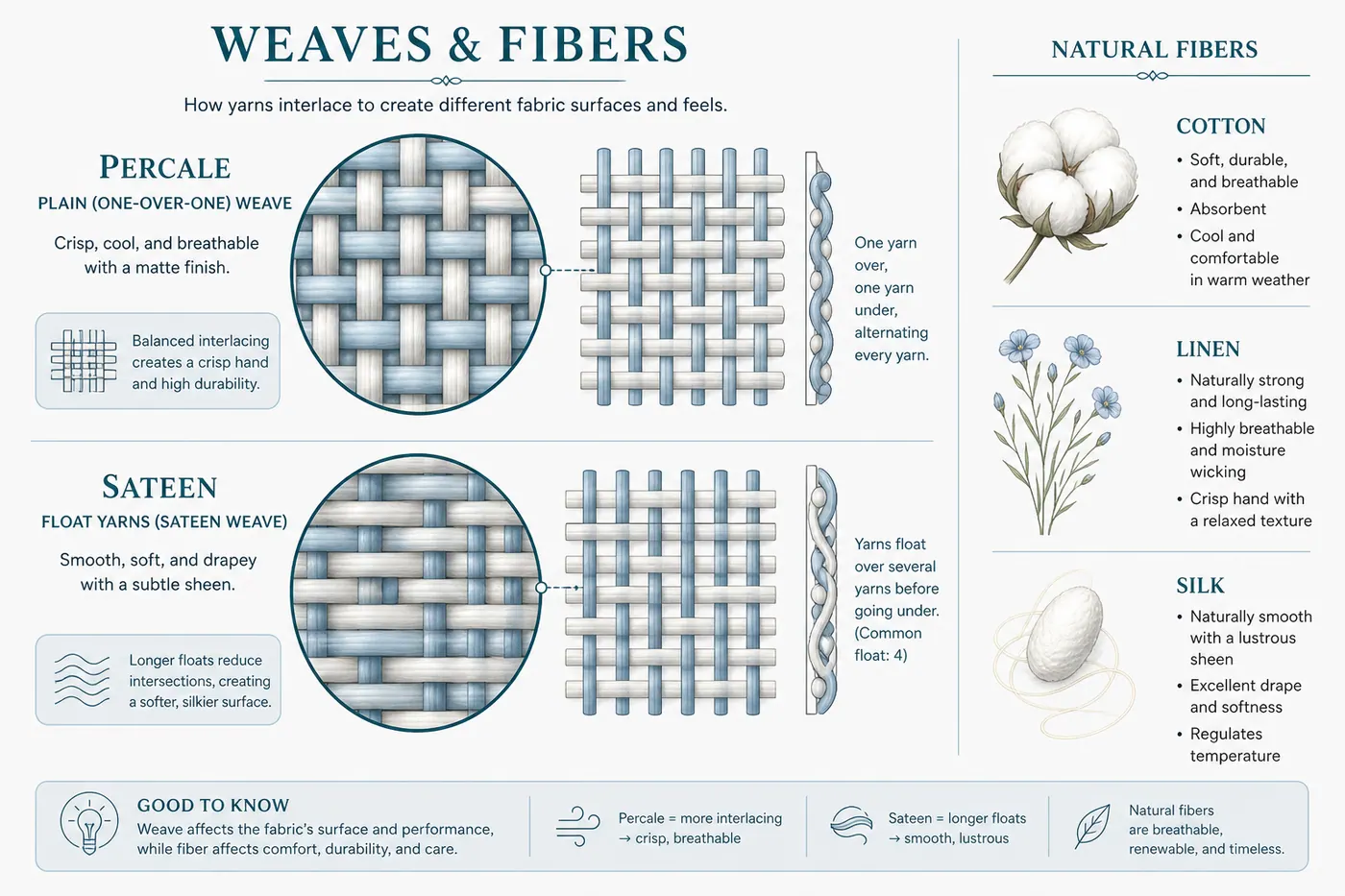
Fibre types used in UK bedding
| Fibre / fabric | Plain traits |
|---|---|
| Long-staple cotton (incl. Egyptian-style) | Longer fibres → smoother yarns when well spun |
| Standard cotton | Wide quality range; care and weave decide feel |
| Linen (flax) | Strong, airy, wrinkles easily; softens with washes |
| Bamboo viscose / lyocell | Smooth feel; quality depends on how it is made |
| Silk | Smooth, low friction; needs gentle care |
| Polyester blends | Durable and wrinkle-resistant; different moisture feel |
Percale vs sateen (same fibre, different weave)
- Percale — plain weave; crisp airy feel; common for cool sleepers.
- Sateen — floated yarns; smoother drape; can feel slightly warmer.
Reading thread count critically
- Prefer known fibre + weave over a headline number.
- Ask whether the count uses single-ply yarns.
- Match fitted-sheet depth to mattress + topper height.
Related BedGuide entries
Frequently asked questions
- Does higher thread count mean better sheets?
- Not always. Thread count can be inflated by counting multi-ply yarns as separate threads. Fibre quality and weave usually matter more than chasing the highest printed number.
- What is the difference between percale and sateen?
- Percale is a plain one-over-one-under weave that feels crisp and matte. Sateen uses float yarns for a smoother, shinier surface that can feel warmer and silkier against the skin.
- Are bamboo sheets cooler than cotton?
- Bamboo-derived fabrics often feel smooth and handle moisture well. Cooling depends on weave, weight and room conditions — not the plant name alone.