Bed Upholstery Fabrics and Colours (UK)
Entity: bed upholstery fabrics and colours
In short
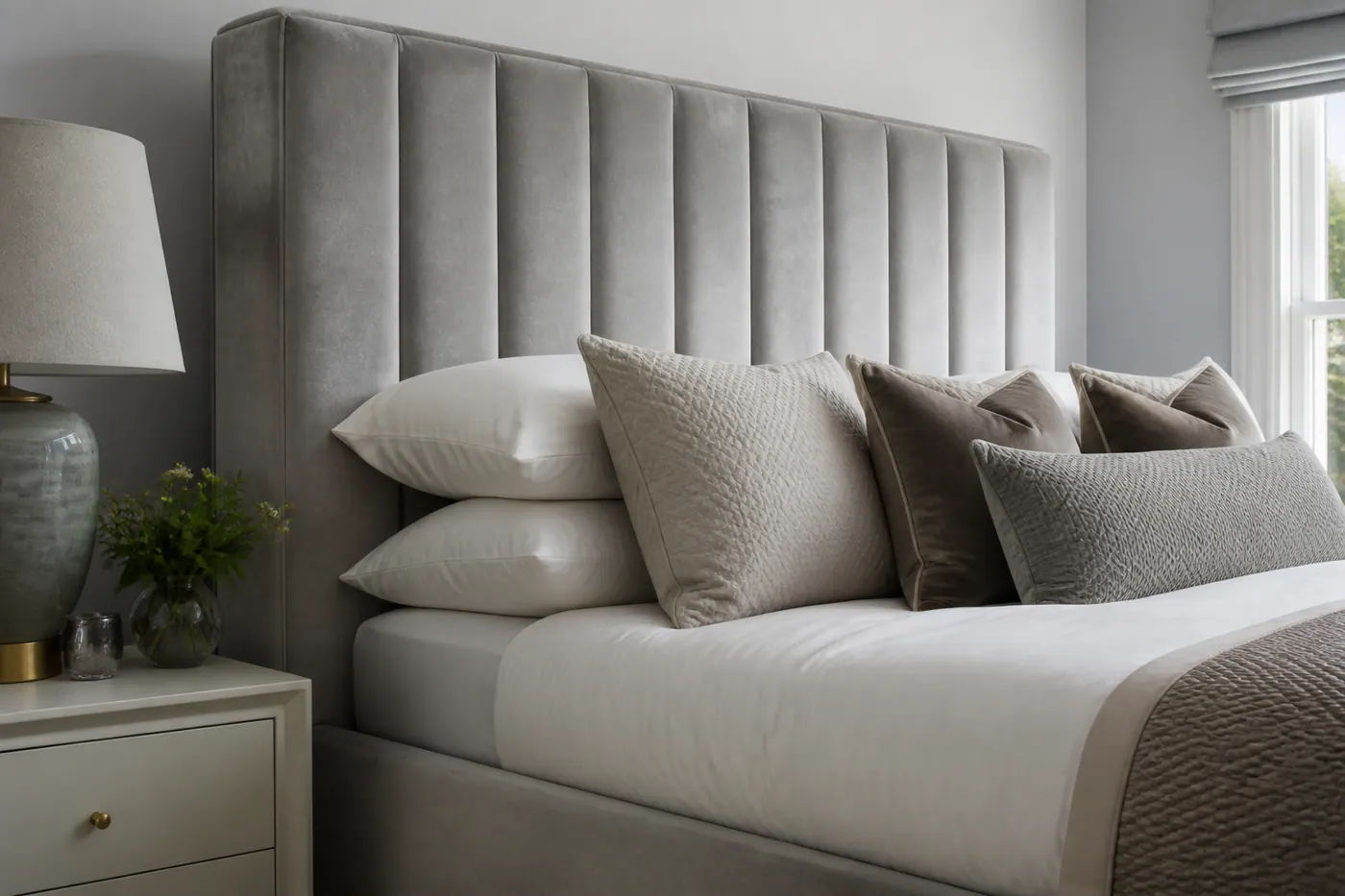
UK divan beds, ottoman beds and headboards come in fabric types such as plush velvet, crushed velvet, chenille, linen-look and faux leather. Shops then offer colours like cream, charcoal, mink and royal blue. Fabric changes look and care. Colour does not change how the mattress supports you. Check the fire label on finished beds.
How it works
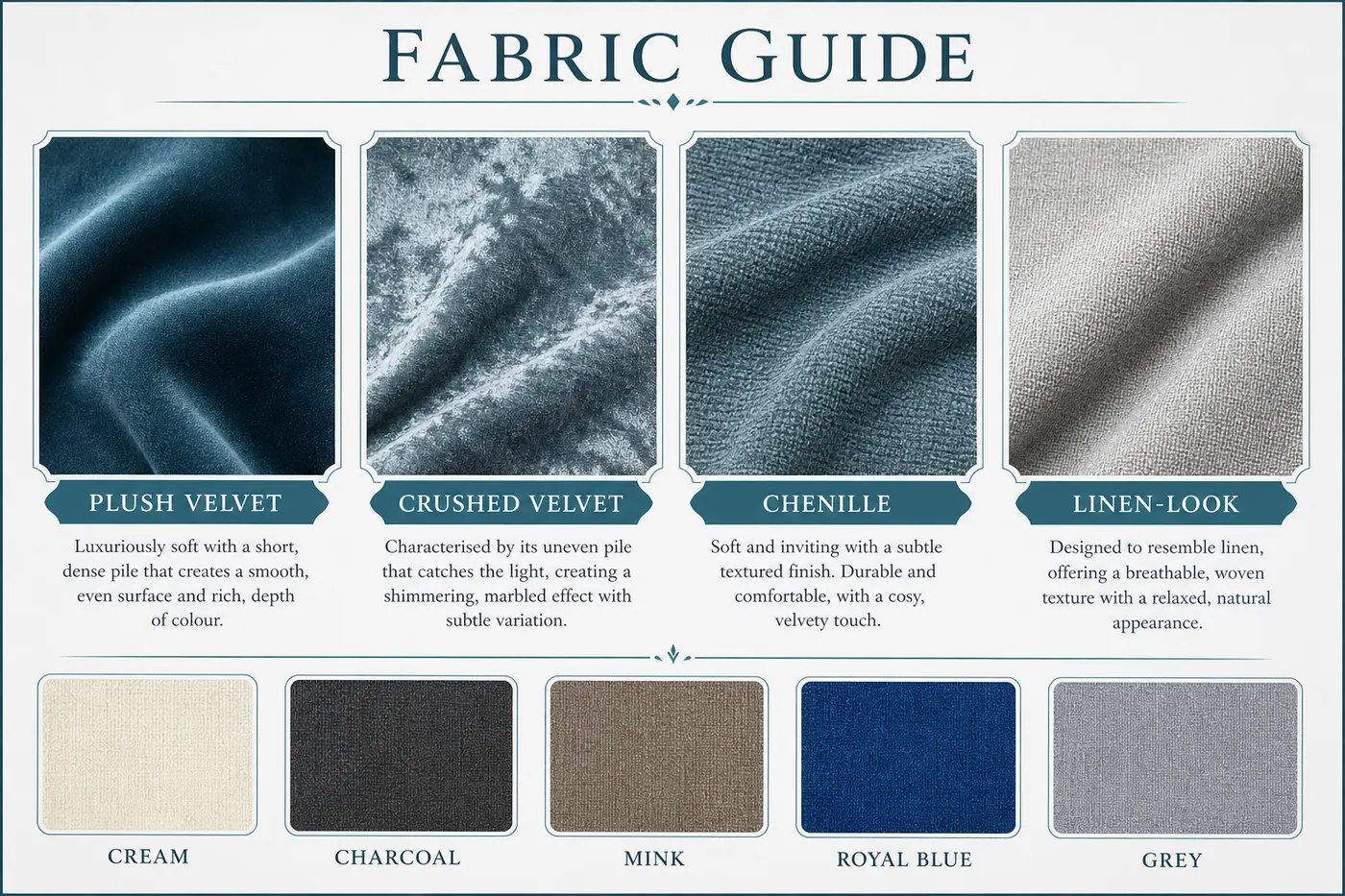
Why shops list so many colours
In short: most UK divans, ottomans and headboards are one bed shape sold in many fabric and colour mixes.
Model names are often just the headboard shape. They are not a new bed type.
If a long colour list confuses you, sort in two steps:
- Pick the fabric type (velvet, chenille, and so on).
- Then pick the colour (cream, charcoal, mink, and so on).
Fabric families (what they are)
| Fabric family | What you are looking at | Typical traits |
|---|---|---|
| Plush velvet | Even cut pile | Soft feel, richer light catch, shows pile direction if stroked |
| Crushed velvet | Pile pressed for mottled sheen | More visual texture; sit marks can show as pile crush |
| Chenille | Soft fuzzy yarn (“caterpillar” look) | Matte-to-soft sheen; often warmer visual feel than velvet |
| Linen-look / Naples-style | Flatter woven face (house names vary) | Less pile; calmer, less shiny bedroom look |
| Faux leather | Coated or polyurethane face | Wipeable surface; different fold and cold-feel behaviour |
These are education classes. Shops invent house names for the same families. Always read the fibre composition and cleaning code on the label.
Colourways commonly offered on UK upholstered beds
Colour names are marketing labels, not paint standards. The same word (for example “mink”) can shift between brands. Use this list to recognise options you will see on divan and headboard configurators. Order physical swatches when colour accuracy matters.
Neutrals (most searched)
| Colour name (retail) | Typical reading |
|---|---|
| White | Bright pale; shows marks readily |
| Cream | Warm off-white |
| Beige | Light warm neutral |
| Putty | Soft grey-beige |
| Silver | Cool light grey with slight metallic read on velvet |
| Grey | Mid cool or warm grey (brand-dependent) |
| Slate grey | Darker grey with cool bias |
| Charcoal | Very dark grey, near black |
| Black | True dark; hides some marks, shows dust/lint |
| Mink | Warm grey-brown / taupe |
| Coffee | Mid-deep brown |
Accent colours (often on velvet or chenille)
| Colour name (retail) | Typical reading |
|---|---|
| Baby pink / Pink | Soft pastel pink |
| Ice blue | Pale cool blue |
| Royal blue | Saturated mid-deep blue |
| Lime | Bright yellow-green (often chenille) |
| Turmeric | Warm golden yellow / mustard |
How retailers usually combine them
A typical UK configurator pairs one fabric family with a subset of the colours above — for example:
- Plush velvet → cream, silver, charcoal, grey, black, beige, putty, coffee, baby pink, ice blue, royal blue, turmeric
- Linen-look → white, cream, beige, silver, grey, mink, slate grey, black, pink
- Crushed velvet → silver, cream, black, mink
- Chenille → cream, black, grey, lime, mink
Not every colour exists in every fabric. That is a dyeing and stock choice, not a performance ranking.
Choosing fabric (education, not fashion advice)
- Light vs mark visibility — pale neutrals show transfer; dark piles show lint and pet hair.
- Pile crush — velvet and crushed velvet can show sit marks on bases and headboards. That is pile behaviour, not structural failure.
- Care — vacuum with soft brushes; spot-clean only per the care label; avoid soaking foam cores.
- Samples — online colour chips are approximate. Swatches under your room lighting are the best check for “what will this look like?”
- Fire labelling — domestic upholstered furniture in the UK must meet flammability rules. Look for compliant labelling on finished items.
Headboard style is not fabric
Deep-buttoned Chesterfield faces, plain panels, winged sides and tall floor-standing boards are shapes. The same shape can be covered in any fabric family above. See headboard types.
Related BedGuide entries
Frequently asked questions
- What fabric types are common on UK divan beds?
- The most common shop families are plush velvet, crushed velvet, chenille, linen-look flat weaves (sometimes sold under house names such as Naples) and faux leather. Each is a different yarn and pile structure, not just a colour name on the label.
- Does bed fabric colour affect comfort or support?
- No. Colour is cosmetic. Support comes from the mattress and base structure. Fabric can change surface friction, temperature feel slightly and how easily marks show, but it does not change spring tension or foam firmness.
- What is the difference between plush velvet and crushed velvet?
- Plush velvet has an even pile with a smoother light reflection. Crushed velvet has varied pile direction, creating a mottled sheen. Both are pile fabrics; crushed is a finishing look, not a different bed mechanism.