Type vs type · Evergreen URLs
Compare bed & mattress types
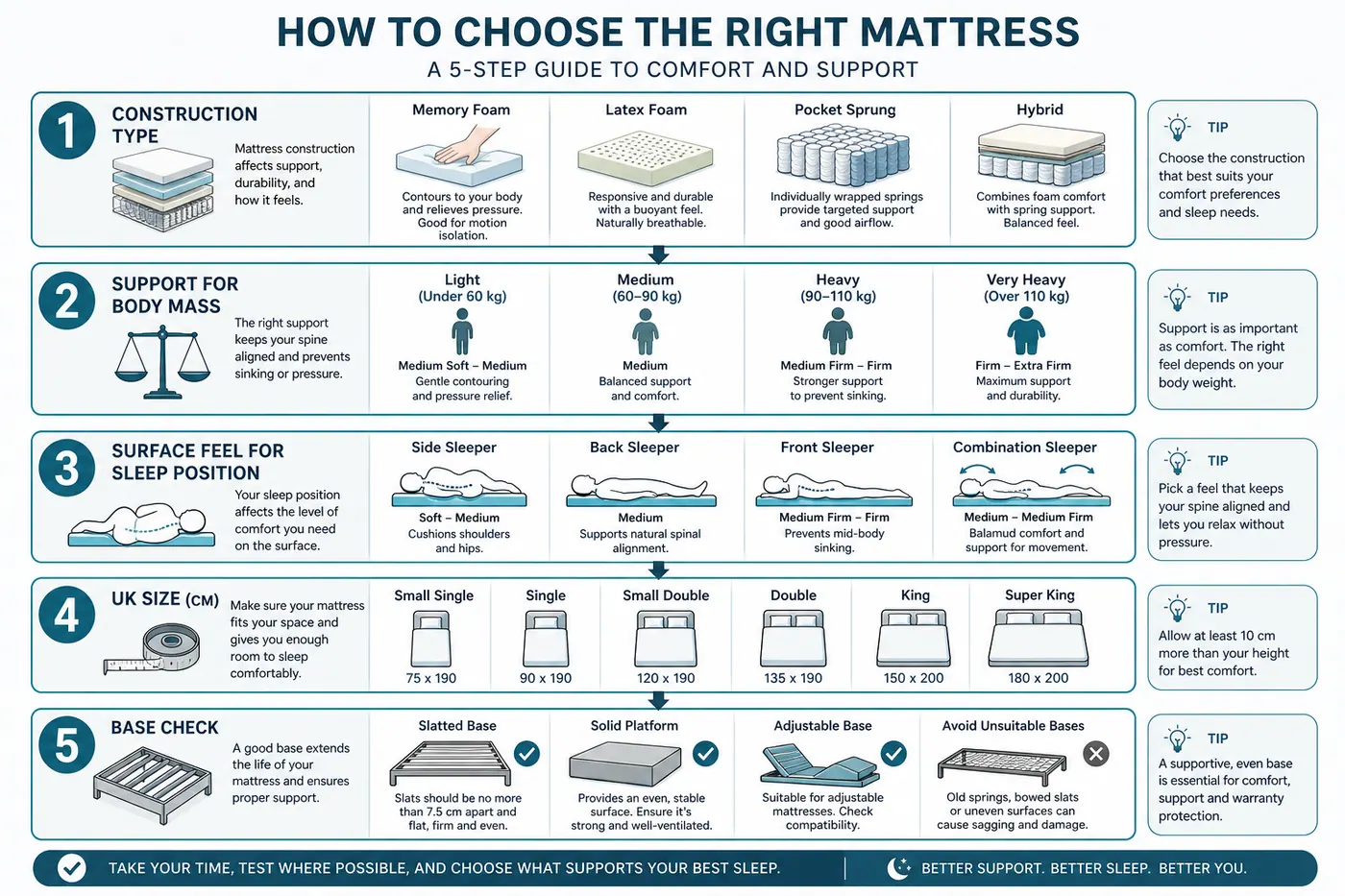
BedGuide Compare explains the difference between commonly confused bed and mattress types — 25 evergreen head-to-head guides covering construction, dimensions, storage mechanisms and care. Each page uses type names in the URL (for example pocket-sprung-vs-memory-foam) and stays educational: zero affiliate links, zero product rankings.
Information only — helps you understand constructions and use cases. BedGuide does not sell products or rank brands.
Mattress types
-
Comparison
Bed-in-a-box (rolled) vs Traditional (flat) mattress
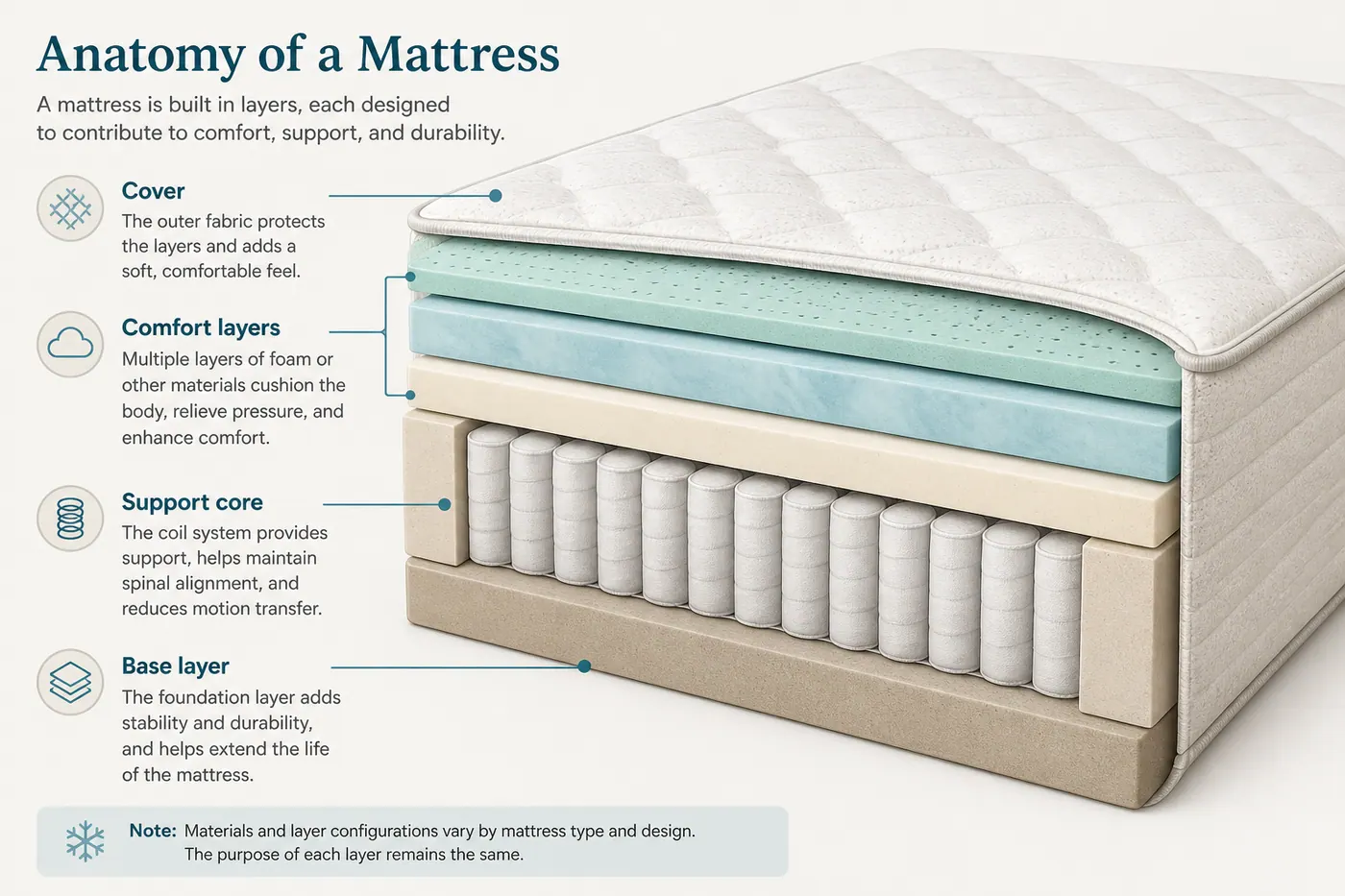
A bed-in-a-box mattress is vacuum-compressed and shipped in a carton, then expands at home. A traditional mattress usually arrives flat at full loft. Compression is a delivery method — both still need UK size, a suitable base, support matched to body weight and clear trial or warranty rules.
/compare/bed-in-a-box-vs-traditional-mattress
-
Comparison
Hybrid vs Pocket sprung
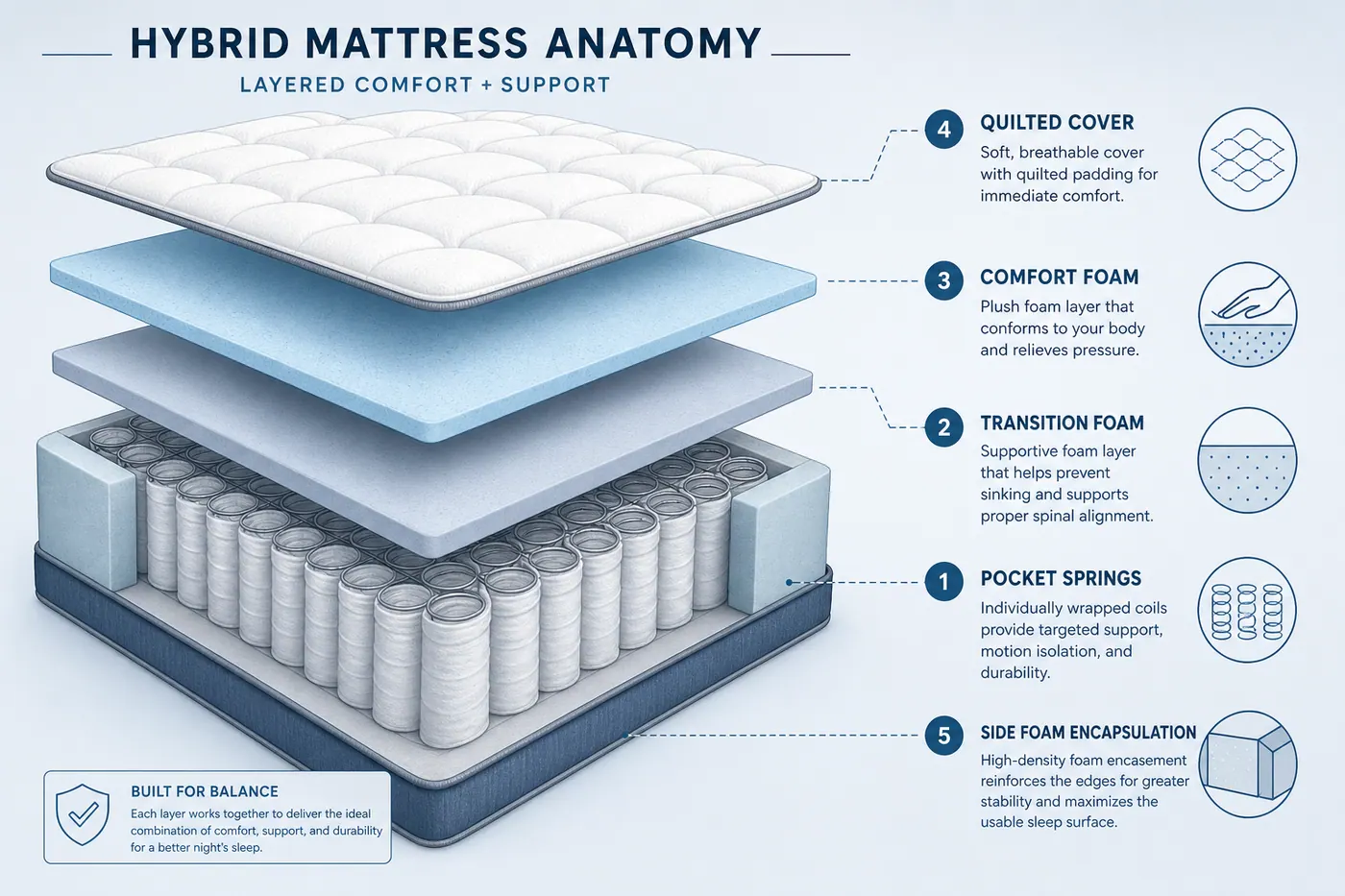
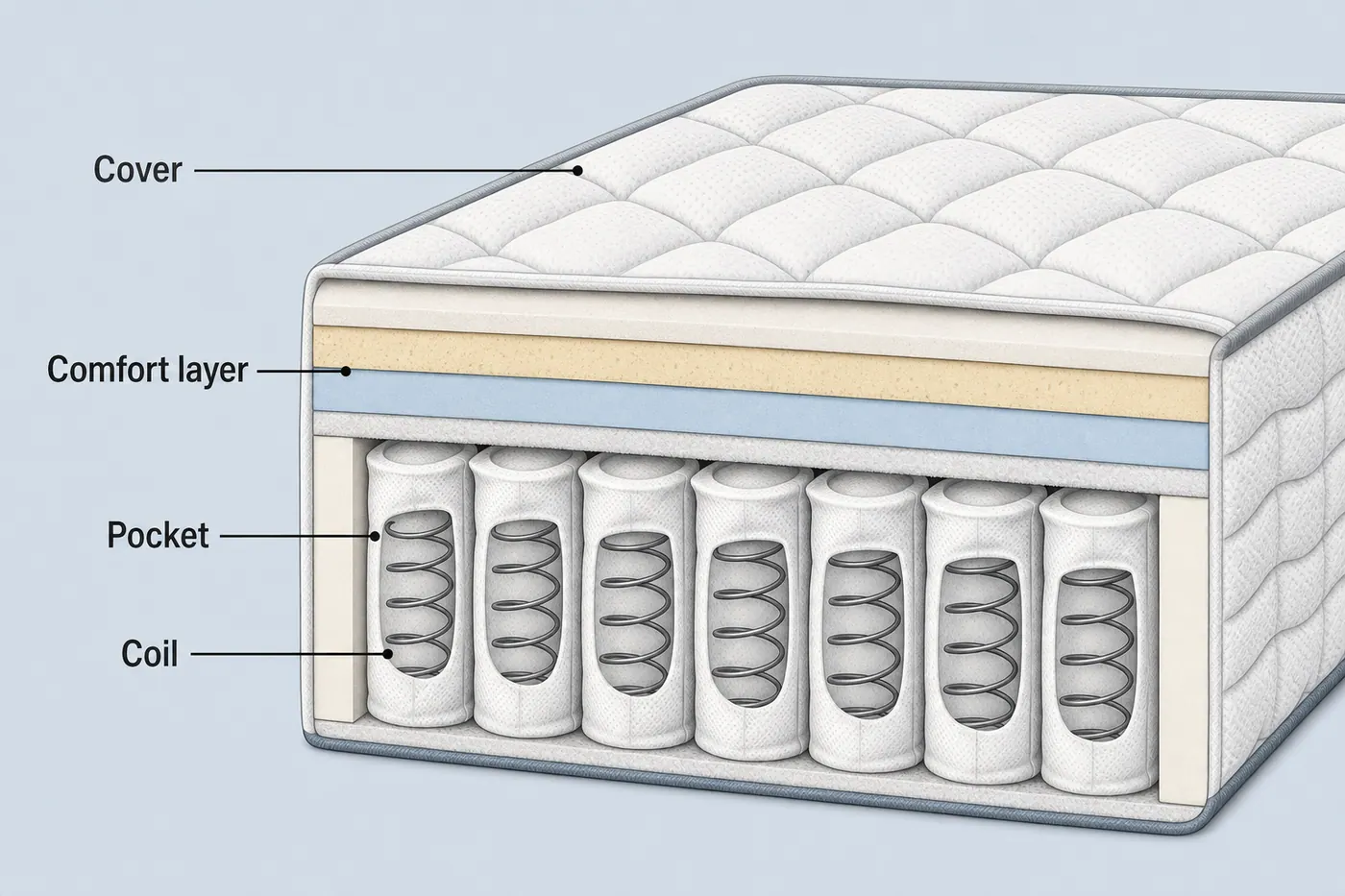
A pocket sprung mattress is defined by its in fabric pockets coil core; a hybrid adds substantial foam or latex comfort layers above that (or a similar) spring core. Every hybrid with pockets is pocket-based, but not every pocket mattress is a hybrid — the label hinges on how thick and intentional the comfort stack is.
/compare/hybrid-vs-pocket-sprung
-
Comparison
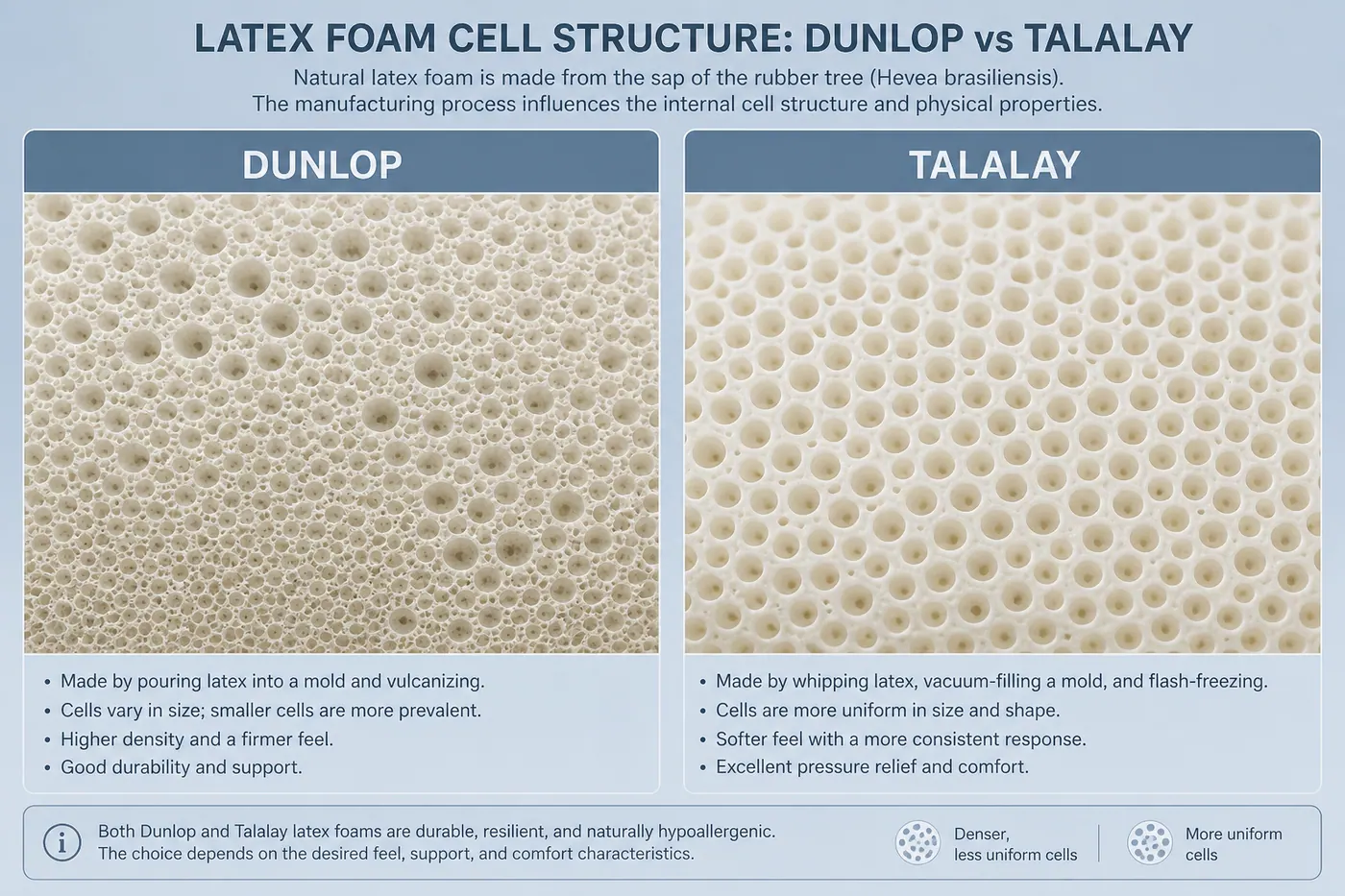
Latex vs Pocket sprung
Latex mattresses use natural or synthetic latex foam for buoyant contouring. Pocket sprung mattresses use individual coils in fabric pockets for zoned spring support. Latex often feels springy without metal coils; pocket units tune tension with wire and coil design. Compare feel and care needs, not slogans.
/compare/latex-vs-pocket-sprung
-
Comparison
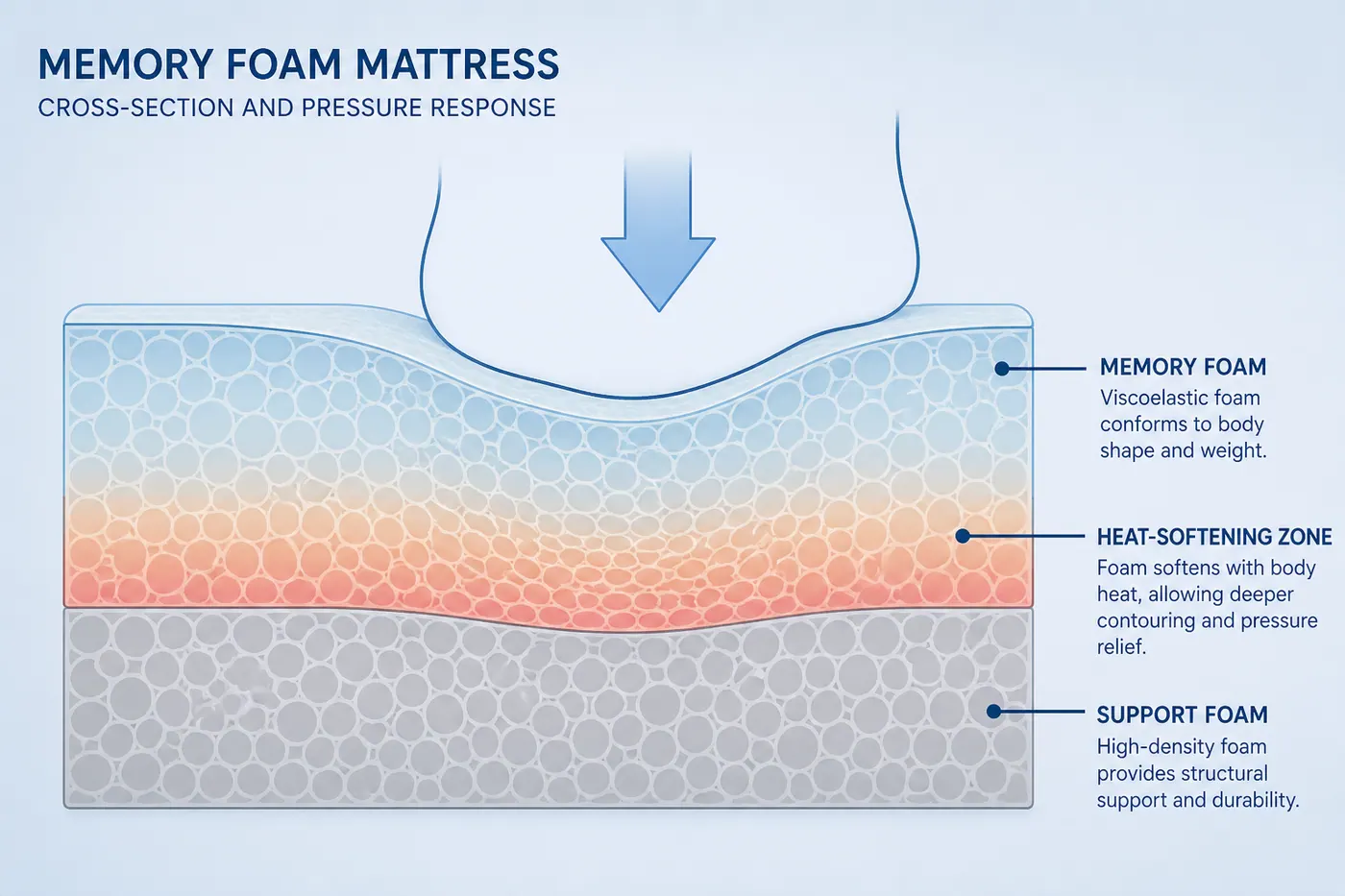
Memory foam vs Hybrid
A memory foam mattress supports mainly with foam layers that contour under heat and pressure. A hybrid combines coils with foam or fibre comfort layers for more bounce and airflow paths. Choose by how you want the bed to move and vent — not by carton marketing. Both still need a suitable base and correct UK size.
/compare/memory-foam-vs-hybrid
-
Comparison
Memory foam vs Latex
Memory foam is memory foam with slow recovery and heat-sensitive softness. Latex foam (Dunlop or Talalay) typically rebounds faster and feels more buoyant. Memory foam contours deeply; latex often sleeps cooler relative to classic memory foam formulations and commonly lasts longer in durability bands.
/compare/memory-foam-vs-latex
-
Comparison
Pocket sprung vs Memory foam
A pocket sprung mattress supports with individual in fabric pockets steel coils; a memory foam mattress contours with memory foam that softens with heat. Pocket units usually feel bounceier with more airflow paths; memory foam contours more slowly and can sleep warmer unless open-cell. Choose by support mechanism, not brand slogans.
/compare/pocket-sprung-vs-memory-foam
-
Comparison
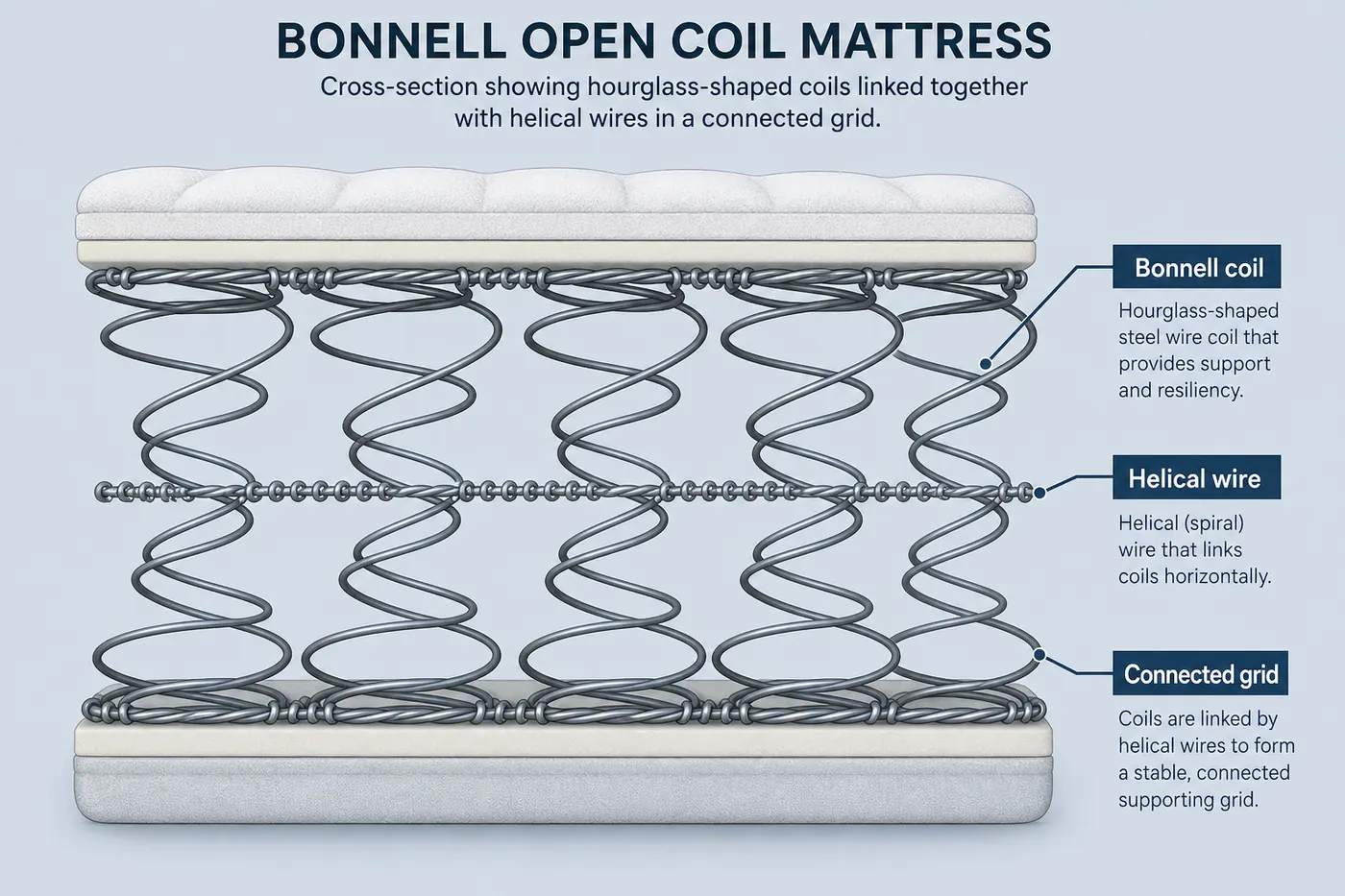
Pocket sprung vs Open coil (Bonnell)
Pocket sprung mattresses encase each coil in fabric so springs act more independently. Open-coil Bonnell units lace hourglass springs into one wire grid, so load shares across the lattice. Expect lower movement felt from a partner and finer moulding to shape from pockets; open coil remains common where cost-efficient interconnected support is the design goal.
/compare/pocket-sprung-vs-open-coil
-
Comparison
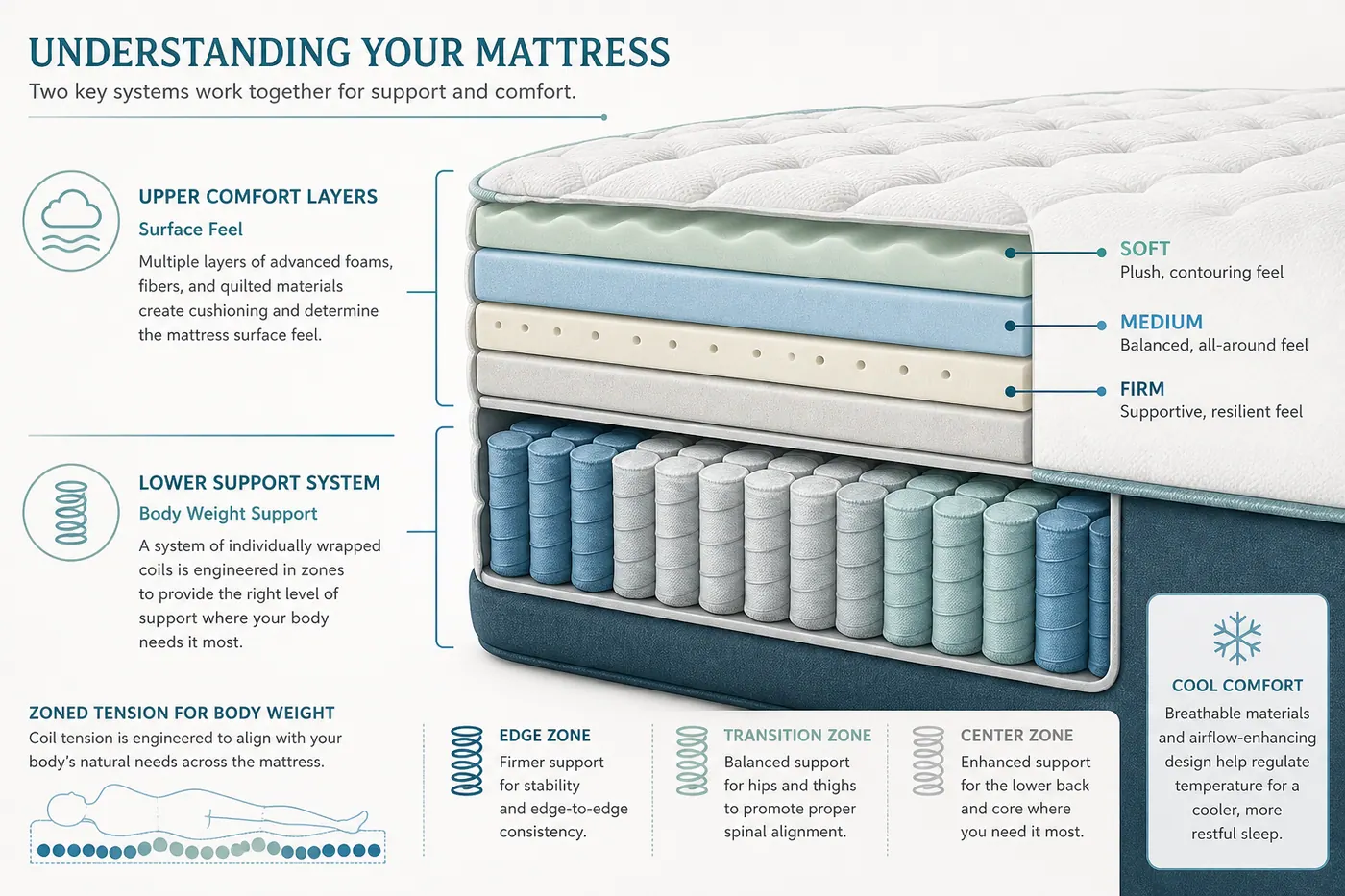
Spring tension vs Surface comfort feel
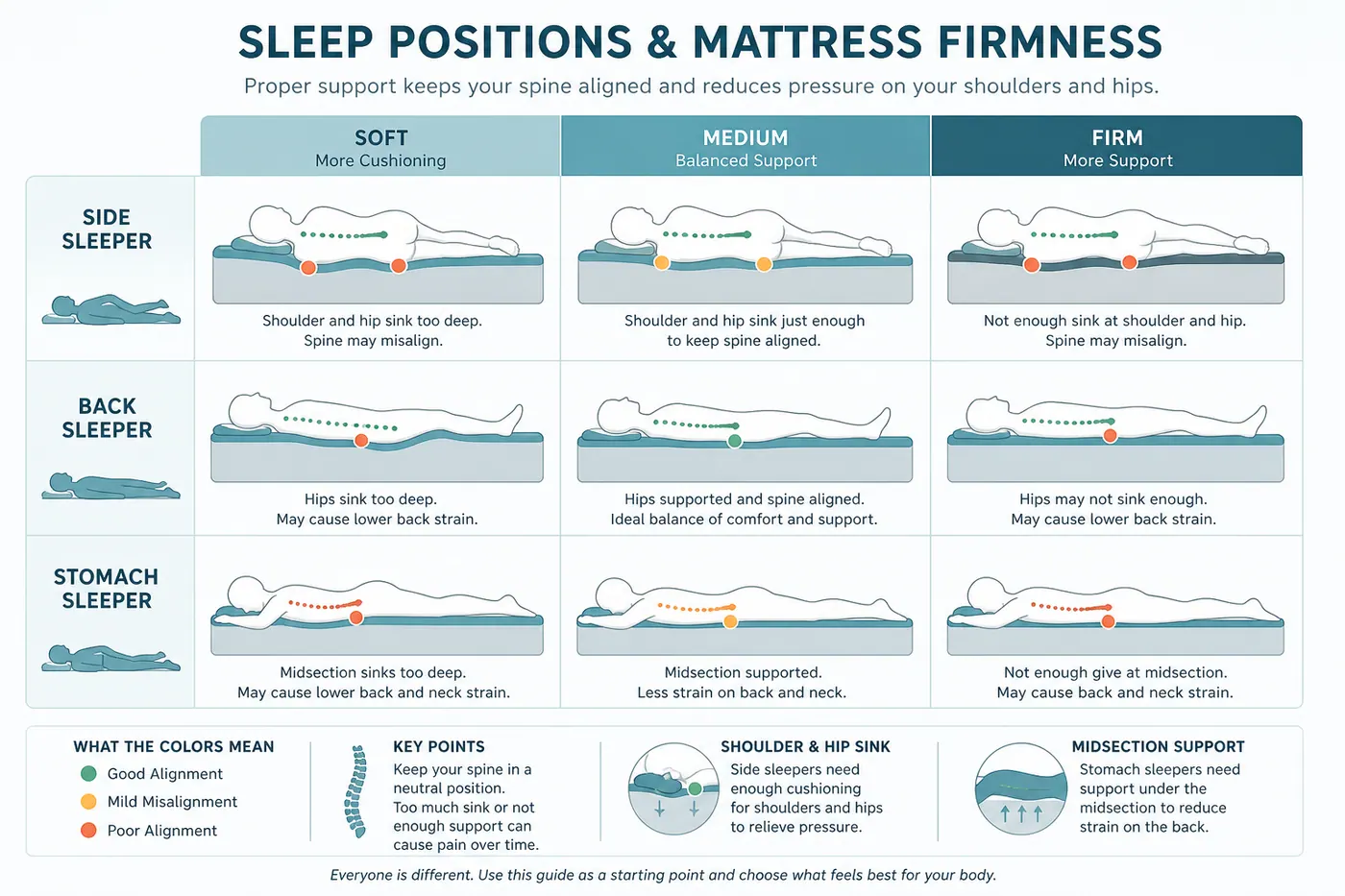
Spring tension is how hard the support unit resists compression and should suit body mass. Surface firmness is the softness of fillings and foams above the springs. Soft/medium/firm retail labels often blur these two specs. A mattress can have firm springs with a soft quilt — or the reverse.
/compare/spring-tension-vs-surface-firmness
-
Comparison
Talalay latex vs Dunlop latex
Dunlop and Talalay are latex manufacturing processes, not botanical labels. Dunlop is poured and heat-set into typically denser foam; Talalay is vacuum-expanded and frozen before vulcanising for a more uniform cell structure. Either process can use natural, synthetic or blended latex raw material.
/compare/talalay-latex-vs-dunlop-latex
Bed bases & frames
-
Comparison
Box spring vs Solid foundation
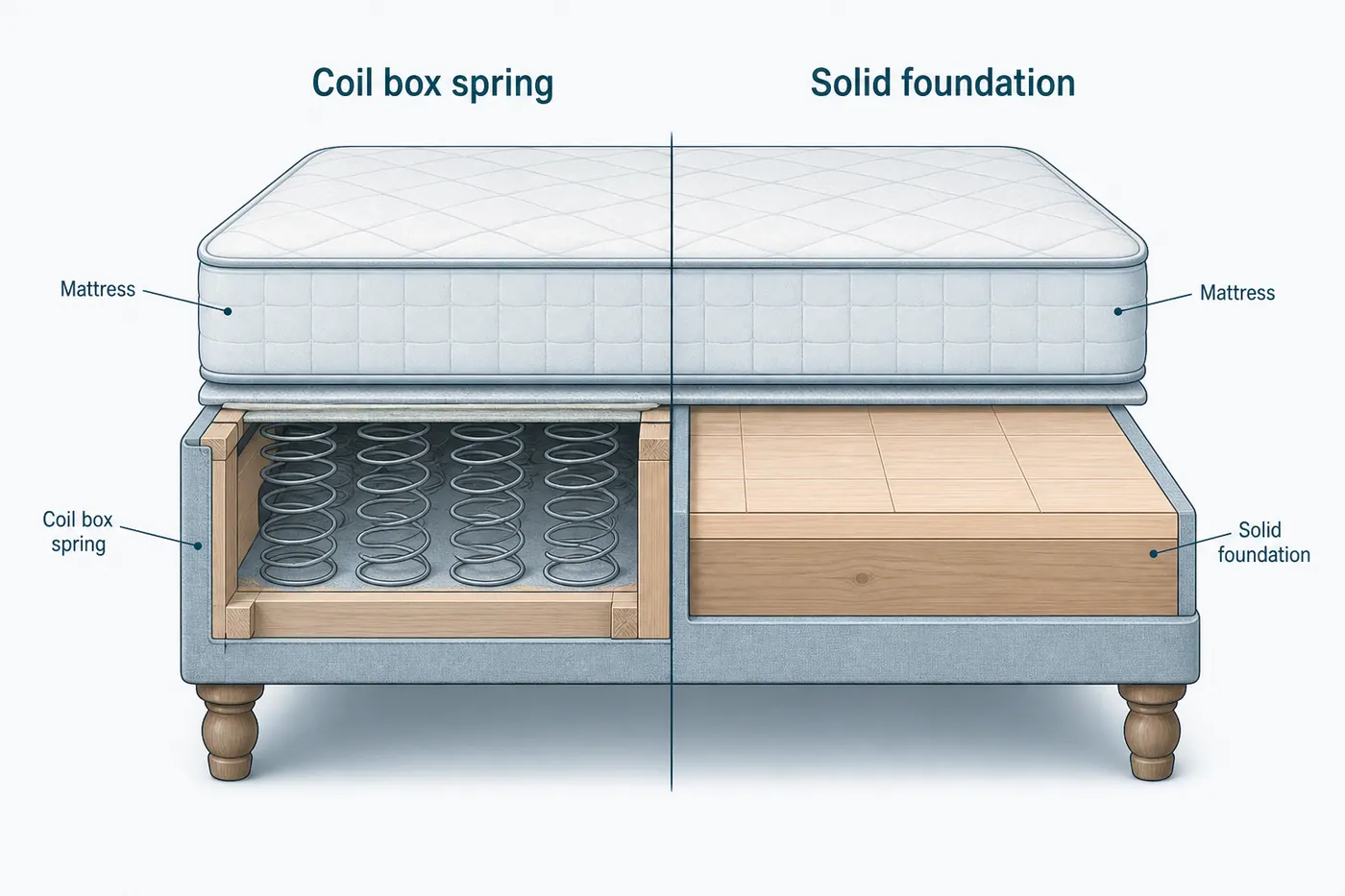
A true box spring contains coils in a timber frame and adds bounce under the mattress. A solid foundation is a rigid deck without coils. Many modern foam and hybrid mattresses need a firm foundation rather than a flexing traditional box spring — always follow the mattress warranty base rules.
/compare/box-spring-vs-foundation
-
Comparison
Bunk bed vs High sleeper
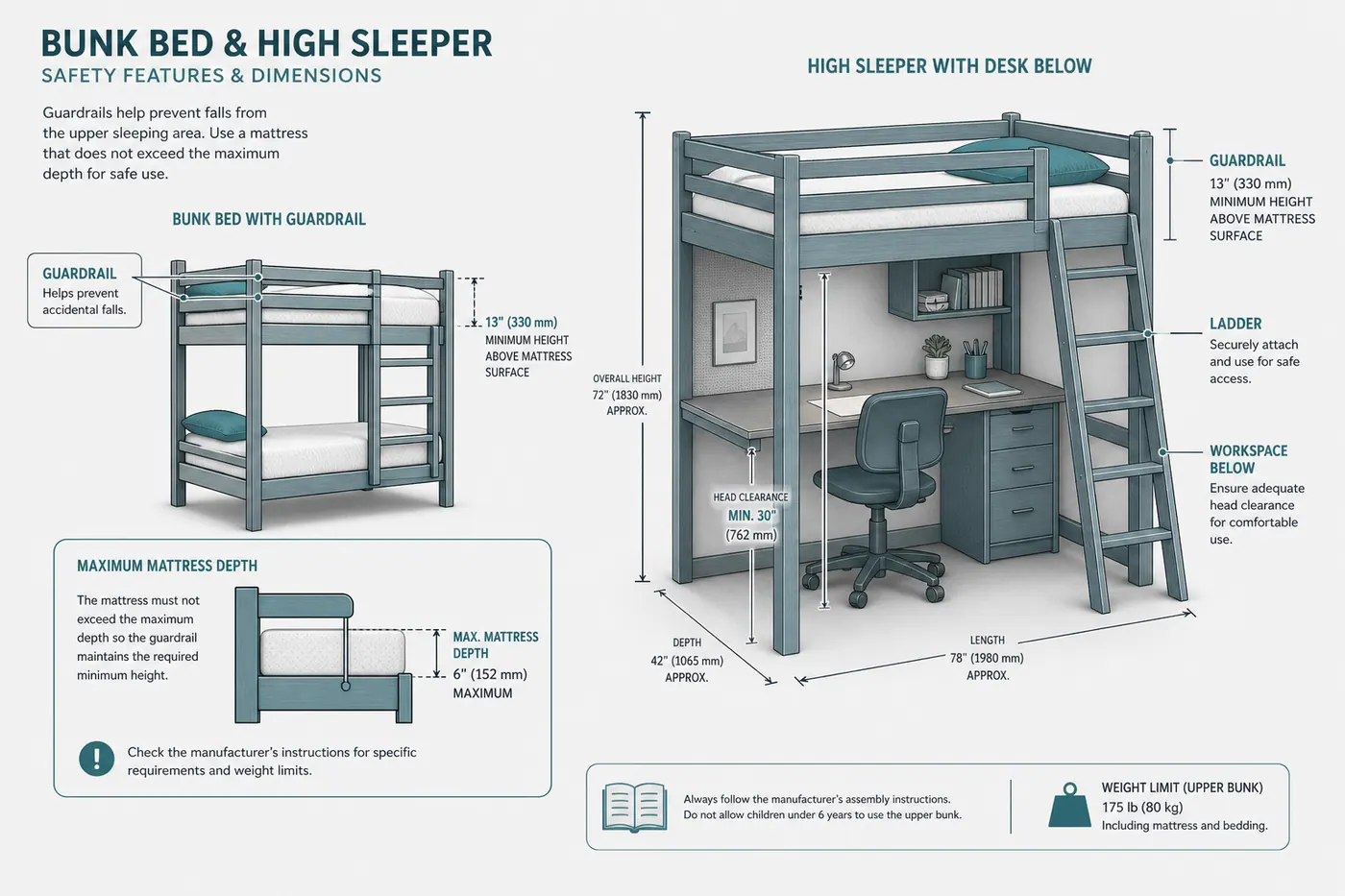
A bunk bed stacks two sleep surfaces. A high sleeper lifts one mattress to free floor space for a desk, sofa or storage underneath. Both need guardrails, ladder clearance and strict age/weight rules. Choose by whether you need two beds or one bed plus under-space.
/compare/bunk-vs-high-sleeper
-
Comparison
Divan bed vs Ottoman bed
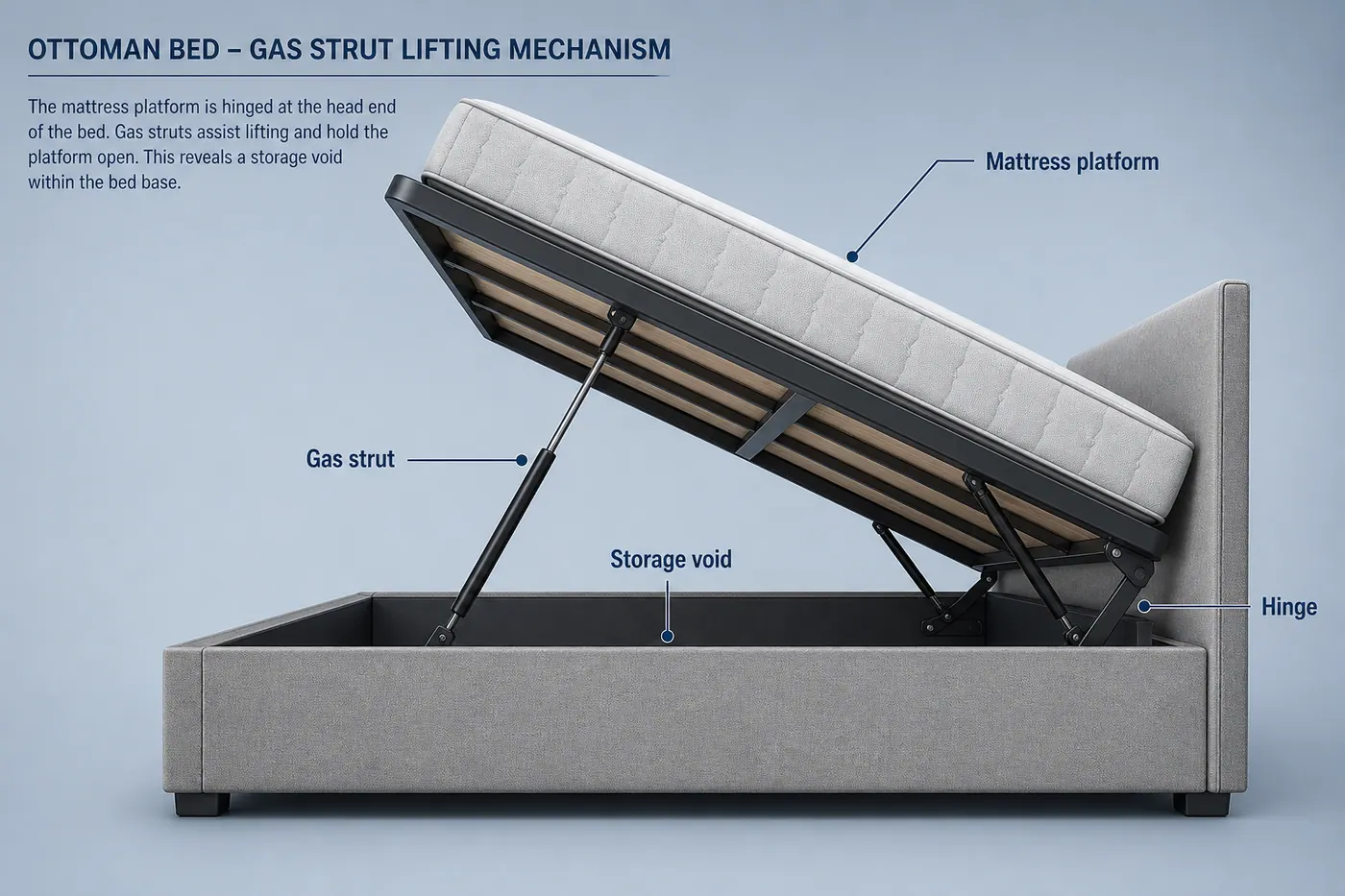
A divan is a box base that supports a mattress, often with drawers; an ottoman uses a hinged platform lifted by gas struts to expose a large storage void. Divans trade storage volume for simpler access; ottomans maximise void space but need strut–mattress weight matching and opening clearance.
/compare/divan-vs-ottoman
-
Comparison
Platform-top divan vs Sprung-edge divan
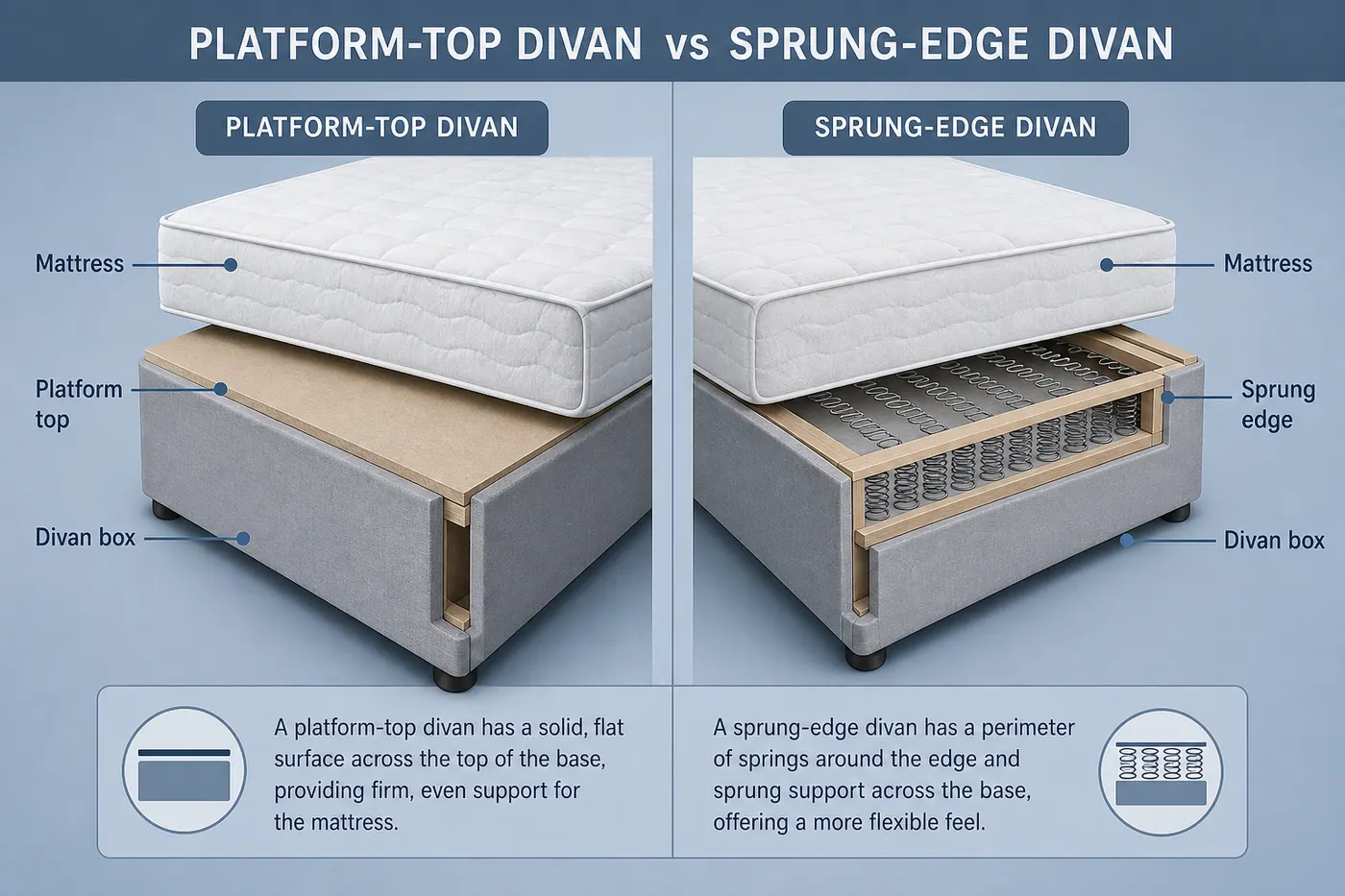
Platform-top divans present a firm, non-sprung upper surface so almost all cushioning comes from the mattress. Sprung-edge divans embed springs in the base top or perimeter, adding give especially when sitting on the side. The mattress still dominates firmness; the base is a secondary influence.
/compare/platform-top-divan-vs-sprung-edge-divan
-
Comparison
Plush velvet vs Crushed velvet
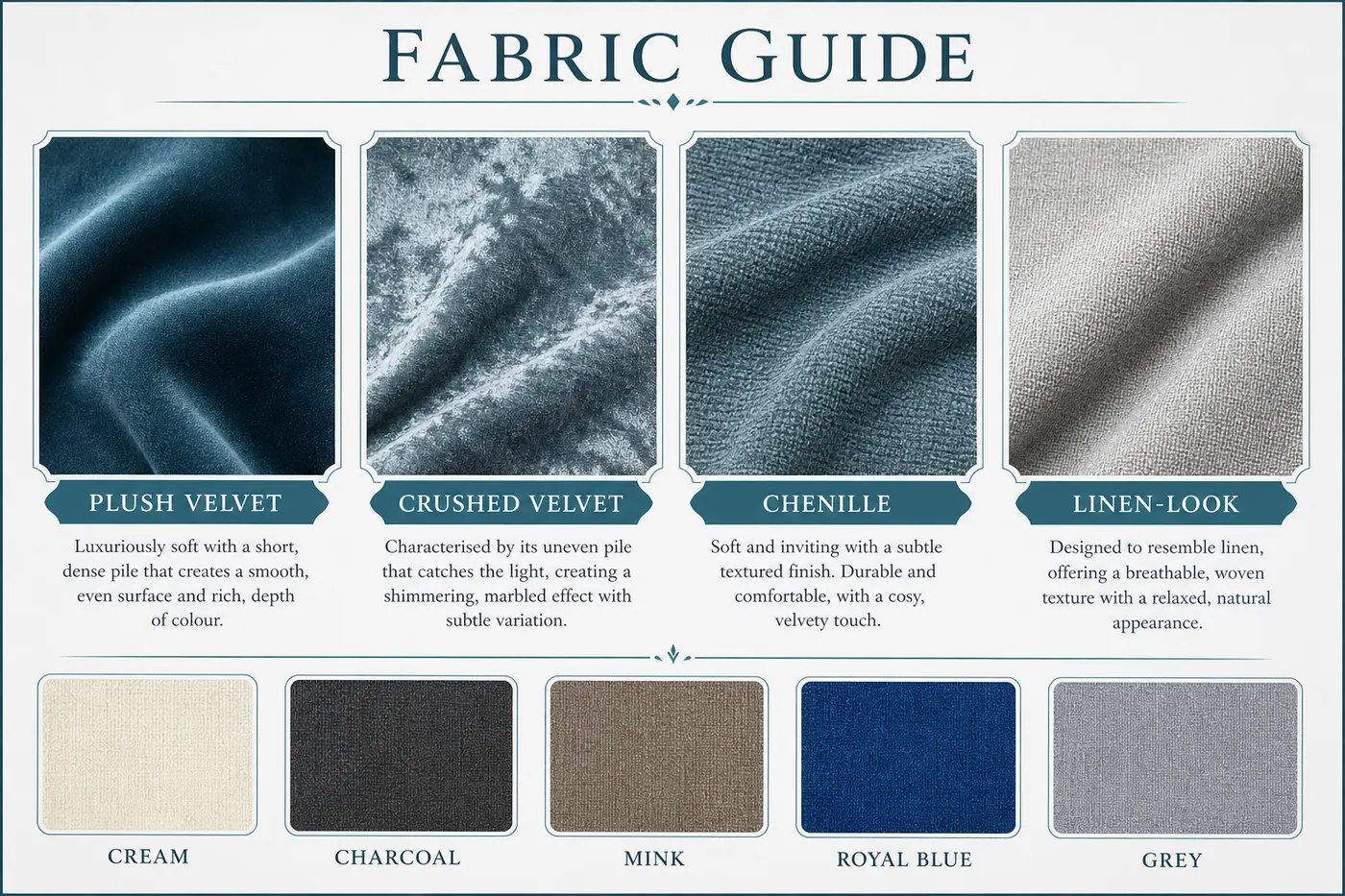
Plush velvet has a more even pile and smoother light catch. Crushed velvet is finished for mottled sheen and more visual texture. Both are cover fabrics for upholstered bases and headboards — neither changes mattress support or drawer layout.
/compare/plush-velvet-vs-crushed-velvet
-
Comparison
Side-lift ottoman vs End-lift ottoman
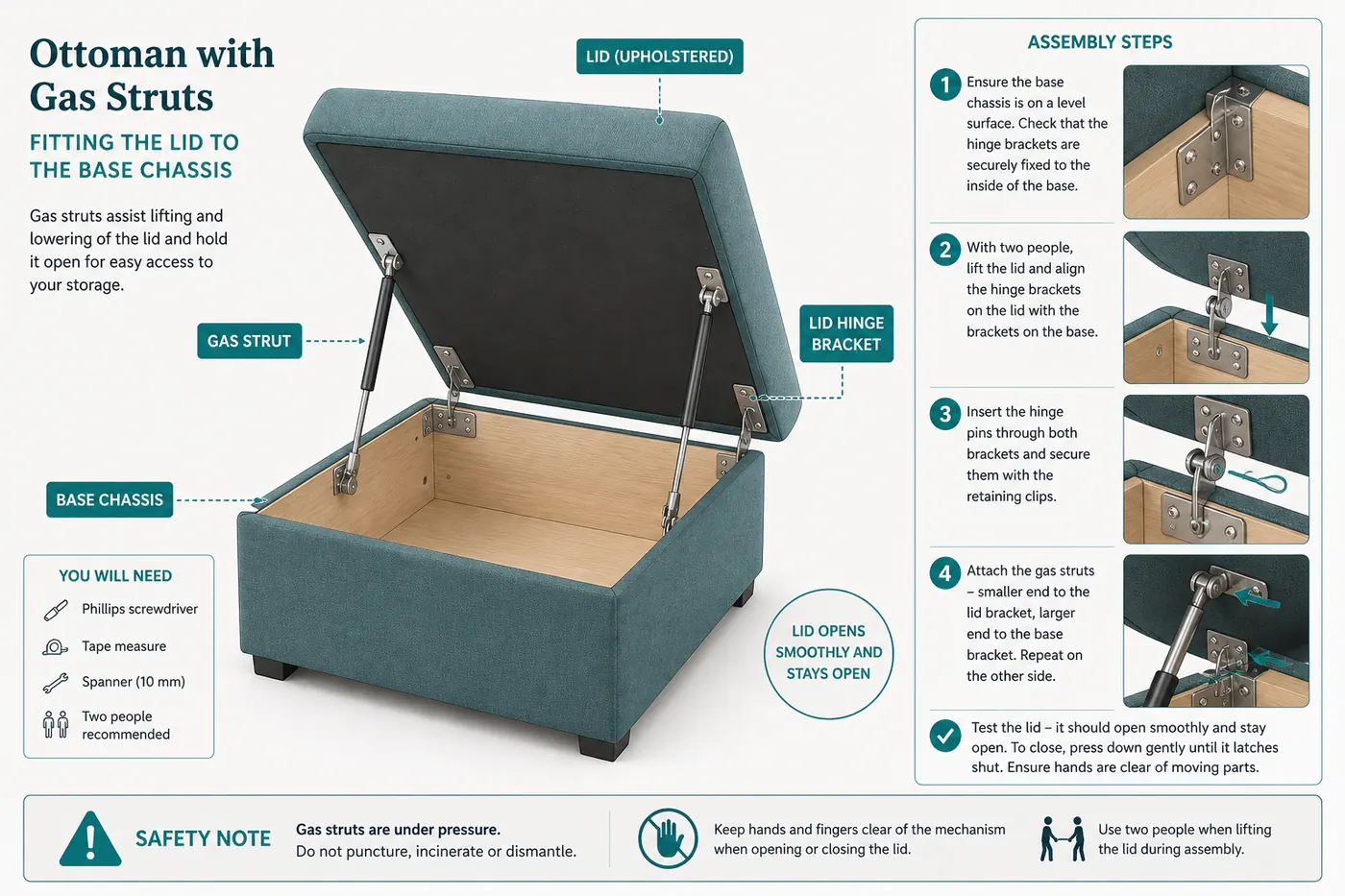
Side-lift ottomans hinge along a long edge and need flank clearance. End-lift ottomans hinge at the head and need clear space at the foot. Both expose a storage void with gas struts; choose by room layout and access, then match strut rating to mattress mass.
/compare/side-lift-vs-end-lift-ottoman
-
Comparison
Sleigh bed vs Divan bed
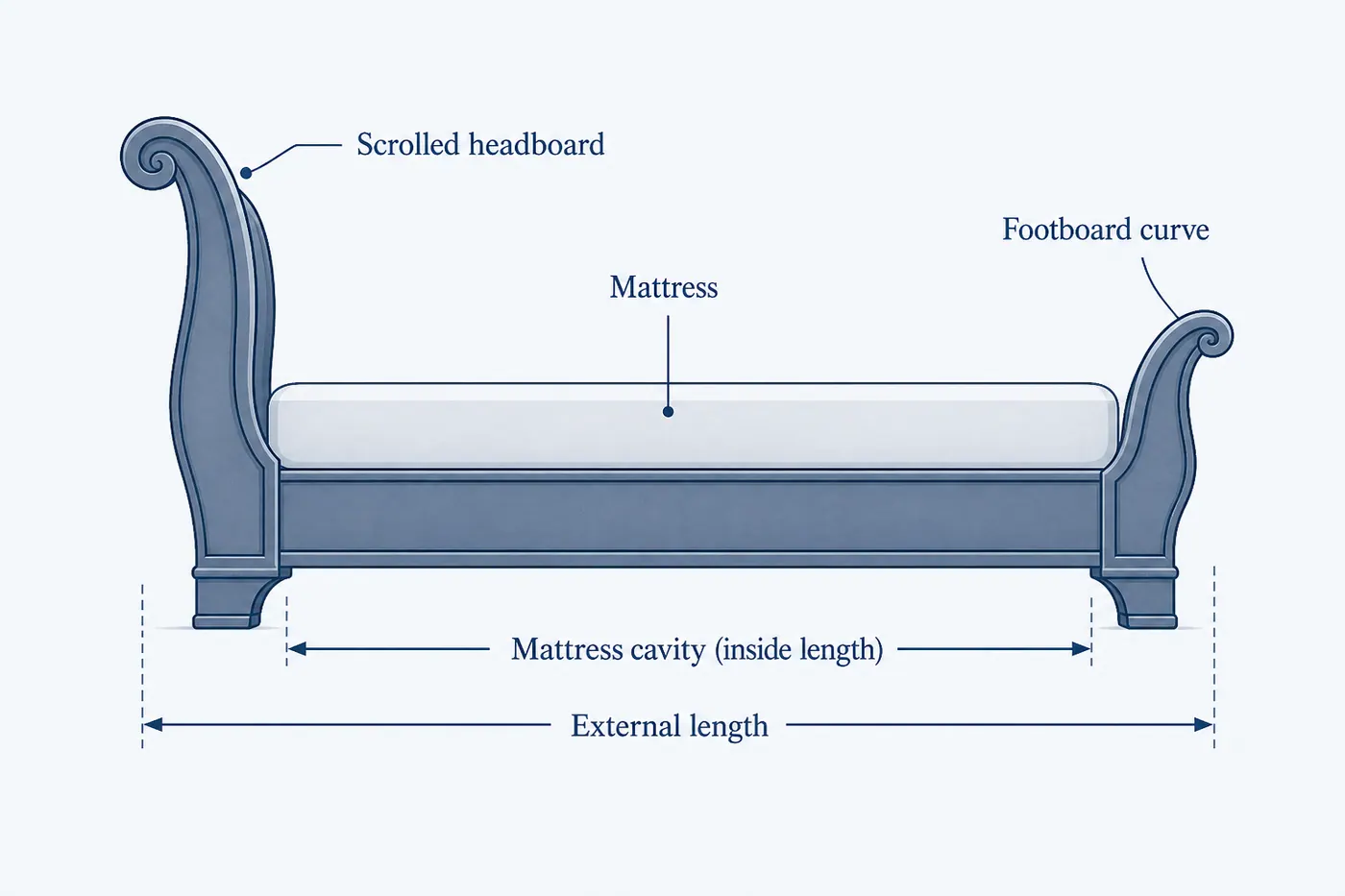
A sleigh bed is a bedstead with outward-curving headboard and often footboard that increases external footprint beyond the mattress. A divan is a box base under the mattress, often with drawers or a sprung/platform top. Sleigh emphasises furniture form; divan emphasises base support and storage.
/compare/sleigh-bed-vs-divan
-
Comparison
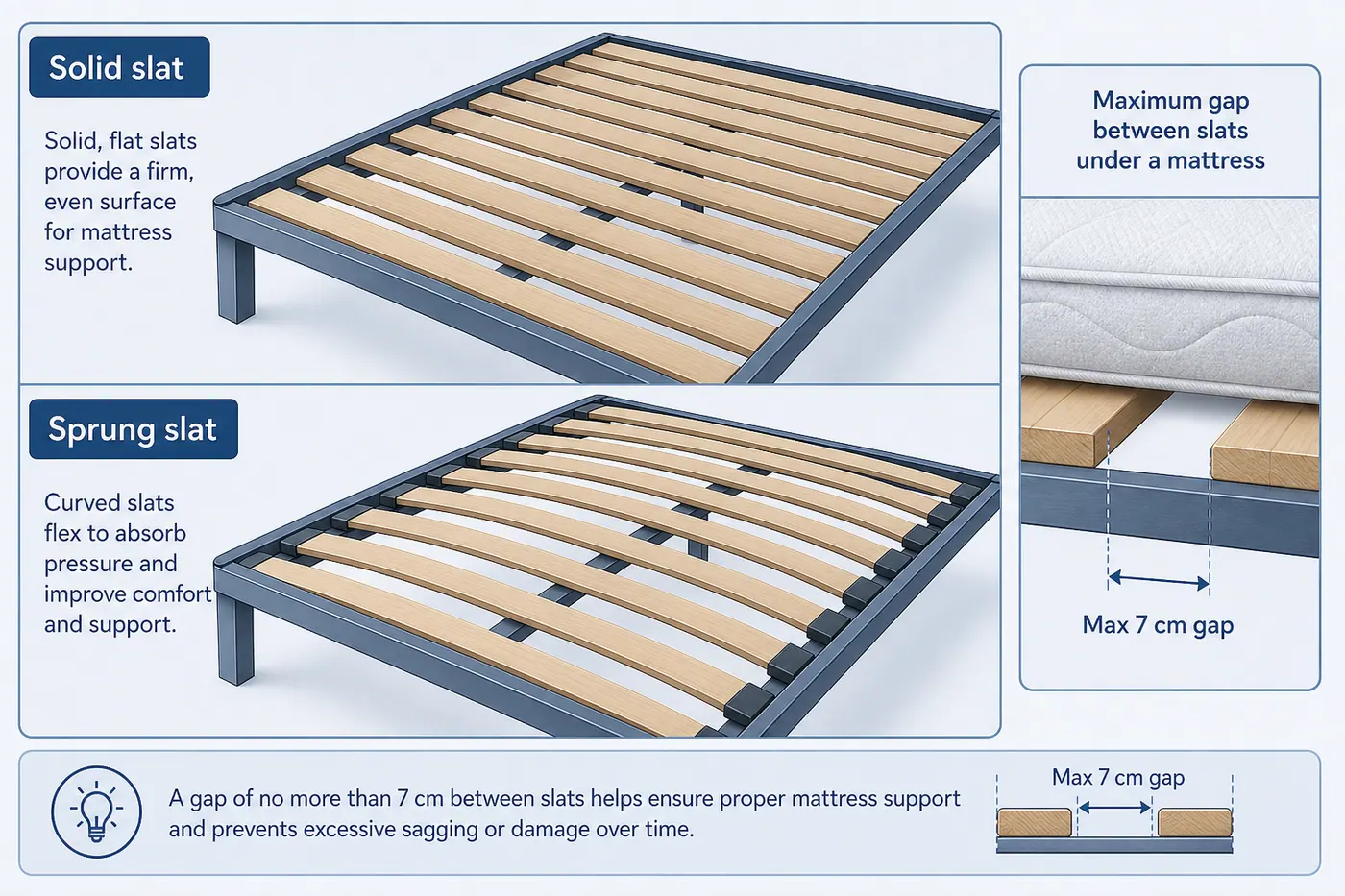
Solid slats vs Sprung slats
Solid slats are rigid laths; sprung slats are bowed and flex under load in flexible end caps. Both must respect mattress warranty gap limits — often about 7 cm clear spacing — so foam and hybrid layers cannot hammock between slats.
/compare/solid-slats-vs-sprung-slats
Sizes
-
Comparison
UK Double vs EU / IKEA Double
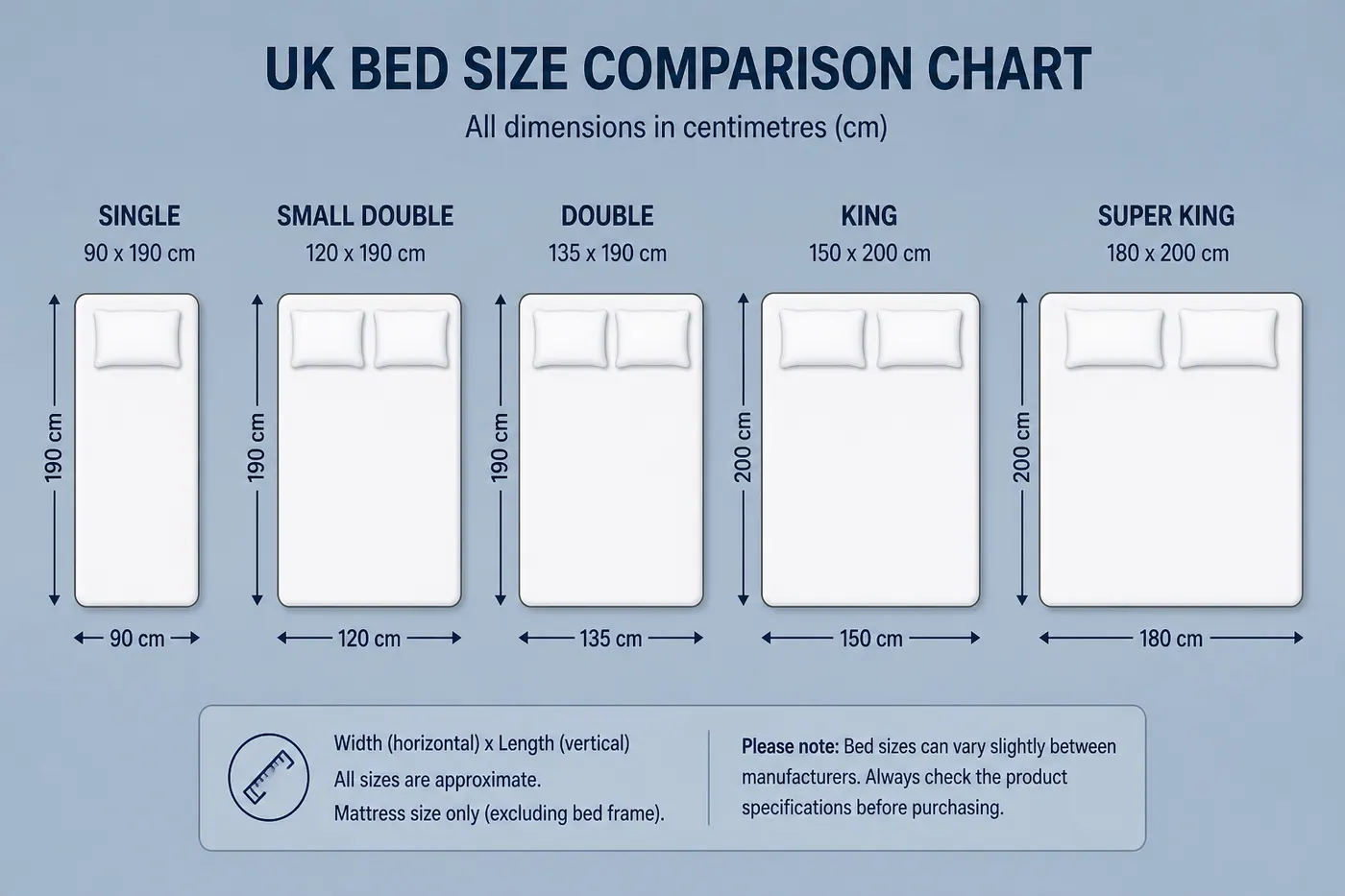
A UK Double mattress is commonly 135 × 190 cm. Many EU and IKEA doubles are 140 × 200 cm — wider and longer. The shared name “Double” causes fit errors when UK frames and European mattresses are mixed without measuring.
/compare/uk-double-vs-eu-double
-
Comparison
UK King vs UK Super King
A UK King mattress is typically 150 × 200 cm; a UK Super King is typically 180 × 200 cm. Both share 200 cm length — longer than UK Double at 190 cm — while Super King adds 30 cm of width for couples who need more personal space.
/compare/uk-king-vs-uk-super-king
-
Comparison
US Queen vs UK King
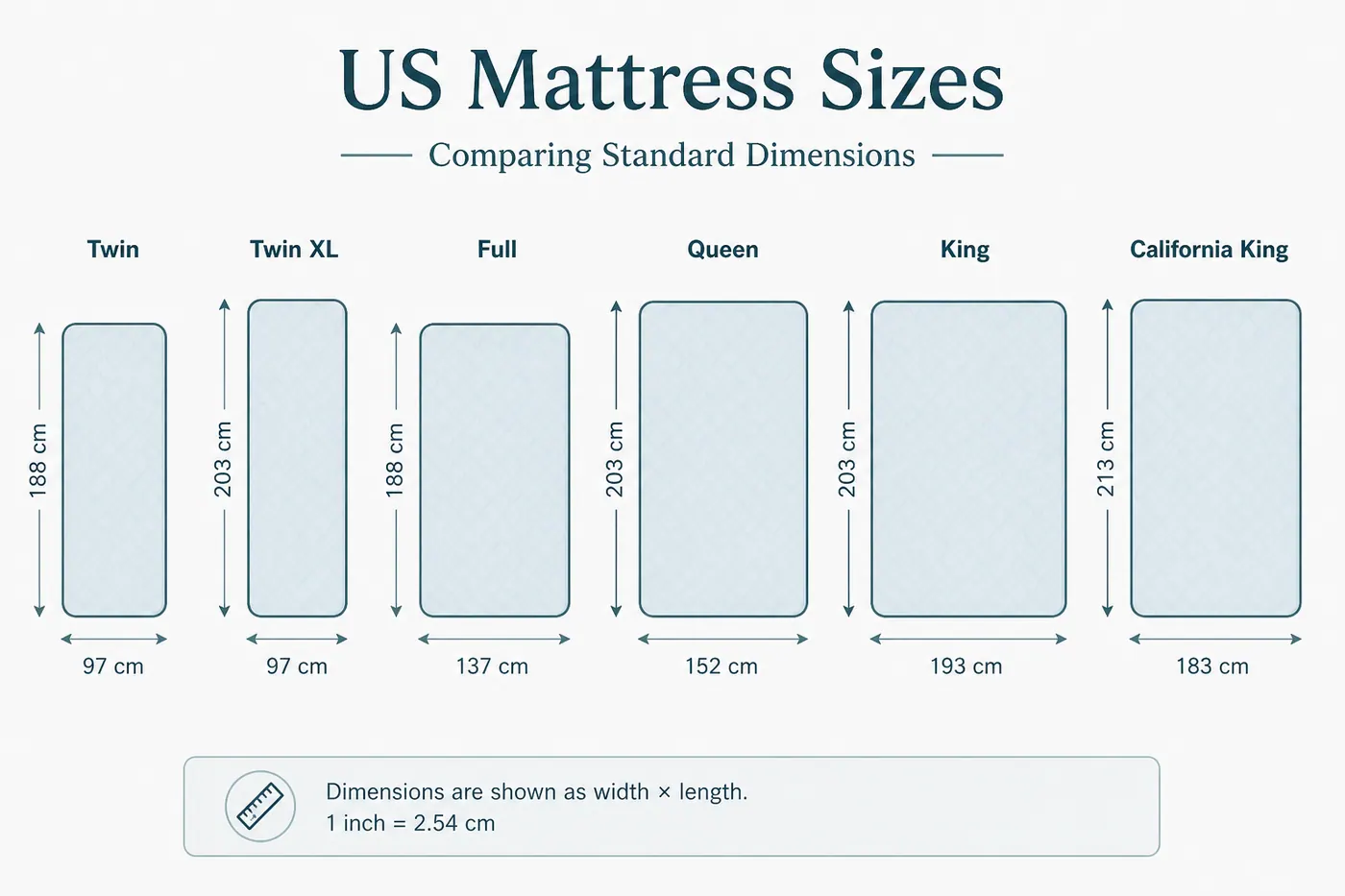
A US Queen is typically about 152 × 203 cm; a UK King is typically 150 × 200 cm. They are close in width but the US Queen is longer. Sheets, protectors and frames are not reliably interchangeable — measure centimetres before cross-border pairing.
/compare/us-queen-vs-uk-king
Care
-
Comparison
Mattress protector vs Mattress topper
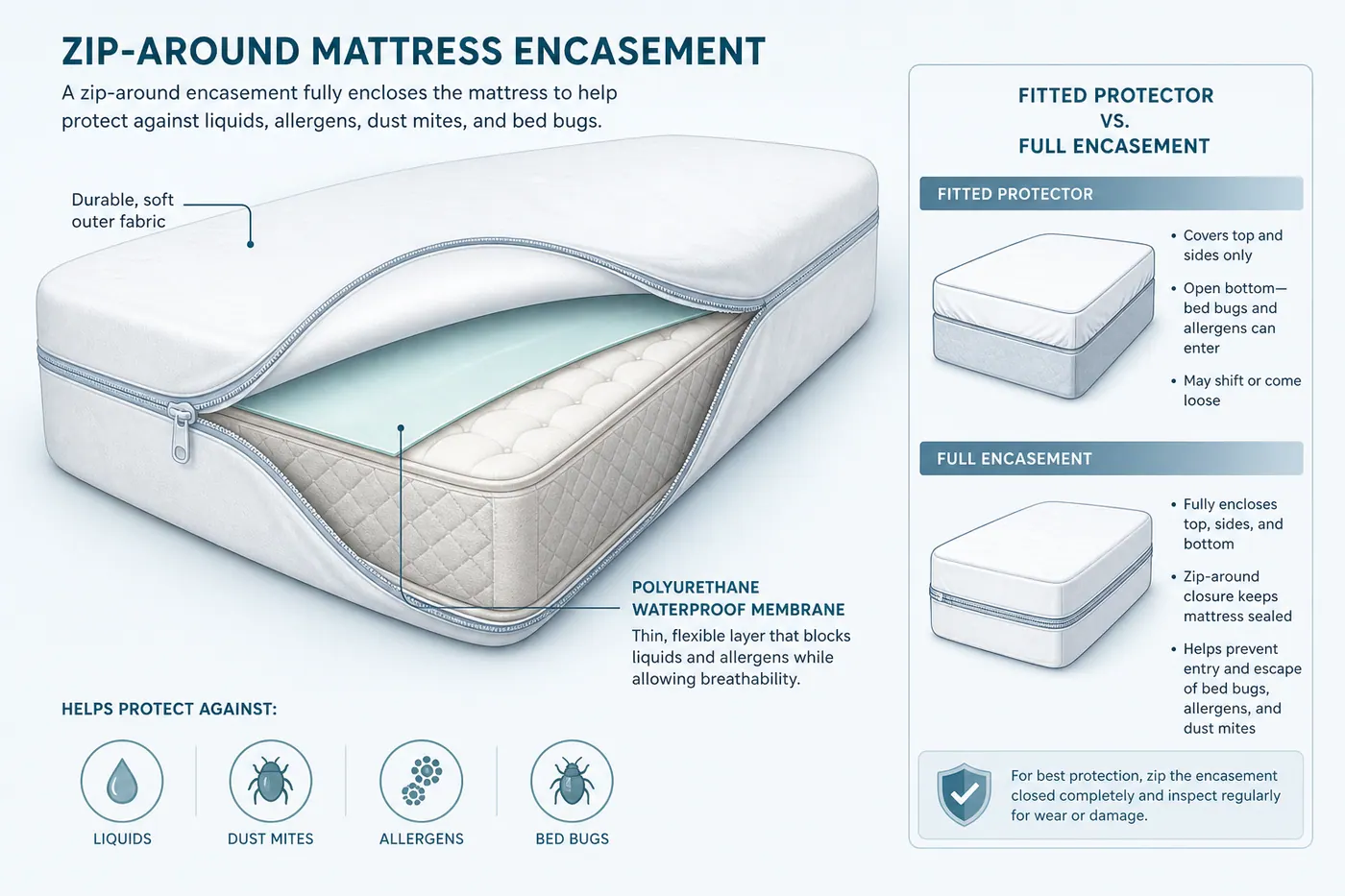
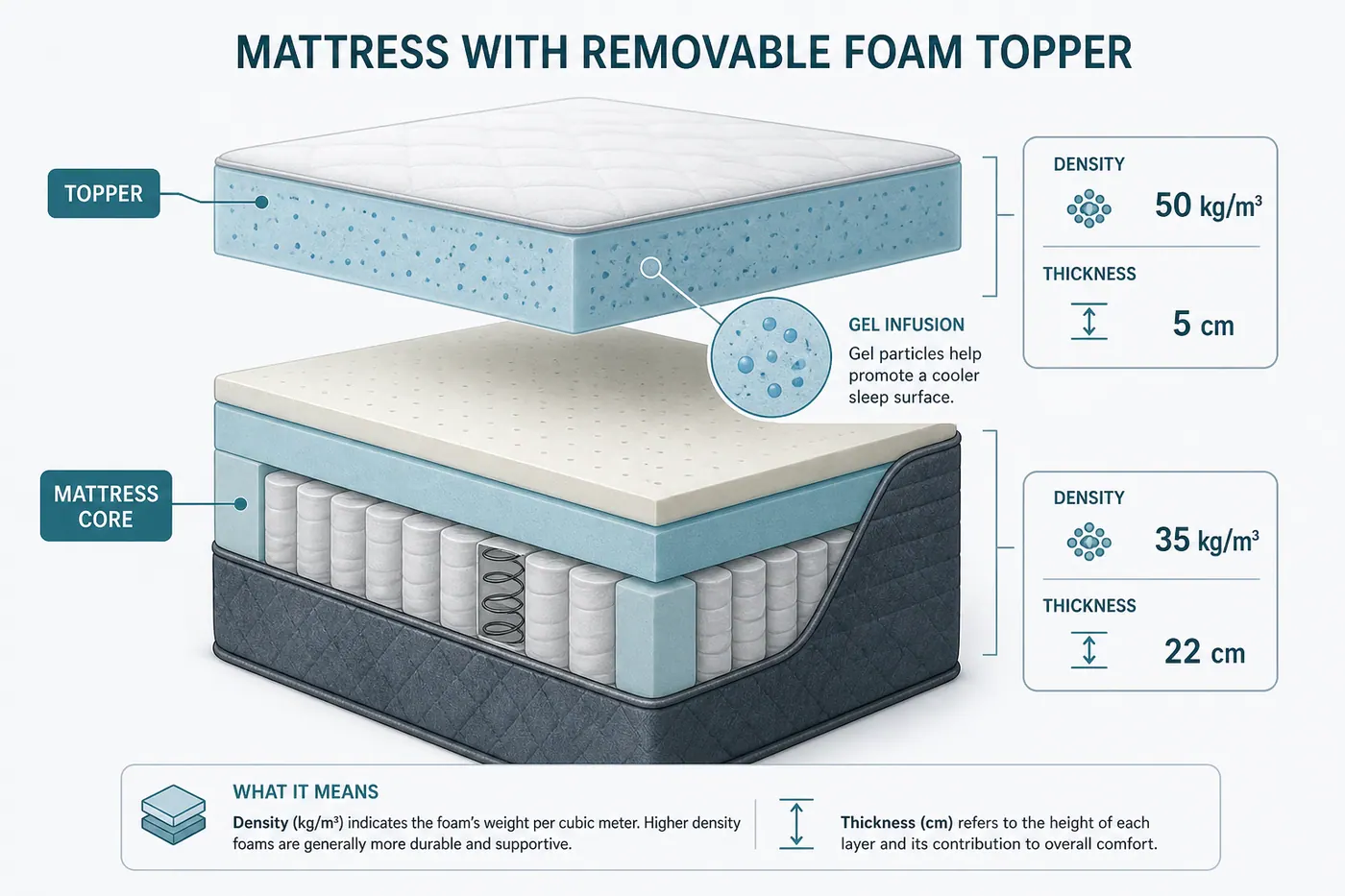
A mattress protector is a thin barrier that shields the mattress from fluids and allergens while aiming to change feel little. A topper is a thicker comfort pad that softens or firms the surface. Protectors support hygiene and many warranty conditions; toppers modify contact feel without replacing a worn core. Use both when you need shield plus feel change.
/compare/mattress-protector-vs-topper
-
Comparison
Turning (flip) vs Rotating (end-to-end)
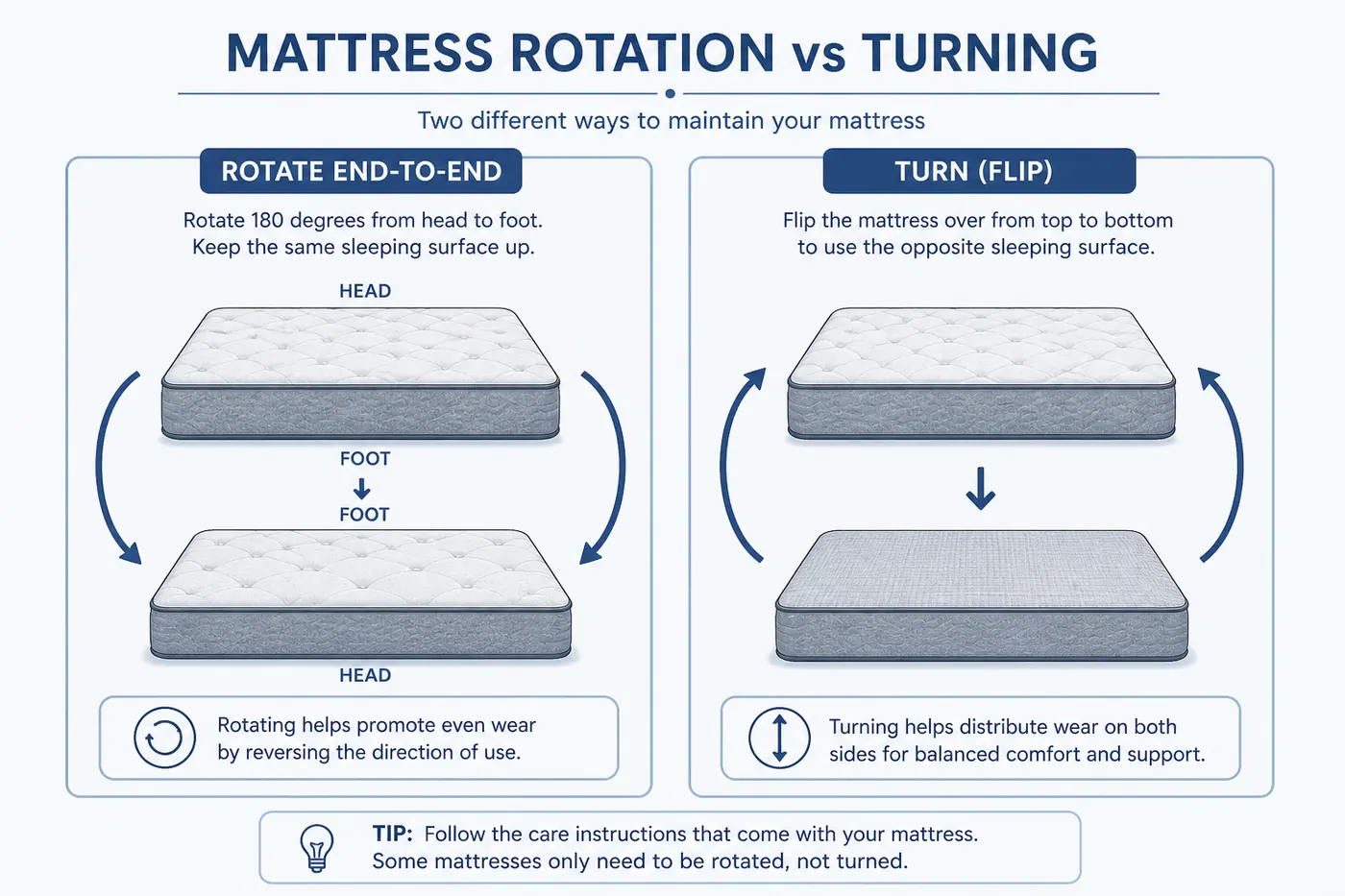
Rotating spins a mattress 180° so head and foot swap while the sleep surface stays up. Turning flips it upside down. Double-sided mattresses can use both; many modern single-sided pillow-top and foam hybrids are rotate-only.
/compare/turning-vs-rotating-mattress