mattresses comparison
Memory foam vs Latex
Evergreen URL: /compare/memory-foam-vs-latex
In short
Memory foam is memory foam with slow recovery and heat-sensitive softness. Latex foam (Dunlop or Talalay) typically rebounds faster and feels more buoyant. Memory foam contours deeply; latex often sleeps cooler relative to classic memory foam formulations and commonly lasts longer in durability bands.
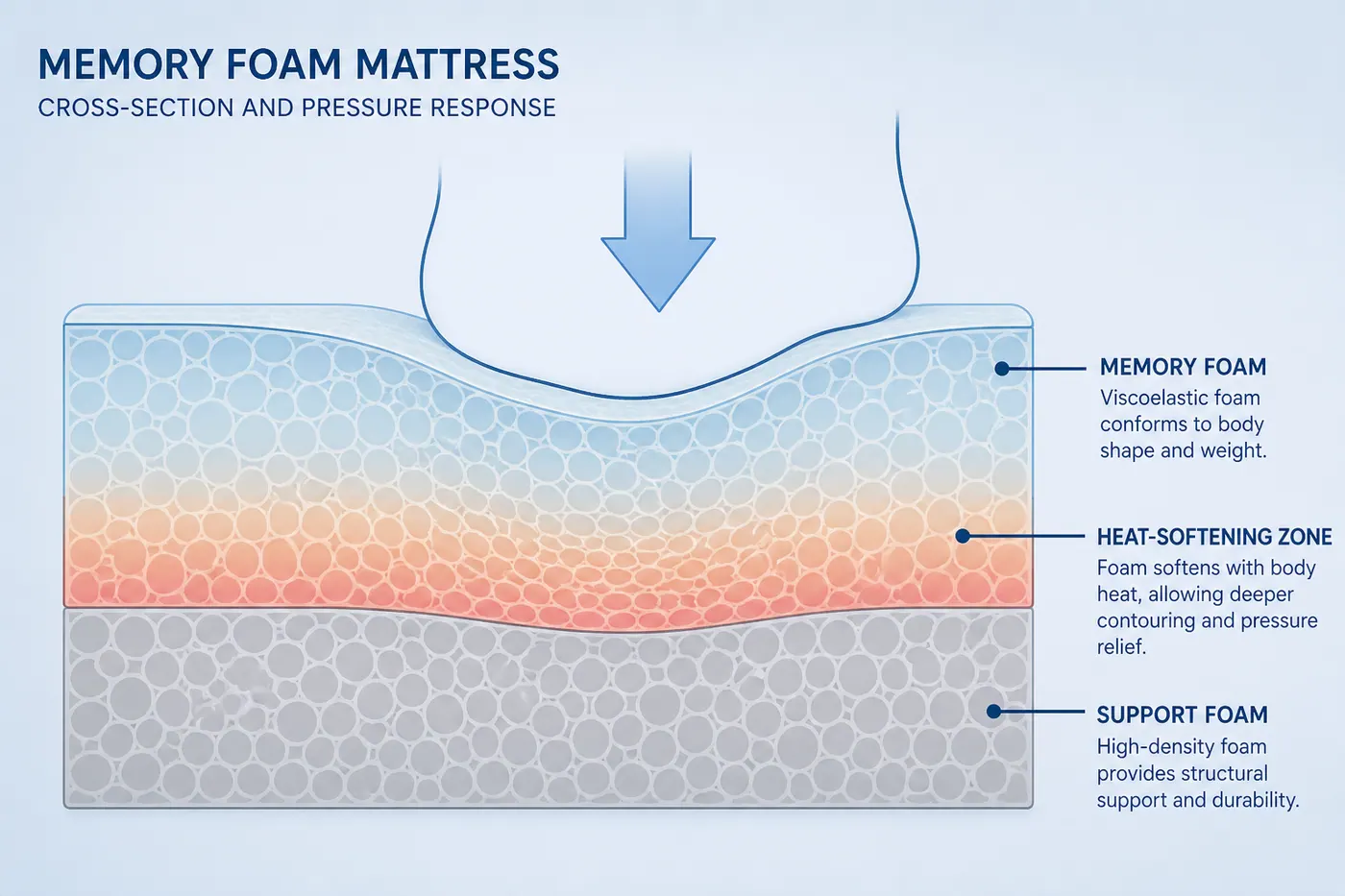
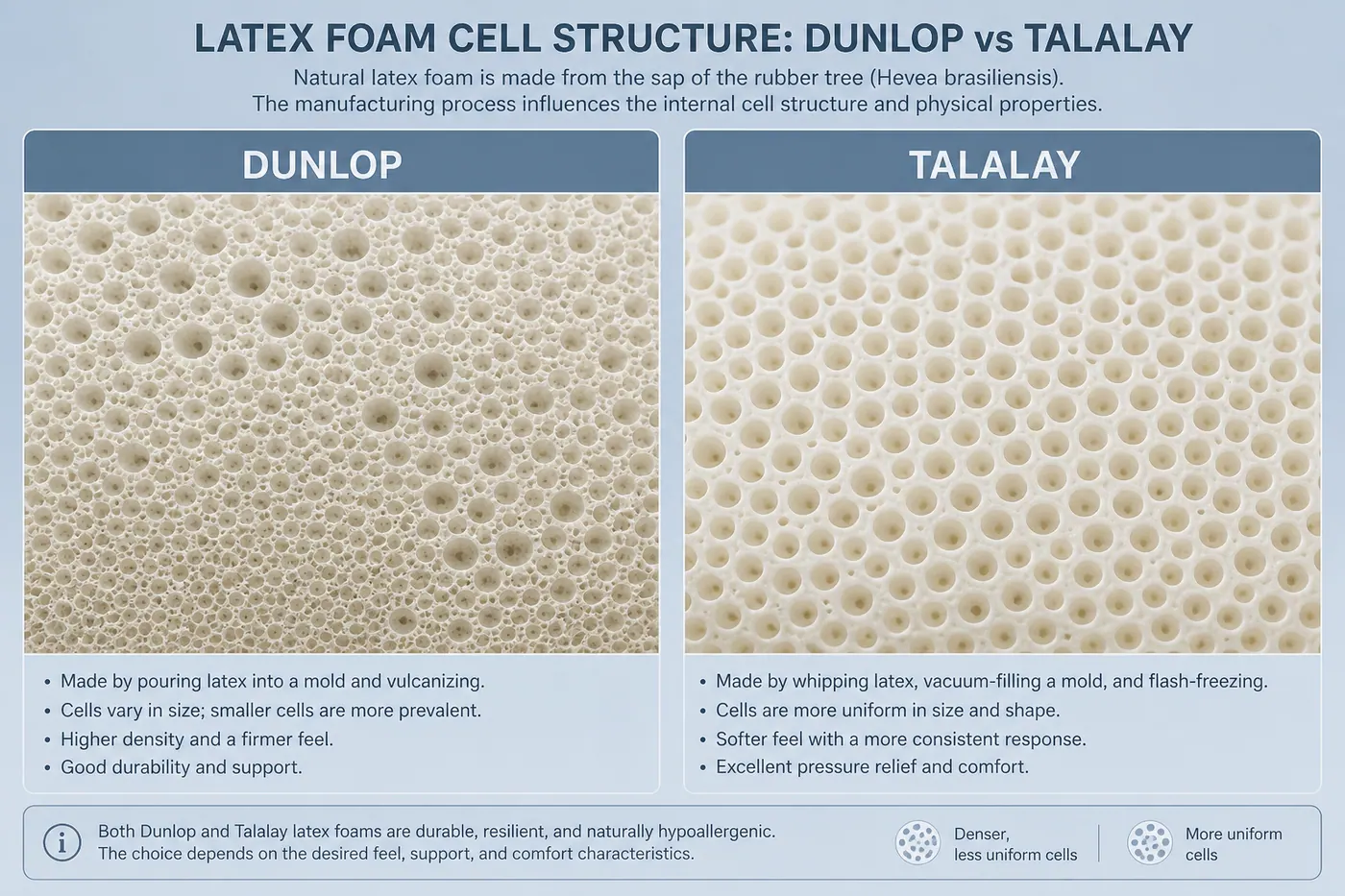
Both can appear as full cores or comfort layers. Compare recovery speed, heat behaviour and degradation modes rather than marketing “natural vs synthetic” shortcuts — latex raw material varies too.
Key differences
| Criterion | Memory foam | Latex |
|---|---|---|
| Polymer behaviour | Slow memory foam recovery | Faster elastic rebound |
| Heat response | Softens with body heat | Less “melt” moulding to shape; often cooler perceived sleep |
| Typical lifespan band | About 6–8 years | About 8–12 years for many latex cores |
| Cleaning caution | Avoid saturating open cell networks | Still avoid soaking; covers help both |
Memory foam may suit if…
- You want deep, slow moulding to shape cushioning at pressure points
- Minimal bounce is preferred
Latex may suit if…
- You want bouncy spring-back and easier movement
- Longer compression-set resistance is a priority
Frequently asked questions
- Which is cooler, memory foam or latex?
- Classic memory foam often sleeps warmer than latex of similar thickness because of slower air exchange and heat-softening. Open-cell foams and ventilated latex change the gap — compare specific constructions.