Electric Blankets — Heat, Safety and Energy
Entity: electric blanket

In short
Electric blankets warm the bed with heating wires controlled by heat settings or a dial on the controller. Safety features include overheat cut-off and timed shut-off. Energy use is usually low compared with room heating because heat goes at the sleep surface. Avoid crushing the wires with sharp folds or unapproved hot washes.
How it works
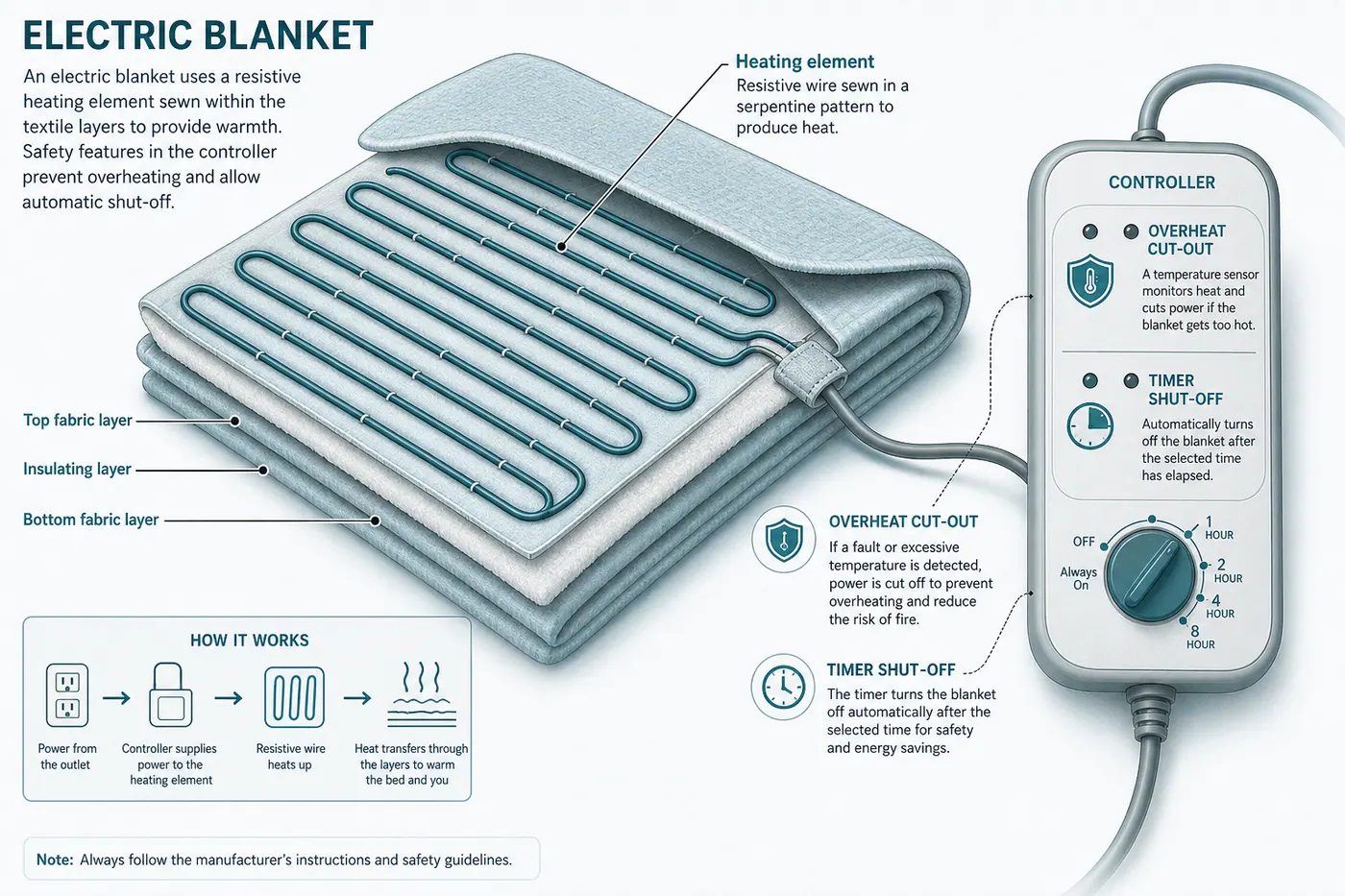
How heating wires work
Wires convert electricity to heat when current flows. Modern controllers control power and watch temperature. Damage from sharp folds or pet claws can create hot spots — inspect and replace damaged units.
Common safety features
- Overheat / over-temperature cut-out
- Timed automatic shut-off
- Dual controls on larger sizes
- Flex-tested wiring for bed use (not improvised with unsuitable heaters)
Energy note
Surface heating can let some households set cooler room air. That is a systems choice with TOG duvets, not a guaranteed bill saving.
Related BedGuide entries
Frequently asked questions
- Are electric blankets expensive to run?
- They usually use modest power compared with room heaters because they warm a small surface. Exact cost depends on power rating, heat setting, hours used and local electricity prices.
- Can you use an electric blanket with a mattress protector?
- Often yes if the protector is approved for heated use and does not trap unsafe heat. Follow both the blanket and protector instructions — never stack heat sources in unapproved ways.
- Overblanket versus underblanket — what differs?
- Overblankets heat from above like a cover. Underblankets or heated pads sit under the sheet on the mattress. Wiring and care rules differ — do not swap them casually.