Pillow Ergonomics and Fill Types
Entity: pillow ergonomics

In short
Pillow height should keep your neck in a straight line for how you sleep. Side sleepers need more loft to fill the shoulder gap. Back sleepers need medium loft. Stomach sleepers need a low pillow. Fills include memory foam, latex, down and fibre. Each bounces back differently. Cervical pillows shape support under the neck curve.
How it works
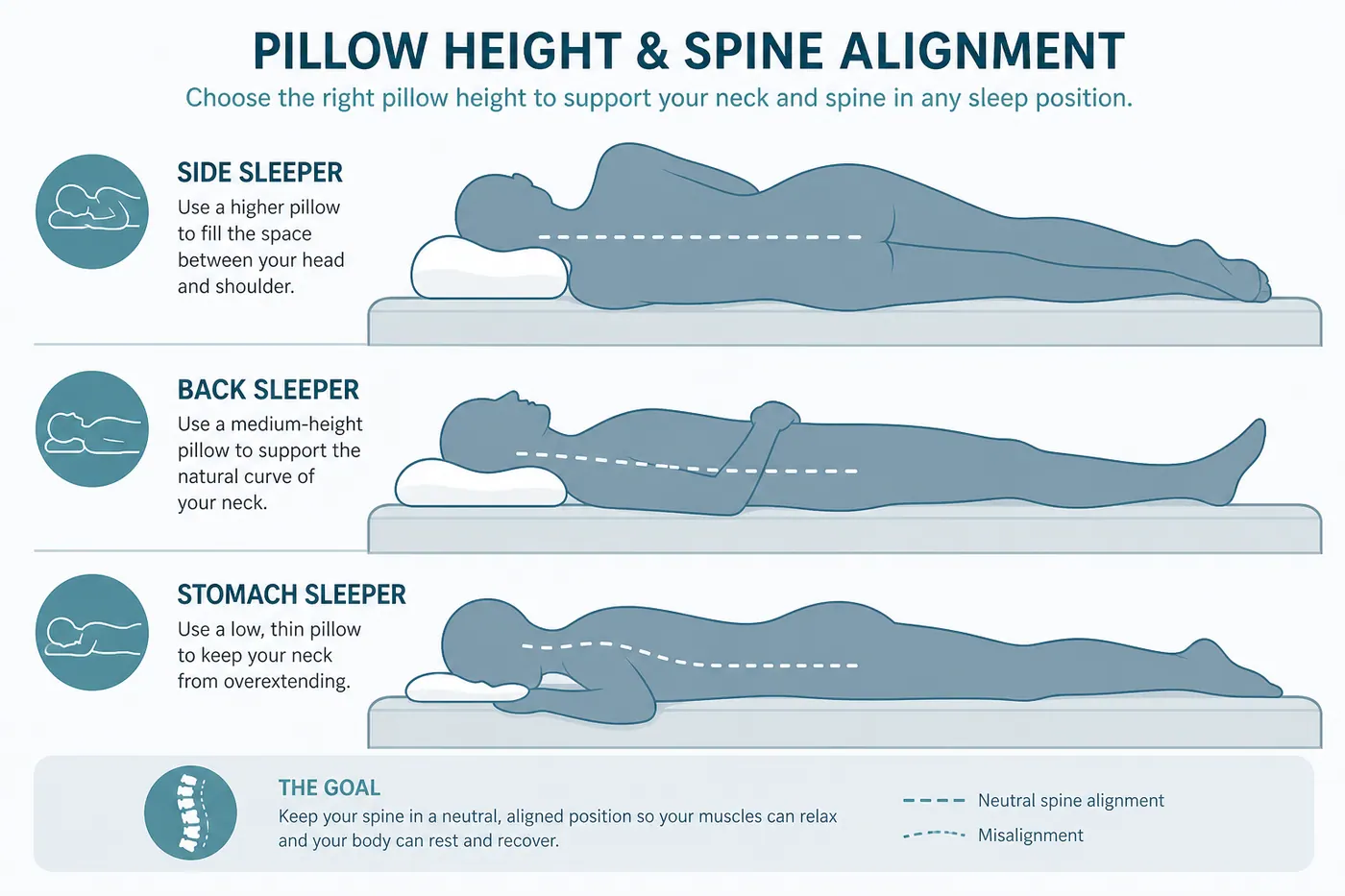
Position and loft map
| Sleep position | Typical loft need | Why |
|---|---|---|
| Side | Higher | Fills shoulder-to-head gap |
| Back | Medium | Supports neck without pushing chin forward |
| Stomach | Low / minimal | Limits neck twist and back arch |
| Combination | Adjustable / mid | Compromise across night positions |
A soft side-sleeper surface lets the shoulder sink in. That can mean you need a slightly lower pillow.
Fill type basics
| Fill | Moulding | Bounce-back | Care notes |
|---|---|---|---|
| Memory foam | High, slow | Slow | Spot-clean cores; wash covers |
| Latex | Springy | Fast | Often bounces back faster than memory foam |
| Down / feather | Soft, mouldable | Variable | Shake to keep loft; watch for allergies |
| Polyester fibre | Soft | Moderate | Often machine-washable |
Related BedGuide entries
Frequently asked questions
- What pillow height do side sleepers need?
- Side sleepers need enough loft to fill the space between shoulder and head. This keeps the neck nearer level with the spine. Exact height depends on shoulder width and how soft the mattress is.
- Are memory foam pillows better than down?
- Neither is always better. Memory foam moulds and holds shape. Down is lighter and more squashable. Pick by bounce-back feel, allergies and how you wash it.
- What is a cervical or orthopedic pillow?
- These pillows use shaped curves — often a raised neck roll and lower head dip — to support the neck. What suits you is personal. Ongoing pain needs professional advice.