Orthopaedic Mattress Meaning Explained
Entity: orthopaedic mattress
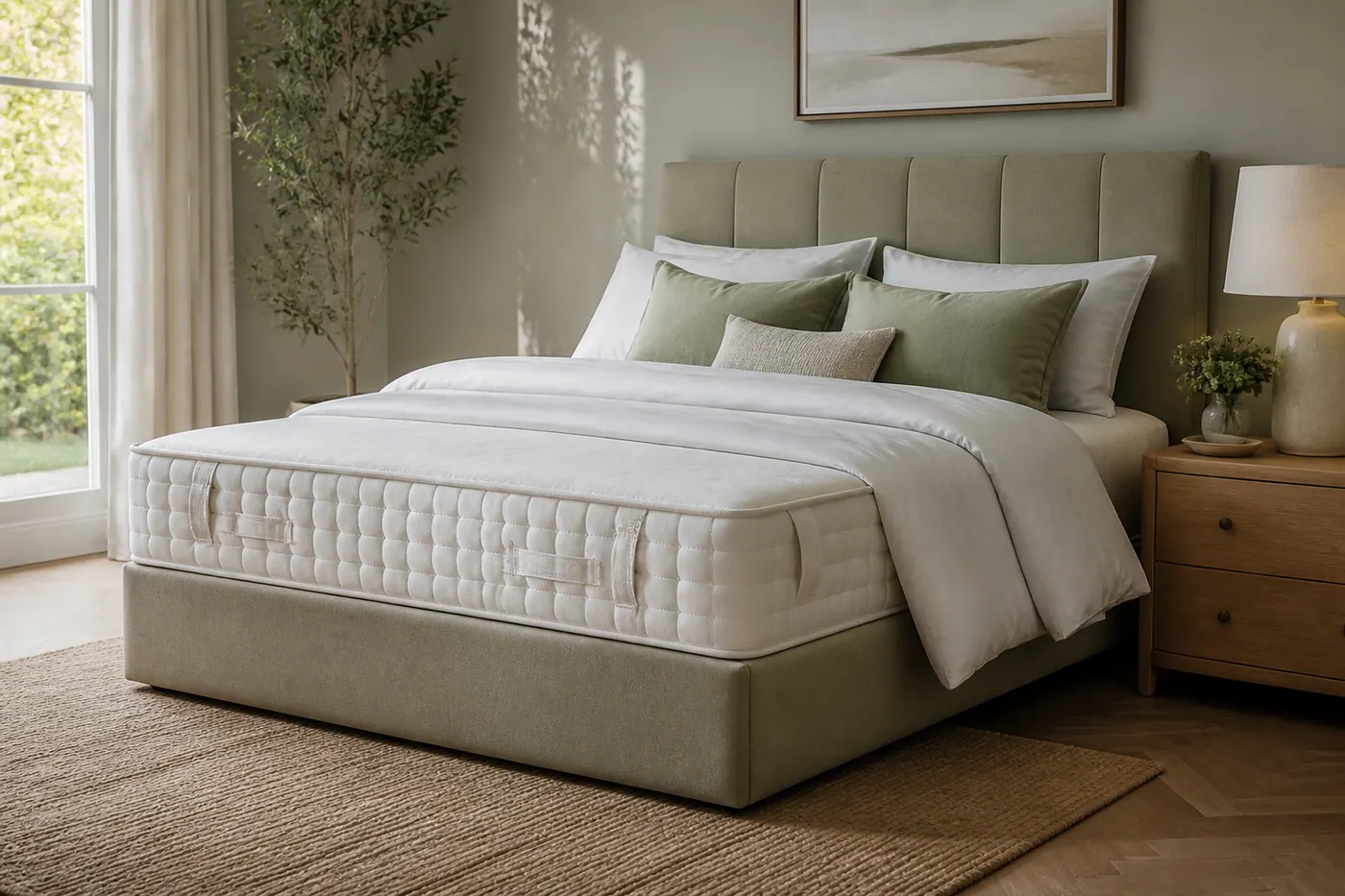
In short
Orthopaedic on a UK mattress label usually means firmer or more supportive. It is a shop word, not a medical device. The bed inside may be pocket sprung, memory foam or hybrid. Read spring tension, zoning and comfort layers instead of the orthopaedic word alone. Ongoing pain needs advice from a doctor. A label is not a diagnosis or treatment.
How it works
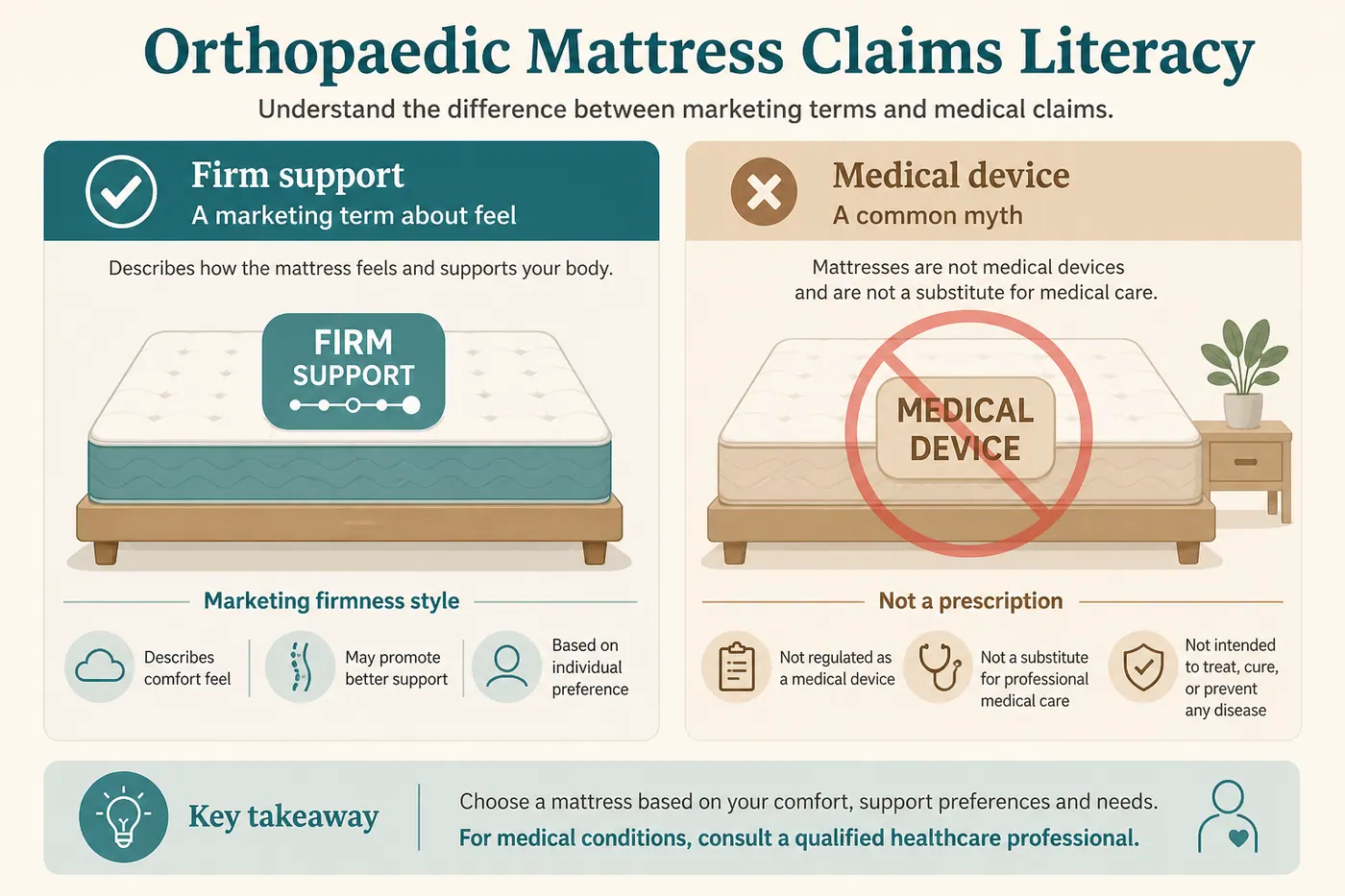
Materials used
- pocket springs or foam cores
- firmer comfort stacks
- optional zoned units
Average lifespan
7– 10 years
What the label usually signals
- Firmer support unit or denser foam
- Sometimes zoned lumbar bands
- Marketing aimed at alignment and back-comfort searches
What it does not guarantee
- Medical certification as a treatment device
- A universal firmness number
- Suitability for every sleep position or body weight
How to evaluate an “orthopaedic” model
- Identify class — types overview.
- Check spring tension vs feel.
- Match sleep position.
- Confirm base compatibility.
Related BedGuide entries
Frequently asked questions
- Is an orthopaedic mattress better for back pain?
- Not automatically. Some people with back discomfort prefer medium-firm support, but needs vary. Orthopaedic is a shop label — check construction, tension and sleep position. See a doctor for ongoing pain.
- Are orthopaedic mattresses always firm?
- They are often sold as firmer, but firmness scales differ between shops. Compare spring tension, foam ILD and surface depth rather than the word orthopaedic alone.