Zoned Mattress Support Explained
Entity: zoned mattress support
In short
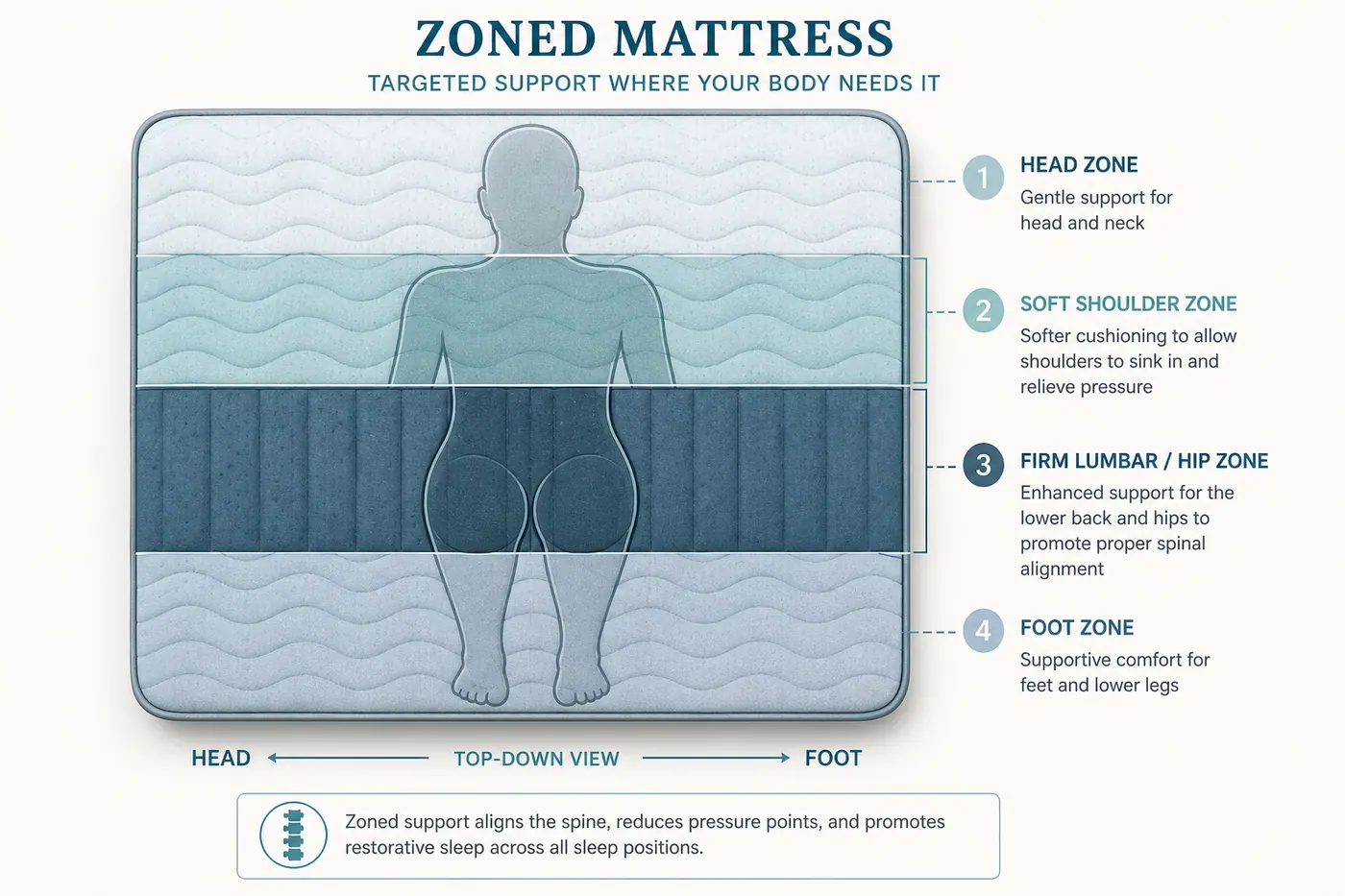
Zoned support means different parts of the mattress feel different firmness. Usually the hips and lower back area is firmer. The shoulders are softer. Zones are made with different spring gauges, coil sizes, foam ILD values or cut foam channels. Zoning aims to help spinal alignment for mixed body shapes. It is a build choice, not a medical device claim.
How it works
Materials used
- zoned pocket springs
- multi-ILD foam
- transition layers
Average lifespan
7– 10 years
How zones are built
| Method | Where used | What changes |
|---|---|---|
| Different spring gauges | Pocket sprung / hybrid | Firmer wire under hips |
| Coil diameter / turn count | Pocket units | Moulding resolution by band |
| Foam ILD bands | Foam cores & comfort layers | Soft vs firm foam strips |
| Cut channels / relief cuts | Foam | Local softening without new foam |
Alignment idea (educational)
The goal is often a straighter spine when lying on the side or back. Let shoulders sink. Hold the midsection. Compare with firmness and sleep position.
Related BedGuide entries
Frequently asked questions
- Do zoned mattresses help side sleepers?
- Soft shoulder zones can let the shoulder sink while a firmer lumbar band limits hip drop. That is a common design goal for side and combination sleepers. Results still depend on body weight and overall firmness.
- Is more zones always better?
- Not necessarily. Extra zones only help if the firmness differences match your body shape. A well-tuned 3- or 5-zone unit can work better than a poorly mapped 7-zone marketing map.