Cooling Pads and Active Temperature Systems
Entity: mattress cooling pad
In short
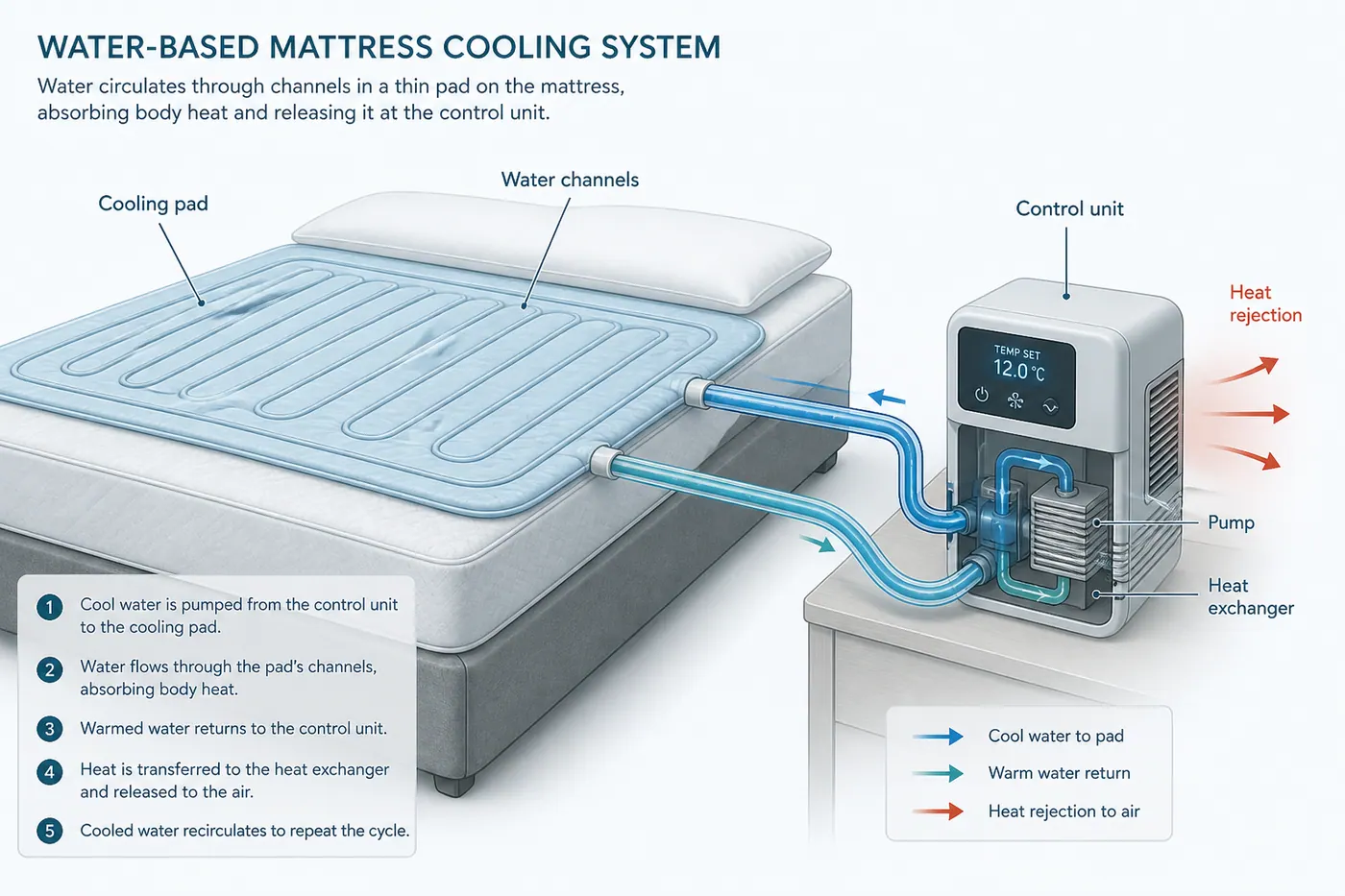
Active cooling systems move temperature-controlled water through a thin pad on the mattress. They carry heat away from the sleep surface. Passive gel pads absorb limited heat without a pump. Water systems need a control unit and clear tubing paths. They change microclimate at the sheet layer and work with mattress airflow and duvet TOG choices.
How it works
Active vs passive cooling
| Type | Energy path | Typical traits |
|---|---|---|
| Water-based active pad | Circulating fluid + control unit | Adjustable set-points; needs power |
| Passive gel / PCM pad | Absorption / phase change | No pump; finite heat capacity |
System placement in the sleep stack
Sheet → cooling pad → protector (if used) → mattress — follow product layering rules. Avoid trapping heat with heavy electric blankets against active coolers unless the makers allow it.
Related BedGuide entries
Frequently asked questions
- How do water-based mattress coolers work?
- A control unit conditions water and a pump sends it through channels in a pad on the mattress. Heat moves from the sleeper into the fluid and is rejected at the unit, lowering surface temperature when set to cool.
- Can cooling pads fix a hot memory foam mattress?
- They can change the sheet-level microclimate even on warmer foam. Core foam chemistry still affects contact feel. Pairing with lighter TOG bedding and breathable sheets helps as a system.
- Do cooling pads work with adjustable beds?
- Only if tubing and pad can flex with the platform without kinking. Check maker guidance for articulating bases.