Bunk Beds and High Sleepers
Entity: bunk bed and high sleeper
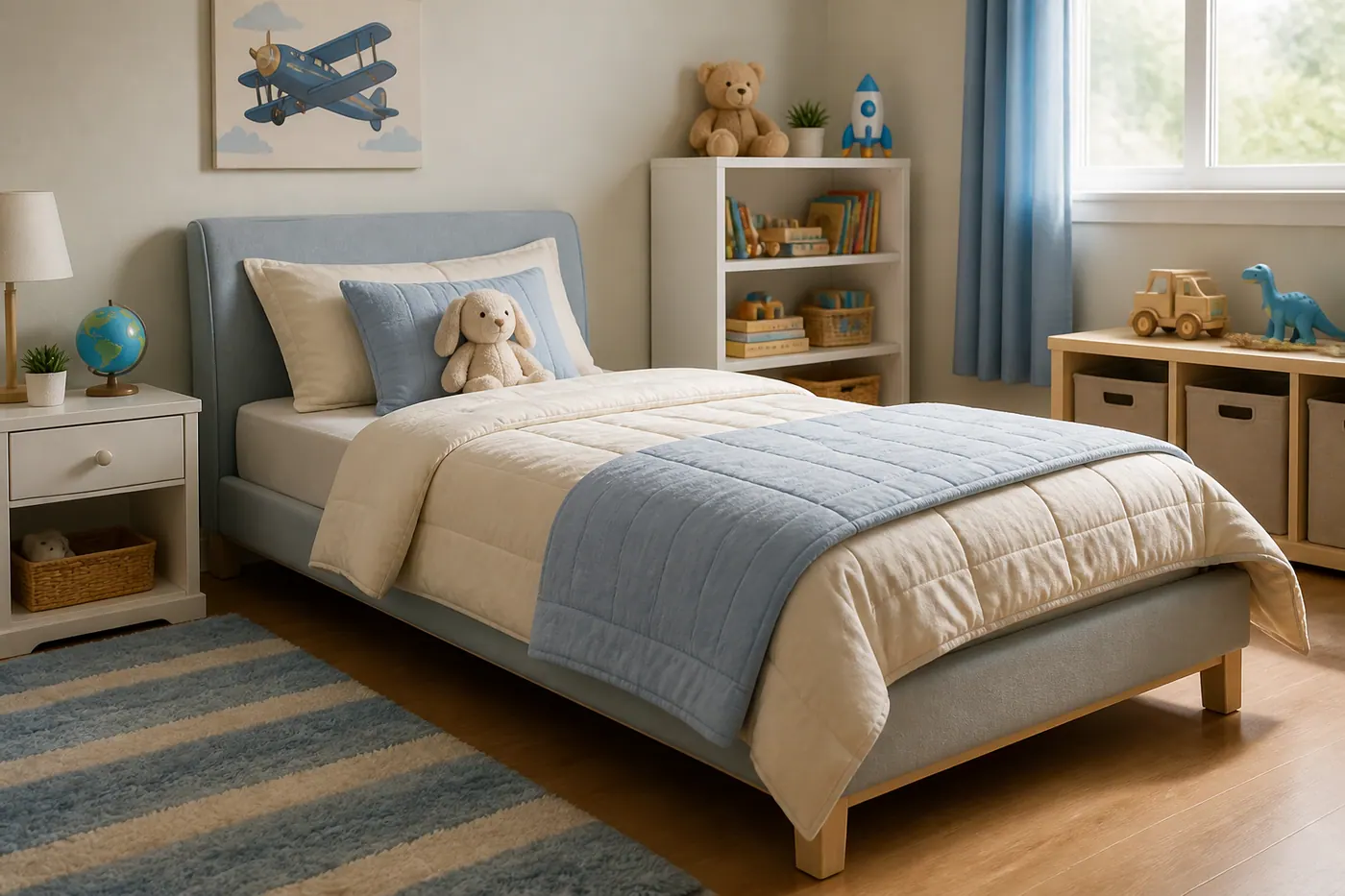
In short
Bunk beds stack two sleep levels on one footprint. High sleepers raise one mattress over desk or storage space below. Safety depends on guardrails, ladder design and mattress thickness limits. Upper bunks need secure rails. The mattress must sit deep enough in the frame. Never go over the maker's maximum depth. Always follow the manufacturer's safety guidance.
How it works
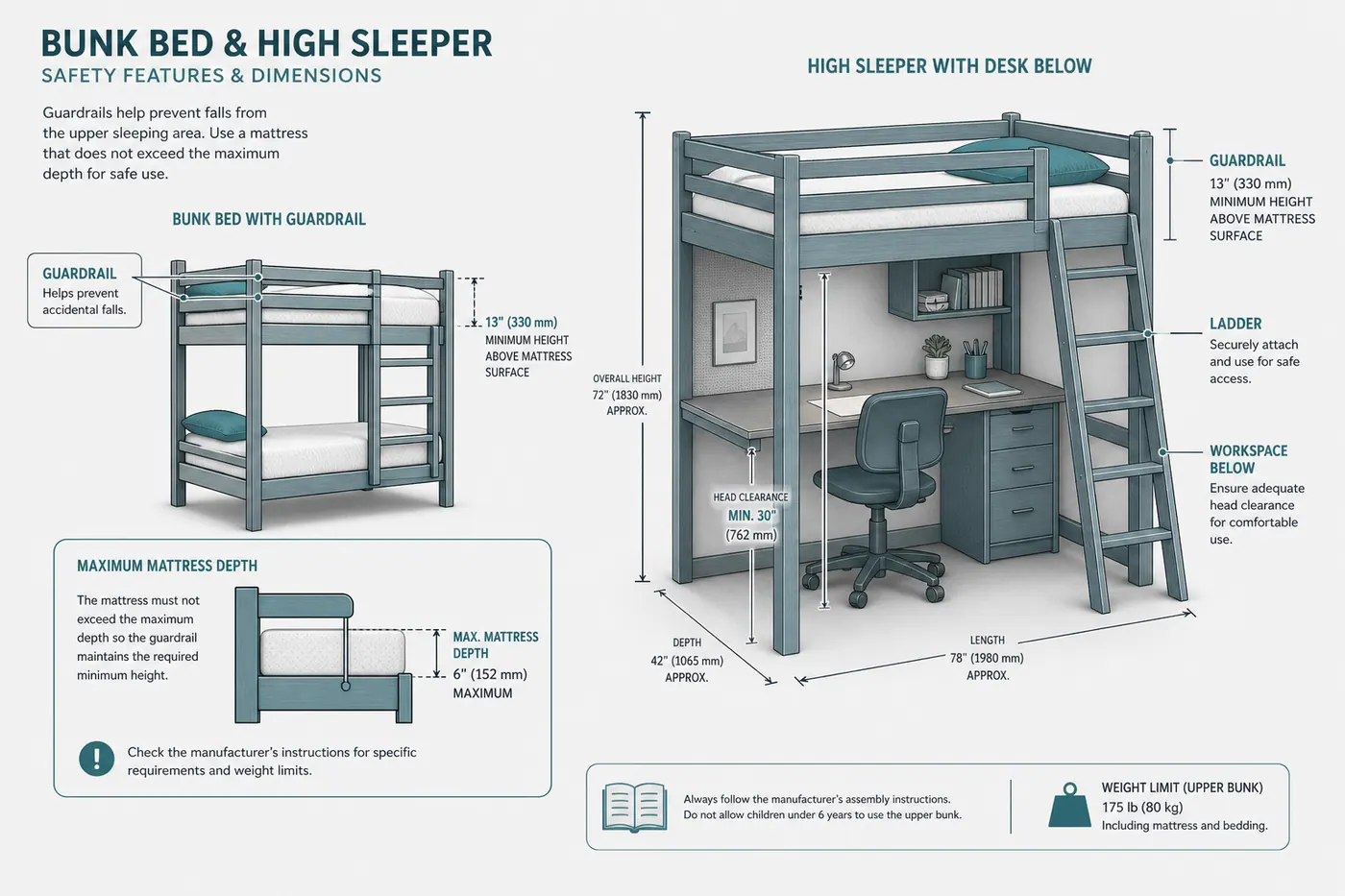
Safety geometry (educational)
- Guardrails on upper berths.
- Secure ladder or stair fixings.
- Mattress depth within the stated maximum.
- Enough ceiling clearance for sitting up.
- Stable floor anchoring where the maker requires it.
This page explains bed types. It does not replace the product’s safety manual or UK consumer safety guidance.
Related BedGuide entries
Frequently asked questions
- What mattress thickness for a bunk bed?
- Use the manufacturer's maximum depth. That way the guardrail still sticks up above the sleep surface. Thicker pillow-top mattresses can defeat rail protection even if they fit the cavity width.
- What is the difference between a bunk and a high sleeper?
- Bunks provide two stacked beds on top of each other. High sleepers raise one bed over usable space below. That space can hold a desk, sofa or storage. They are related to cabin beds.