Mattress Protectors and Toppers Explained
Entity: mattress protectors and toppers
In short
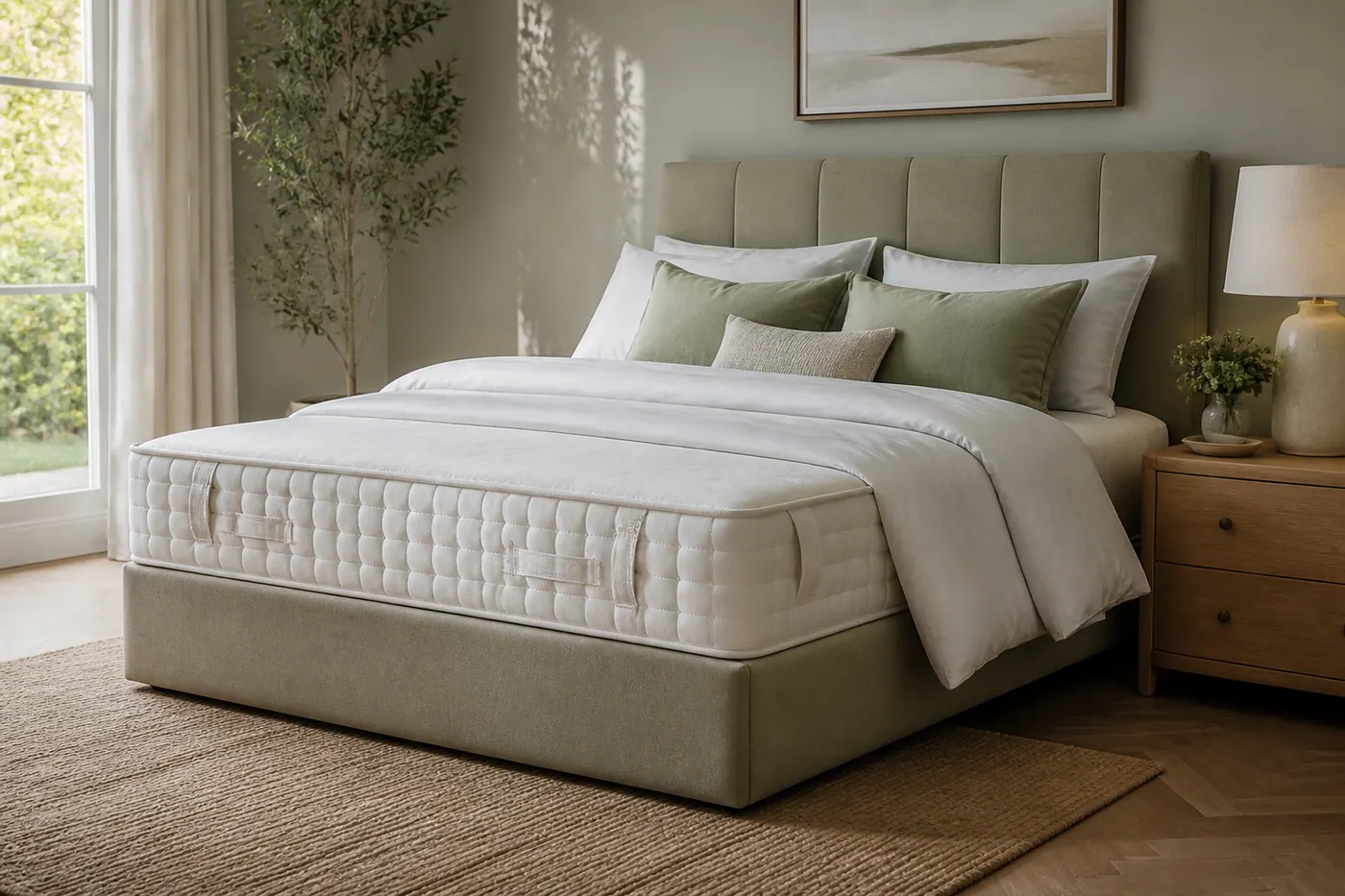
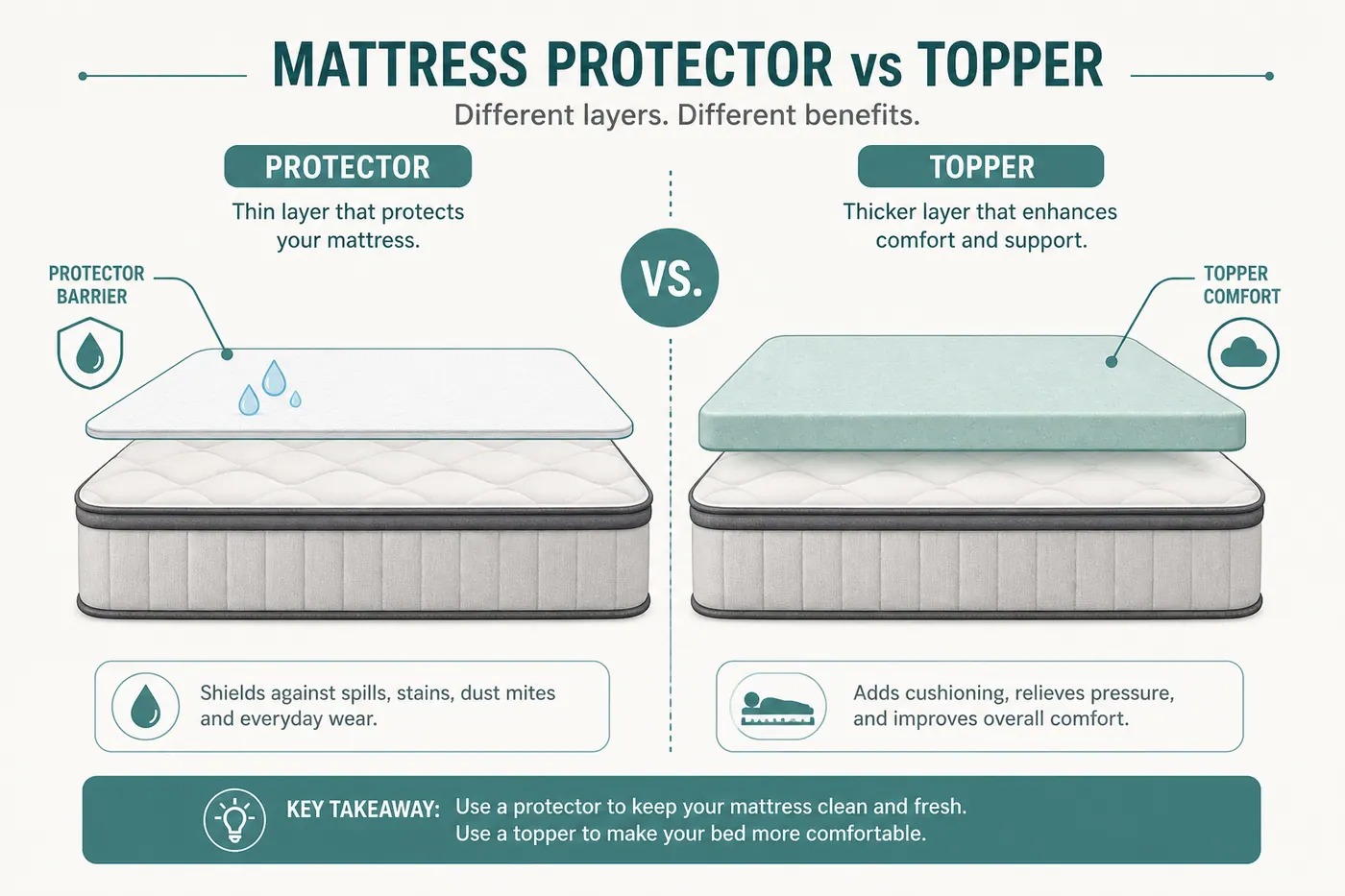
A mattress protector is a thin barrier that shields the mattress from fluids and allergens while changing feel as little as possible. A topper is a thicker comfort pad that softens or firms the surface. Protectors support hygiene and warranty conditions. Toppers change contact feel without replacing the core support unit beneath.
How it works
Protector roles
- Fluid and stain barrier (often important for warranty claims).
- Allergen and dust-mite barrier when zip-enclosed.
- Minimal change to the mattress’s engineered feel when correctly specified.
Topper roles
- Soften a firm surface for side sleepers.
- Add plushness without buying a new core.
- Temporary guest-room comfort tuning.
| Layer | Typical thickness | Primary job |
|---|---|---|
| Protector | Millimetres to ~1–2 cm quilted | Shield |
| Topper | Often 3–8+ cm | Change surface feel |
Depth and fitted sheets
Adding a topper increases total sleep-system height. Check mattress depth and deep-pocket sheet sizing.
Deeper textile guides
- Mattress toppers — density and gel
- Protectors and encasements — membranes
- Protector vs topper compare
Related BedGuide entries
Frequently asked questions
- What is the difference between a protector and a topper?
- Protectors are thin shields for spills and allergens. Toppers are thicker comfort pads that change surface softness. Use a protector under a topper if you want both hygiene and a feel change.
- Do mattress protectors affect firmness?
- Quality thin protectors should add negligible firmness. Thick quilted or padded protectors can slightly soften or mute the mattress surface.
- Can a topper fix a worn-out mattress?
- Toppers mask surface feel but cannot restore a collapsed spring unit or permanently compressed foam core. Deep body impressions usually mean the mattress itself needs replacement.