Motion Isolation in Mattresses
Entity: mattress motion isolation
In short
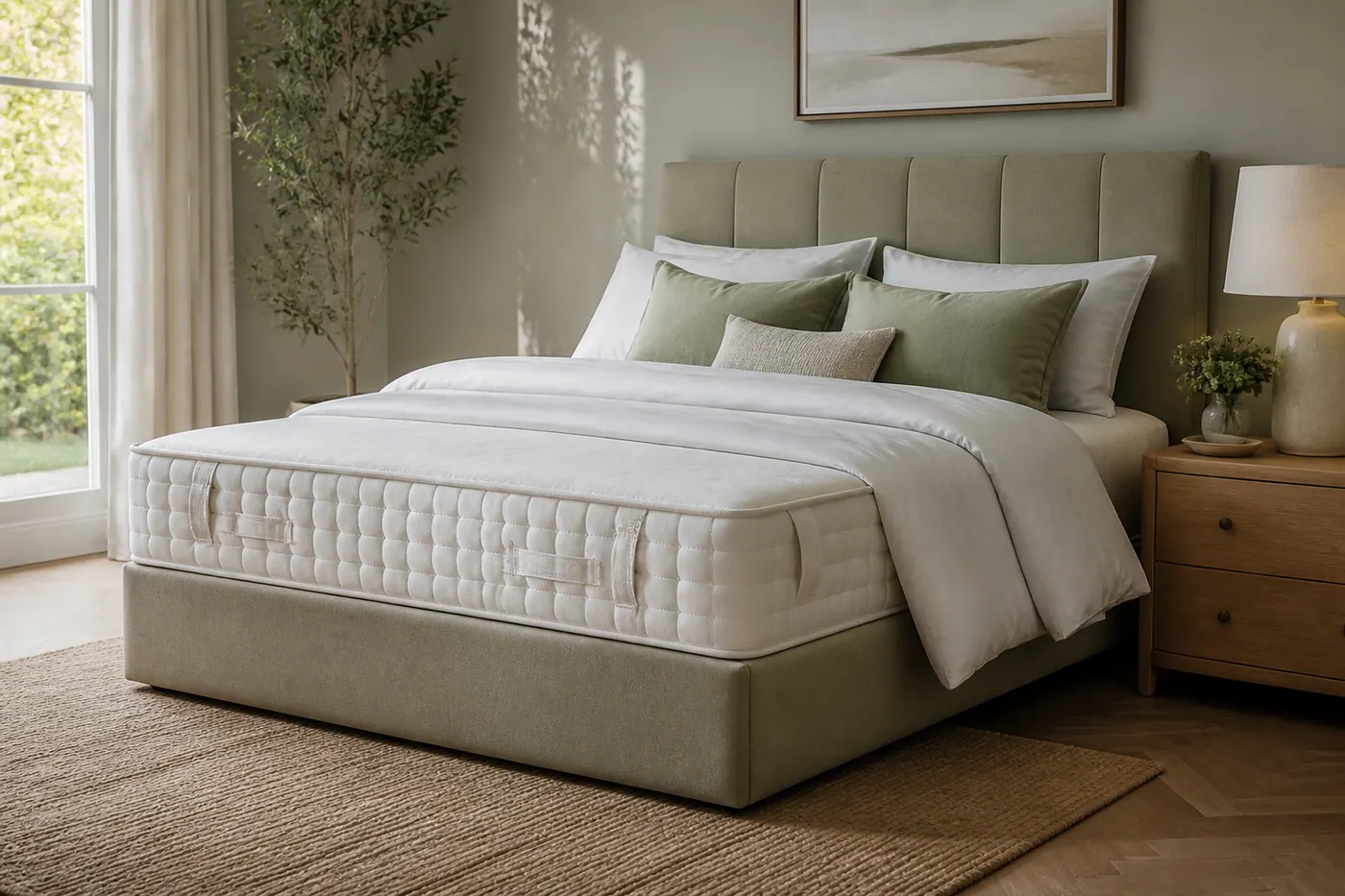
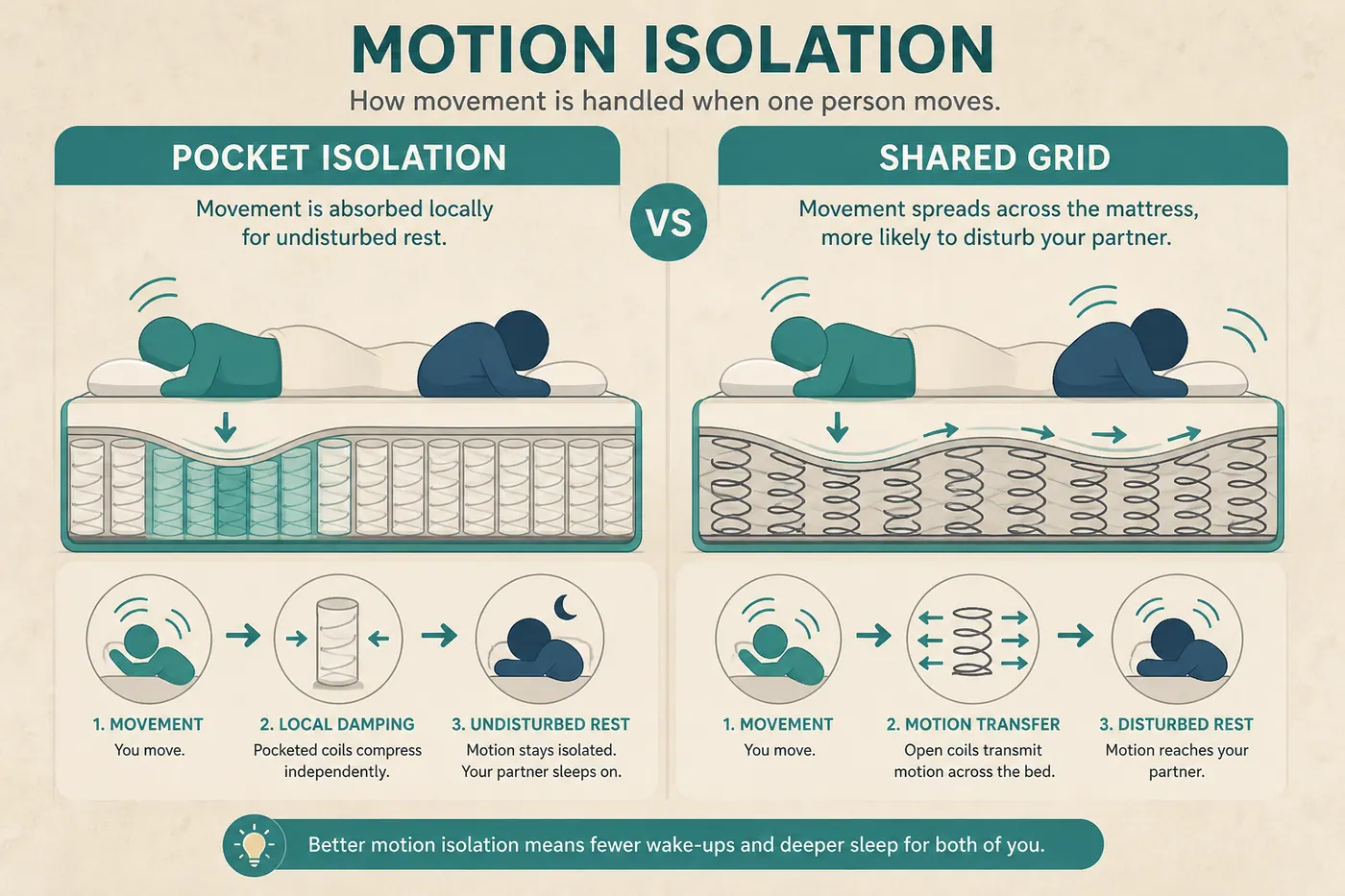
Motion isolation means how little one sleeper's movement disturbs the other. Memory foam and latex damp bounce through slow recovery. Pocket springs isolate better than linked open coils. Soft surfaces can still share centre sink — related to but distinct from roll-together. Couples often weigh isolation alongside firmness and temperature.
How it works
Materials used
- pocket springs
- memory foam
- latex
- hybrid stacks
Average lifespan
7– 10 years
How different builds behave
| Construction | Typical isolation | Notes |
|---|---|---|
| Open coil | Lower | Linked grid shares motion |
| Pocket sprung | Higher | Independent coils |
| Memory foam | High damping | Slow recovery |
| Latex | Good damping | Faster rebound than memory foam |
| Hybrid | Mixed | Foam thickness dominates surface |
See also roll-together and zip-and-link for couples’ configurations.
Frequently asked questions
- Which mattress isolates motion best?
- Thick memory foam and many latex surfaces damp bounce well. Pocket sprung units isolate better than linked open coils. Hybrids depend on foam thickness above the springs. There is no single winner for every couple.
- Is motion isolation the same as roll-together?
- No. Isolation is about bounce transfer across the bed. Roll-together is drifting into a shared dip in the middle. A soft foam bed can isolate bounce yet still allow centre sink.