Box Springs vs Solid Foundations
Entity: box spring and foundation
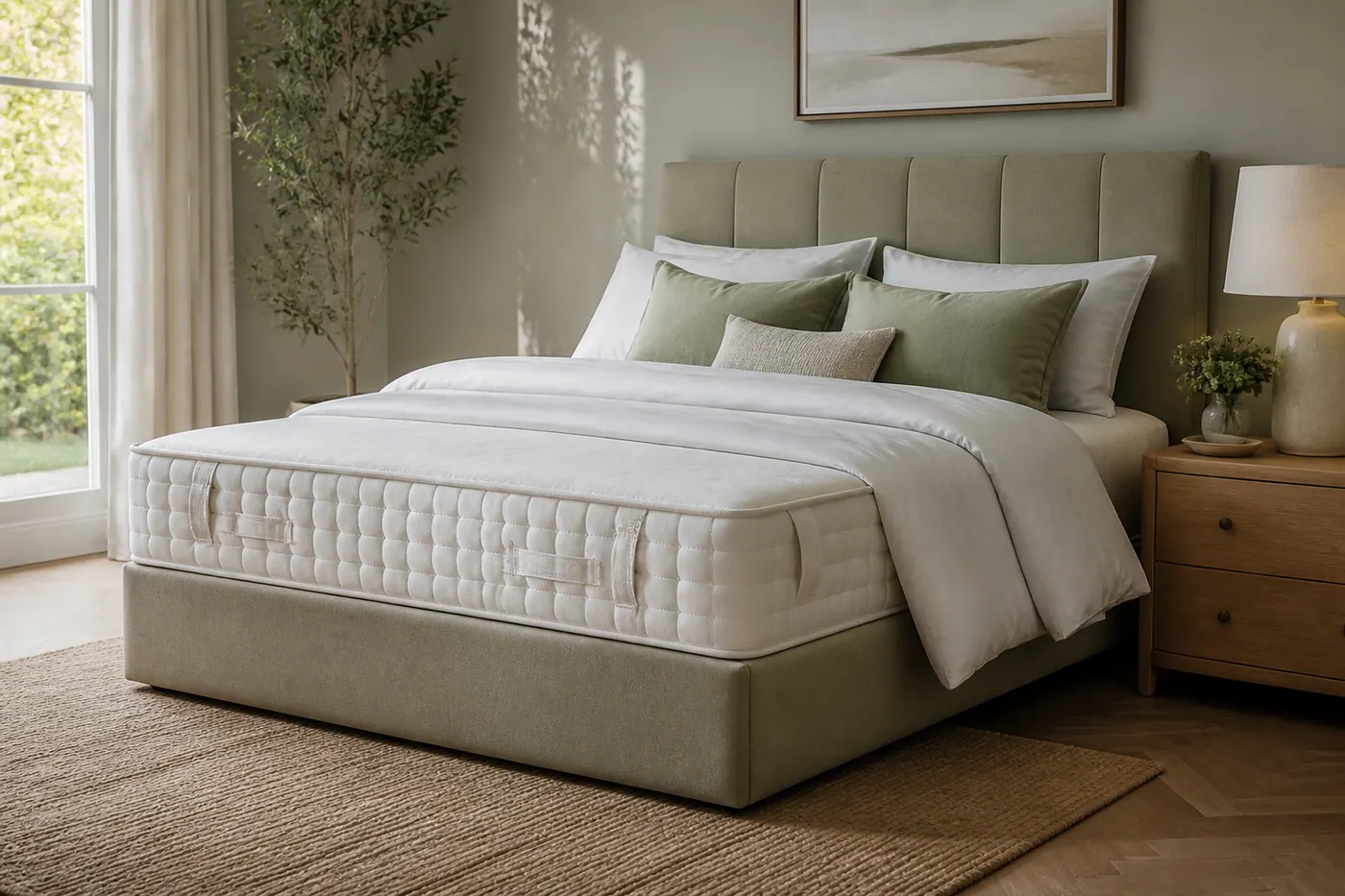
In short
A true box spring is a timber frame with coiled springs under a fabric top. It absorbs shock and adds bounce under a mattress. A solid foundation is a rigid platform without coils. Modern memory foam and hybrid mattresses usually need a firm, non-flexing foundation. Traditional innerspring beds historically paired with true box springs.
How it works
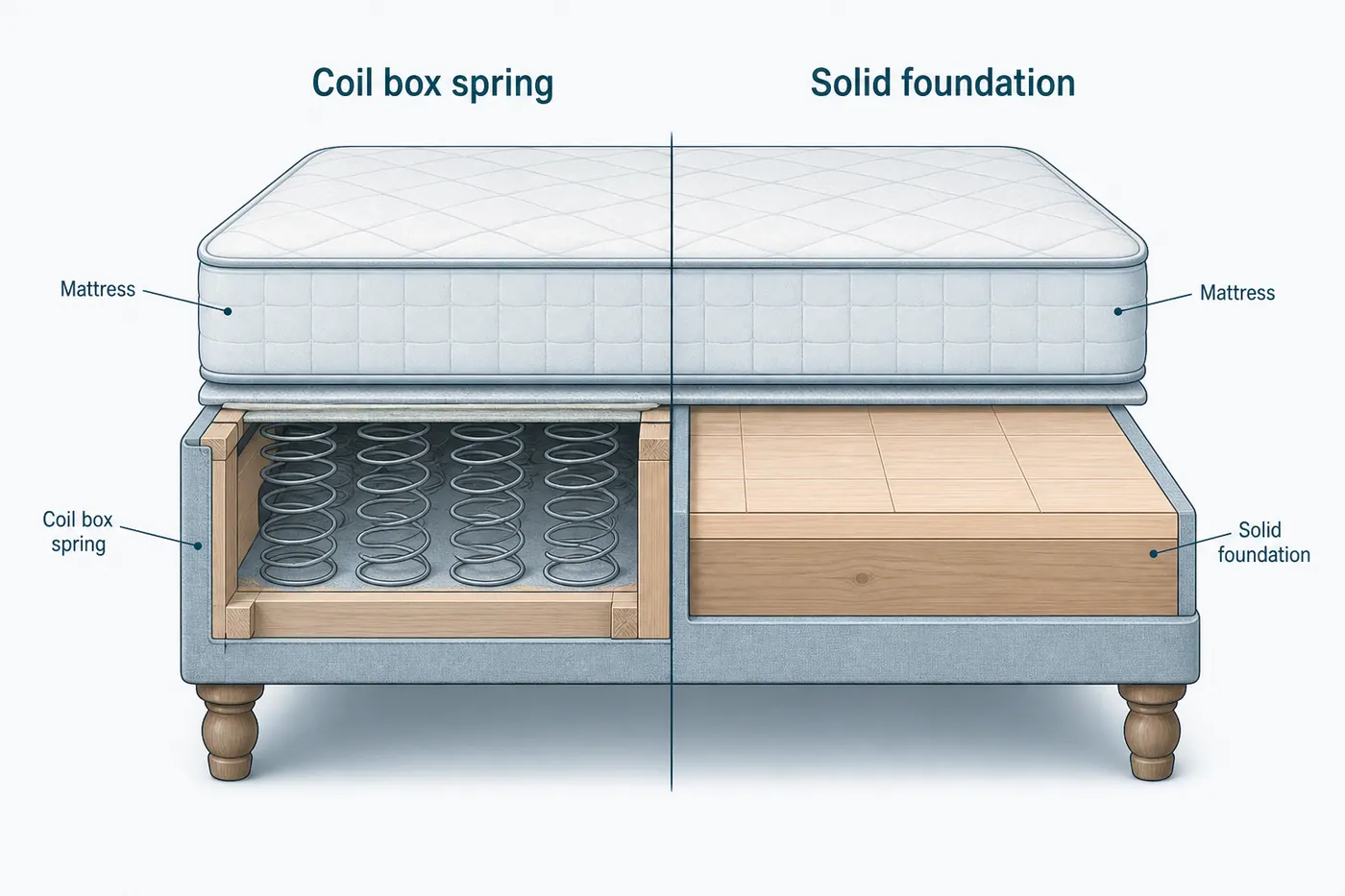
Construction comparison
| Base type | Core structure | Typical feel contribution |
|---|---|---|
| True box spring | Coiled spring unit in a box frame | Bounce / shock absorption |
| Solid foundation | Rigid wood, board or metal deck | Firm, stable platform |
| Slatted base | Parallel laths | Airflow + optional flex |
| Divan | Upholstered box | Platform or sprung-edge top |
Matching base to mattress class
- Traditional open-coil / pillow-top innerspring — historically designed around box-spring give.
- Memory foam, latex, hybrid — usually need a firm, even foundation so comfort layers do not sag between supports.
- Warranty language overrides habit — “box spring required” may mean “approved foundation,” not specifically coils.
Related BedGuide entries
Frequently asked questions
- Is a box spring the same as a foundation?
- Not always. In precise language a box spring contains coils. A foundation is often a solid or slatted platform without springs. Shops sometimes use the words interchangeably, so check whether coils are present.
- Do memory foam mattresses need a box spring?
- Most foam and hybrid warranties prefer a solid, even foundation or closely spaced slats. They do not want a flexing traditional box spring. Follow the mattress maker's base rules to protect support and warranty.
- What height do foundations add?
- Traditional box springs are often taller than modern low-profile foundations. Height changes bed entry height, how much headboard shows and fitted sheet pocket needs.