How Mattress Matching Quizzes Work
Entity: mattress matching quiz
In short
Mattress matching quizzes ask about sleep position, body weight, heat and firmness preference, then map answers to a shortlist of types or store models. They are useful filters, not proofs. Most tools cannot see your bed base, partner weight gap, trial small print or how a brand defines medium. Use results as a starting point only.
How it works
Materials used
- pocket springs
- memory foam
- hybrid stacks
- questionnaire logic
Average lifespan
6– 10 years
What the tools usually do
- Collect a few answers (position, weight, heat, feel).
- Map those answers to tags such as “soft pocket”, “medium hybrid”, “firm foam”.
- Show products that carry those tags in that retailer’s catalogue.
In-store systems (often marketed with names like SleepMatch) may add pressure maps or body measurements. The output is still a shortlist for that shop’s ranges — not a universal ranking of every UK mattress.
What quizzes usually miss
| Often missing | Why it matters |
|---|---|
| Exact spring tension vs top feel | Soft tickets can hide firm springs — see tension vs feel |
| Partner weight gap | One medium may be wrong for both sleepers — see couples / zip-and-link |
| Base and slat rules | Can void warranty — see base compatibility |
| Trial and warranty small print | Risk rules differ by retailer — see trials |
| Fill mass / GSM / turnability | Quality signals beyond feel — see budget vs premium |
| Named spring systems | Brand tech still needs decode — e.g. Miracoil |
How to use a quiz well
- Note the type it suggests (pocket, foam, hybrid), not only the model name.
- Check that type against how to choose a mattress.
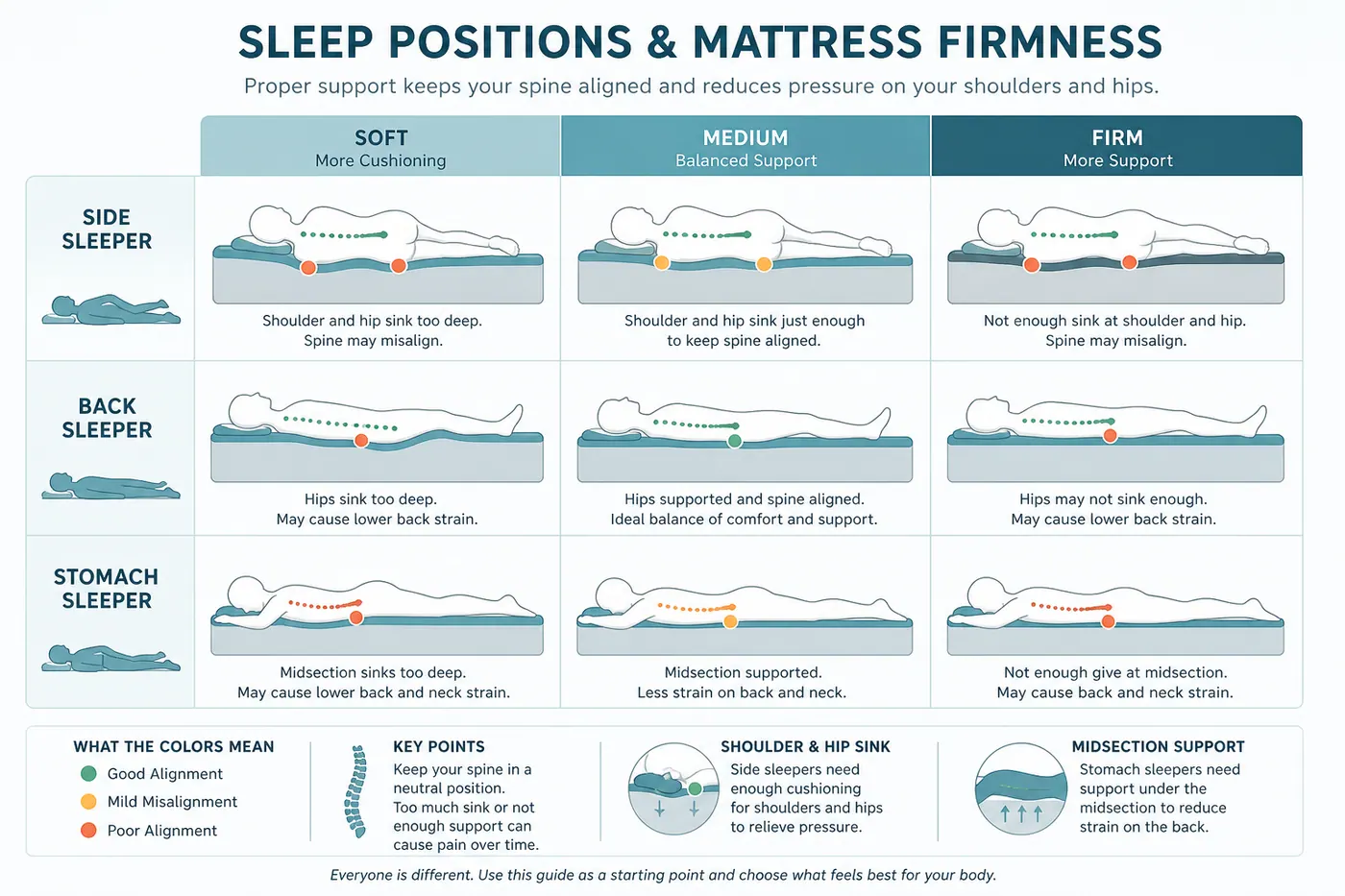
- Confirm firmness language against firmness and sleep position.
- Run the before you buy checklist.
- In store, ask the showroom questions.
BedGuide’s own path finder only routes you to educational learning paths — it does not recommend products to buy.
Related BedGuide entries
Frequently asked questions
- Are mattress matching quizzes accurate?
- They can narrow type and firmness bands from sleep position and weight, but they rarely know your base type, partner weight difference, or a brand’s exact meaning of medium. Treat results as a shortlist, not a final answer.
- What do most sleep quizzes ask?
- Typical inputs are main sleep position, body weight band, whether you sleep hot, preferred surface feel, and sometimes budget. Some in-store systems add pressure-mat or body-scan data. Outputs still map to that retailer’s stock.
- Should I ignore a quiz and choose myself?
- Better: use the quiz, then verify support type, tension or density, base rules and trial terms with a checklist. See before you buy a mattress and questions to ask in a bed shop.