Pillow-Top, Euro-Top and Tight-Top Mattresses
Entity: mattress surface types
In short
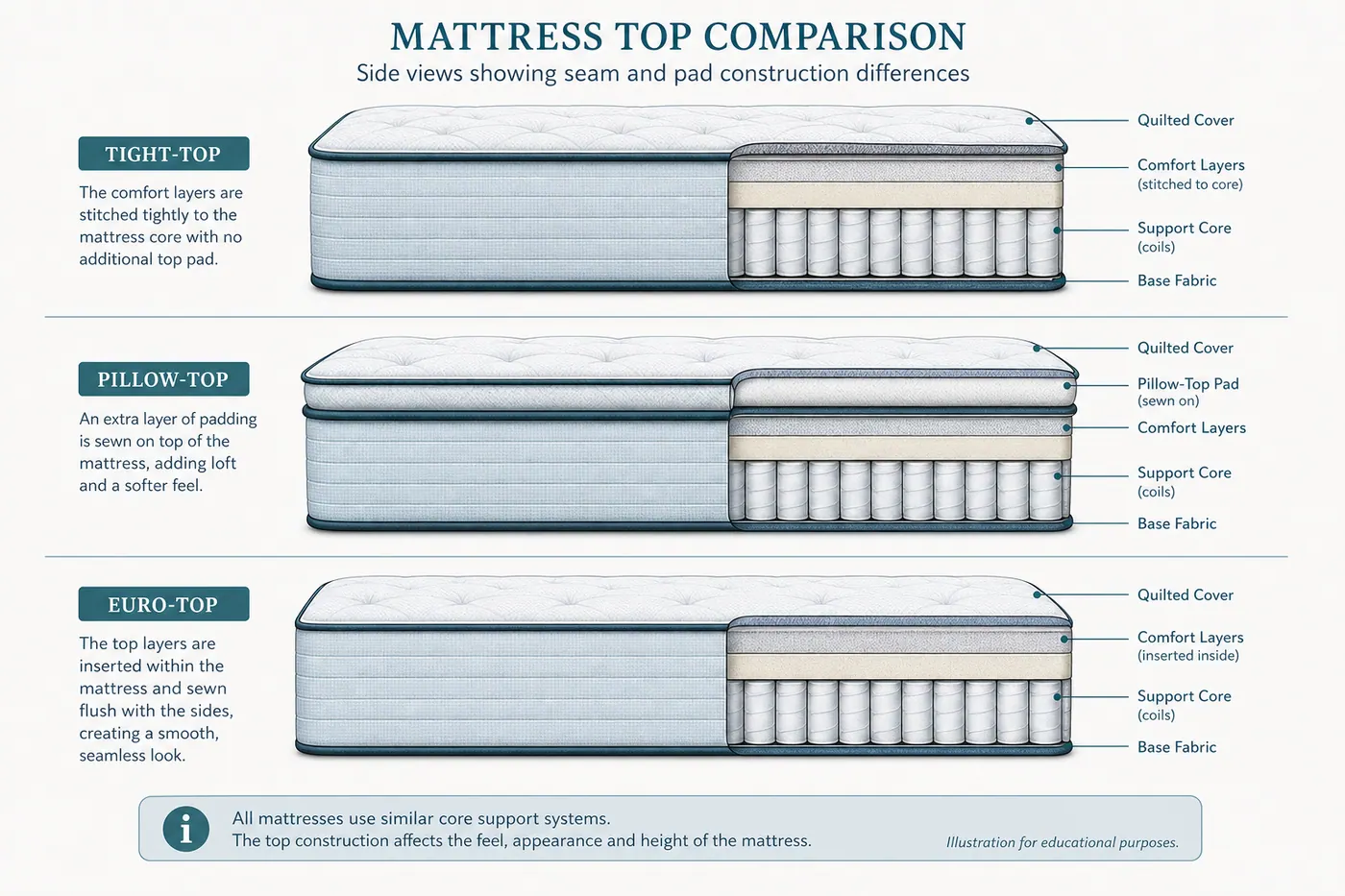
Surface type describes how comfort layers attach to the core. A pillow-top is a sewn-on cushion pad above the main seam. A euro-top is similar but flush to the edge. A tight-top quilts comfort layers directly with no raised pad. Many modern mattresses are single-sided no-turn designs — rotate only, do not flip.
How it works
Materials used
- quilt fibre
- foam comfort pads
- ticking
Average lifespan
6– 10 years
Surface types at a glance
| Type | Construction idea | Care note |
|---|---|---|
| Tight-top | Comfort layers quilted into main panel | May be single- or double-sided |
| Pillow-top | Raised pad above border seam | Almost always rotate-only |
| Euro-top | Integrated flush pad | Almost always rotate-only |
| No-turn / single-sided | One engineered sleep face | Rotate, don’t turn |
Pillow-tops increase mattress depth for sheets and headboard reveal.
Related BedGuide entries
Frequently asked questions
- What is the difference between pillow-top and euro-top?
- A pillow-top pad sits above the main border seam like a cushion on top. A euro-top integrates the pad more flush with the mattress edge. Both add plushness and depth compared with a tight-top.
- Can you flip a pillow-top mattress?
- Usually no. Pillow-tops and most euro-tops are single-sided. Rotate end-to-end if the label allows. Do not turn the mattress upside down.