Natural Mattress Fillings — Wool, Cotton and Horsehair
Entity: natural mattress fillings
In short
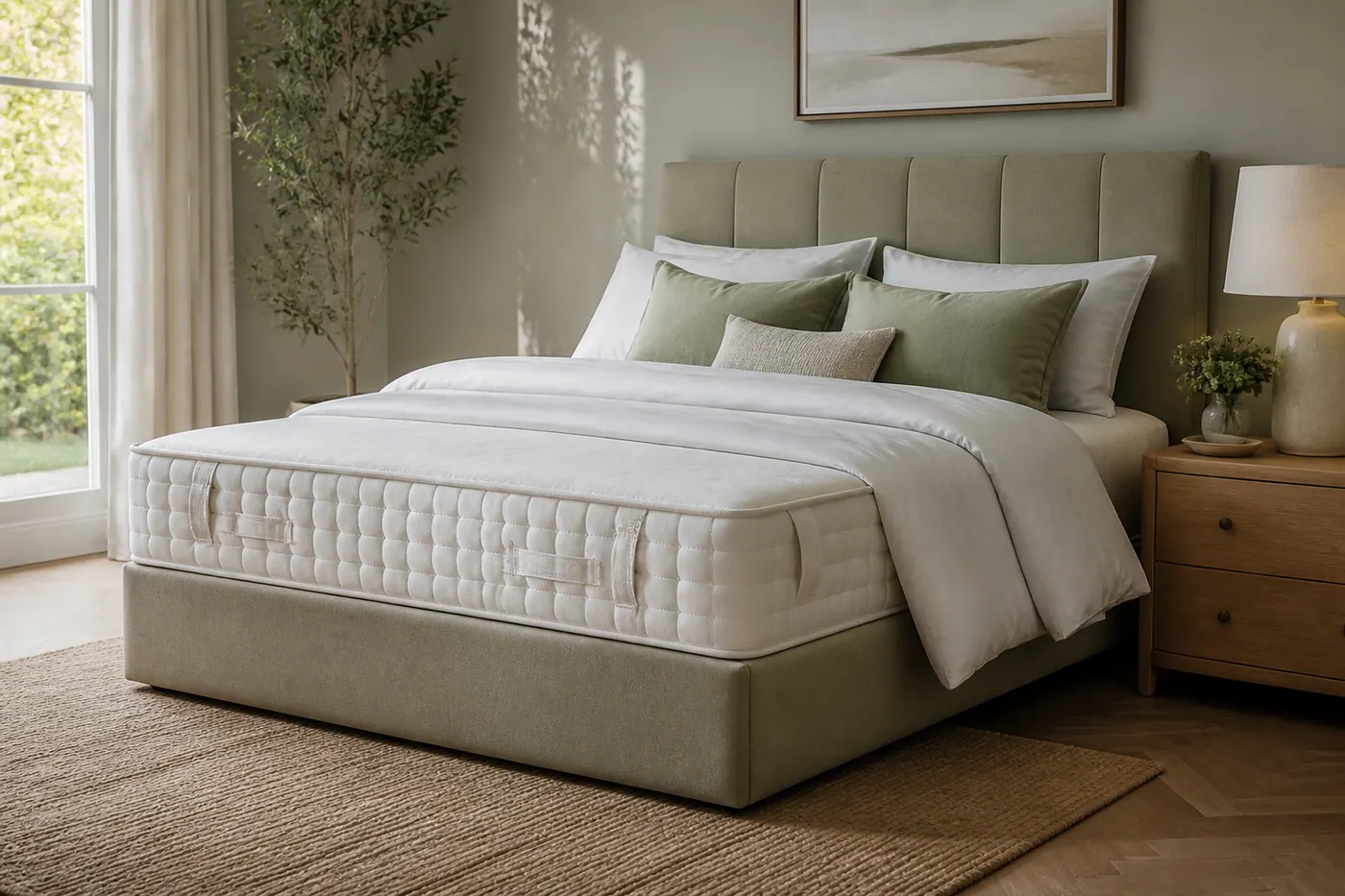
Traditional UK mattresses often use natural fillings above the springs. Wool adds bouncy loft and helps with moisture. Cotton makes soft quilt layers. Horsehair gives a springy, open fill in higher-spec beds. Fillings shape how the surface feels and how air moves. The spring or foam core still does the main support job. Natural does not automatically mean hypoallergenic.
How it works
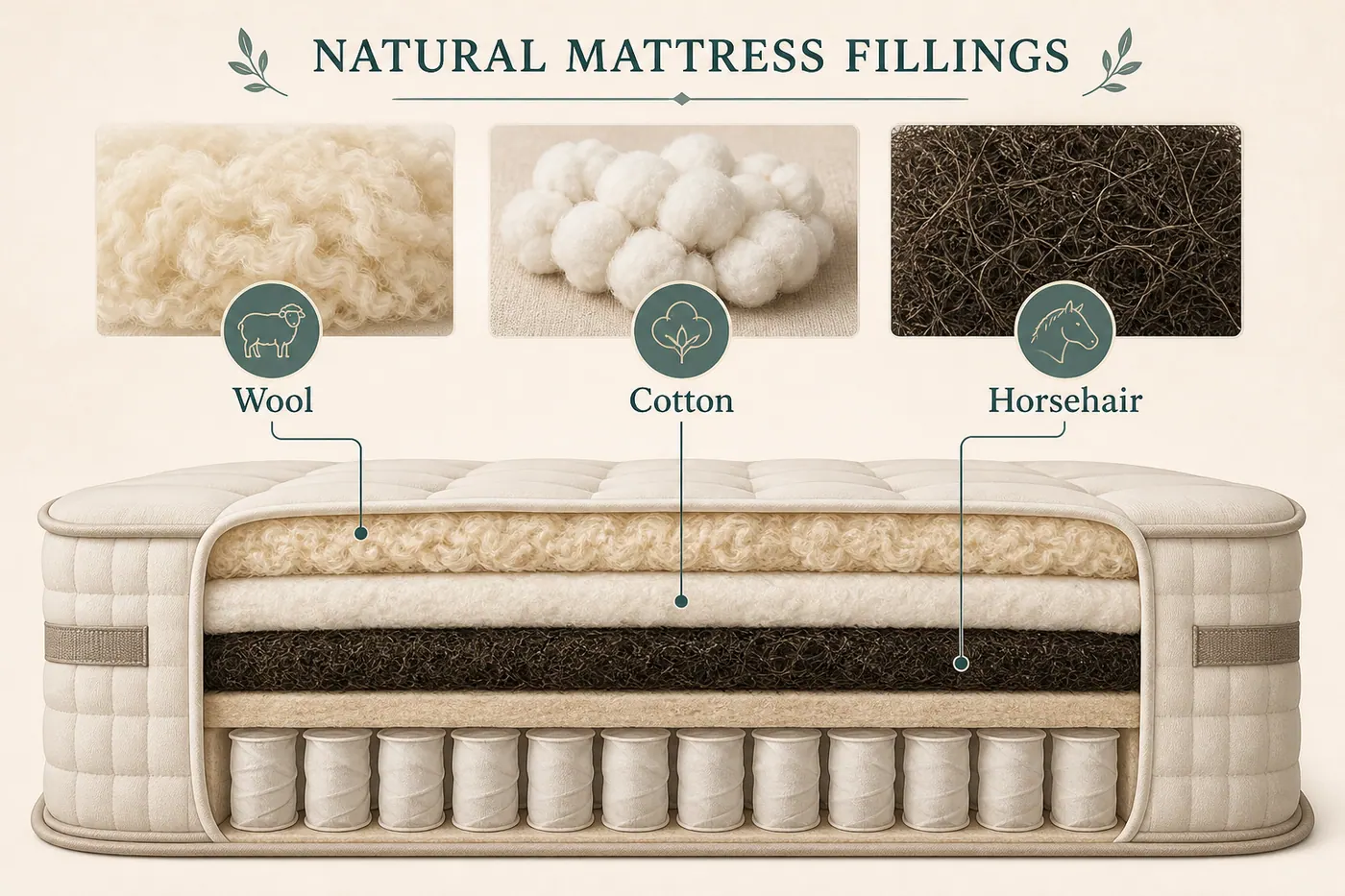
Materials used
- wool
- cotton
- horsehair
- coir or other vegetable fibres (related traditional fills)
Average lifespan
8– 12 years
What each filling does
| Filling | Traits |
|---|---|
| Wool | Bouncy loft, resilience, moisture buffering |
| Cotton | Soft quilt layers; can compact over years |
| Horsehair | Springy open fill in traditional stacks |
| Coir / vegetable fibres | Firmer, more rustic support pads in some builds |
Where fillings sit in the stack
Natural fillings are usually comfort and insulation layers above pocket or open coil units. Tufting helps stop fillings moving around. Modern hybrids may combine thin natural quilts with foam comfort layers.
Related BedGuide entries
Frequently asked questions
- What does wool do in a mattress?
- Wool provides bouncy, resilient cushioning. It can handle moisture better than many synthetics. It sits as a comfort filling above the support unit, not instead of springs or foam cores.
- Is horsehair still used in mattresses?
- Yes in some traditional and higher-specification UK upholstery. Horsehair is springy and open when properly prepared. It is a filling choice, not a medical claim.